

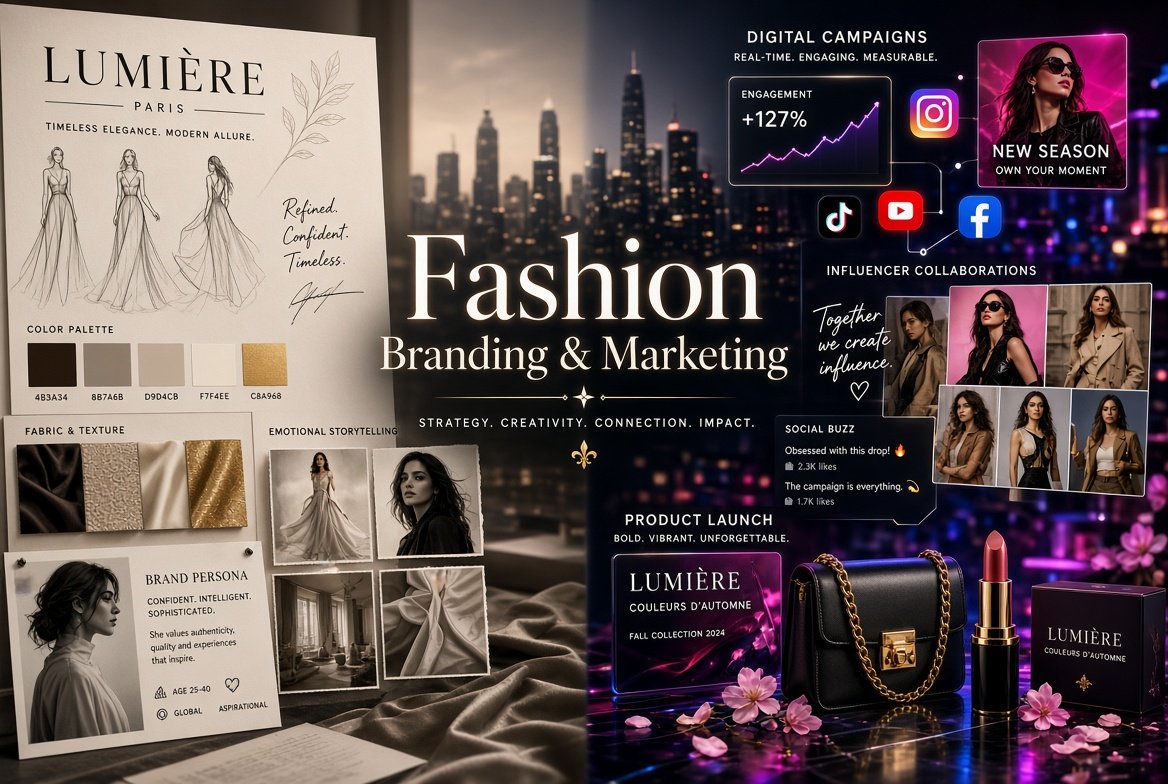
In the effervescent industry of fashion, two words frequently are mentioned in conversation: the terms fashion branding and marketing. Although they are closely linked and often utilized interchangeably, they serve distinct, yet interdependent functions that are crucial to the success of a brand. We’ll explore the specifics of each and explore the ways they can contribute to an effective strategy that is in tune with the public and boosts profitability. Understanding the distinction between fashion brand marketing and branding is crucial to understanding the complex work involved in helping fashion labels succeed in a highly competitive market.
Understanding Fashion Branding: The Soul of a Company
Fashion branding focuses on creating the identity of a brand as well as its values and the way the brand is perceived by the general public. It’s an integral part of the “soul” of a company and influences everything from product design to user interaction. Fashion branding is more than packaging and logos and encompasses all aspects of a brand’s image from the runway aesthetics to online content, and ultimately the customer experience. A variety of factors contribute to a strong fashion branding
- A Consistent Visual Identity This covers all aspects of color schemes to imagery, and typography for all types of platforms.
- Clean Brand Persona: What exactly does the brand represent? What emotions do they create? Its uniqueness is evident.
- emotional storytelling: Connecting with audiences on a deeper basis through stories that convey the brand’s values, mission and aesthetic.
- The Cultural Value and Awareness of Trends: Fashion brands should reflect current trends, cultural, societal and aspirations to remain relevant.
- Distinctive Style: A recognizable aesthetic that customers can recognize before they see the brand’s name.
In the end, fashion branding is all about generating recognition and building brand loyalty. It’s about influencing how a brand’s image is perceived and perceived, defining what they are and the values it represents.
Exploring Fashion Marketing: Reaching and Engaging the Audience
Fashion marketing, in contrast, is the process of promoting a fashion label or retailer, and then selling its merchandise, including accessories, clothing and footwear. It involves preparing and executing campaigns to generate demand, increase revenue, then boost the profitability of a business. Fashion marketers are charged with creating “buzz” and capturing customer interest through different ways. This can be accomplished by blending traditional and digital techniques:
- Digital Marketing:
- Mail Marketing Campaigns: A direct communications to nurture leads and entice existing customers.
- Social Media Marketing: Platforms such as TikTok along with Instagram are essential for building trust, boosting the visibility of brands, increasing storytelling and creating unforgettable experiences. Brands are constantly engaged via livestreams, stories, and creative collaborations.
- The Search Engine Optimization (SEO) Optimization of online content for better the visibility of search results.
- Influencer Campaigns: Working with people with a large following to market products.
- Traditional Marketing:
- Print Advertising: Advertisements in fashion magazines as well as other related publications.
- Brand Activation Events: Designing an immersive experience to attract consumers.
- Personal Sales: direct contact with customers, primarily in retail environments.
- Pop-up events and partnerships: Stories that are centered around community, which help create brand awareness and build connections.
The purpose in fashion-related marketing usually focused on short-term goals for example, selling new collections or increasing traffic to websites. It involves understanding the people, their habits and the best way to promote products in a way that is appealing to the people they are targeting. The fashion industry worldwide is predicted to grow to $920.19 billion in revenues by 2025’s end with a steady growth rate and highlighting the vital importance of marketing to increase market share.
The Symbiotic Relationship: How Branding Informs Marketing and Vice Versa
Although distinct the two, fashion branding and marketing are not separate tasks They are in a synergistic relationship. The one is a source of information and helps strengthen the other, resulting in the most effective and effective overall strategy. Marketing is informed by branding, which provides the fundamental foundation upon which marketing campaigns are created. A strong brand identity defines the tone, language and the messages that are employed throughout marketing strategies. For example, if the identity of a brand is lavish and exclusive, its marketing strategies will reflect this with sophisticated images, top-quality collaborations, and appearances in prestigious magazines. Without a strong brand marketing campaigns can appear unconnected and fail to create an ongoing relationship with customers. Brand’s “vibe,” font, and color palette must be immediately identifiable in marketing materials. Marketing, on the other hand, strengthens branding by constantly conveying the brand’s image and values to its intended public. Every ad campaign or social media post, or occasion is a chance to improve the image of the brand and tell a story. Marketing is a way to tell the story of the brand, revealing not only what it sells, but also what it stands for, its beliefs and its style. Marketing also offers invaluable feedback using the use of metrics and responses from consumers that can be used to aid in the development of the brand’s identity as well as future strategies for branding.
Take a look at the table below to summarize their key similarities and differences:
| Feature | Fashion Branding | Fashion Marketing |
| Primary Goal | Building and maintaining a distinctive brand identity, perception, and long-term recognition. | Promoting products and services, driving sales, and achieving short-term objectives. |
| Focus | The brand’s soul, values, personality, emotional connection, and overall image. | Product sales, campaigns, promotions, and audience engagement. |
| Time Horizon | Long-term brand building, credibility, and brand association. | Short-term objectives such as collection launches, traffic generation, and conversion rates. |
| Key Activities | Defining visual identity, storytelling, establishing brand voice, creating cultural relevance, and influencing product design. | Advertising campaigns, social media management, email marketing, SEO, events, collaborations, and public relations. |
| Output | Brand recognition, loyalty, emotional connection, perceived value, and a distinctive personality. | Increased sales, website traffic, engagement, leads, and market share. |
| Content Role | Provides a consistent voice and aesthetic for all content. | Creates specific content, including visuals, videos, and written materials, for campaigns. |
| Overlap | Both rely on strong content creation and a deep understanding of the target audience. | Both rely on strong content creation and a deep understanding of the target audience. |
Key Components of a Successful Integrated Strategy
If a fashion-related brand is to be successful, an integrated strategy that seamlessly integrates marketing and branding is vital. This integrated approach guarantees consistency as well as maximizing impact. It also establishes a strong bond with the consumer. The following are the essential elements of a well-integrated strategy:
- Understanding Your Brand and the Audience You Want to Reach: Before any marketing campaign can begin, a thorough understanding of the identity of the brand is essential. This means defining what the brand is as well as what it stands for and what its distinctive value offering. In parallel, conducting extensive consumer research to know the people who purchase the clothes as well as how they perceive themselves and how the item affects their image is essential. This knowledge allows for the creation of messages that are able to connect with the buyers’ feelings.
- A consistent visual identity and story telling Every marketing material and marketing campaigns should reflect an unifying visual identity, from color palettes and fonts and the overall “vibe.” Storytelling is essential, as it communicates the brand’s values, mission aesthetic and emotional connection more than the product itself. A consistent narrative helps build trust and increases the brand’s recognition across all platforms.
- Collaboration across Teams: Fashion marketing can’t be just a single-minded initiative. Members of the marketing team as well as public relations experts, brand managers and event planners frequently collaborate to increase demand and boost sales. This collaboration extends to PR where PR and marketing teams work in tandem to create integrated campaigns that ensure an identical voice and message. When PR and marketing work together and create a complete funnel that runs from awareness to purchase which each enhances the other’s outcomes.
- Multi-Channel Methodology: A winning strategy uses the combination of traditional and digital marketing methods, specifically tailored to the audience you want to reach. Social media is essential to daily interaction and relationships as well as collaborations and events create a sense of community and encourage engagement. The trick is to get your message out to the audience you want to reach where they are the most active.
- Selling a solution (Value Proposition): Instead of simply selling clothes, successful marketing is often focused on selling an answer or an exclusive value proposition that does not have any other competitors. This is connected to the customers’ emotions and creates their sense of identity.
- Monitoring and Adapting: When campaigns are launched it’s essential to examine the audience’s response using appropriate metrics. The feedback from reviews, comments or direct messages could help determine what resonates with and what can be confusing to consumers, offering the opportunity to improve and generating fresh ideas for content. Continuous learning and adaptation is crucial to long-term success.
Conclusion: The Unified Approach to Fashion Success
In the end, the discussion between fashion branding and. Fashion marketing doesn’t revolve around selecting which one to choose. Instead, it’s about acknowledging their different but complementary roles in establishing and maintaining an effective fashion business. Fashion branding creates the brand’s identity, the values and the emotional foundation which makes brands distinctive and memorable. It’s the long-term plan and the base of a consumer’s perception. Fashion marketing, in contrast, is the ongoing process of promoting the brand’s image, promoting products and interacting with the intended public to boost revenue and share of market. When these two forces are synchronized and integrated, they form powerful synergies. A strong brand makes marketing more credible and effective and strategic marketing continuously strengthens and broadens the reach and impact of the brand. In a market that is predicted to experience significant growth major retailers and brands are continuing to fund marketing directors and social media marketers. PR experts, and brand managers, highlighting that both are crucial tasks. A unified strategy, where marketing and branding work together is the way to build long-lasting brand loyalty, reaching the highest level of profitability and maintaining an enviable place in the ever-changing fashion world.
Frequently Asked Questions (FAQ)
What is the most important distinction in fashion brand and marketing?
Fashion branding is about developing an overall image appearance, image, and perception of a company’s fashion brand and establishing its distinctive character and values. Fashion marketing is about promoting specific clothing or fashion collections and engaging with target customers to increase sales and help meet short-term goals.
Can a fashion company be successful with only good marketing, but poor branding?
It’s not likely to be a long-term achievement. While a well-planned marketing campaign can bring some initial sales, without having a clear and convincing branding identity (branding) the company has a difficult time establishing trust with customers, standing out in a crowded market and keeping a consistent brand message.
What roles play a role in the field of fashion marketing?
Fashion marketing covers a variety of roles such as marketing managers, social media marketers as well as public relations specialists, brand managers as well as event organizers. They collaborate in a variety of tasks, from the creation of content and advertising campaigns, to market research and event coordination.
How do social media fit into the world of fashion and branding as well as marketing?
Social media is vital for both. As a branding tool, it assists in creating a consistent image and communicating the brand’s personality through stories, and helps create emotional bonds with the audience. Marketing is the primary method for daily interactions, promoting products, running promotions as well as collaborating with influencers in order to boost visibility and increase sales.
Are fashion-related merchandising and shopper marketing the same as marketing for fashion?
Although they’re identical, they differ in their areas of focus. Fashion merchandising involves the process of sourcing and purchasing items as well as planning for the coming season and fashions, as well as managing sales (in-store or online, or hybrid). Fashion marketing is the process of creating and executing campaigns that market the product and boost sales.