
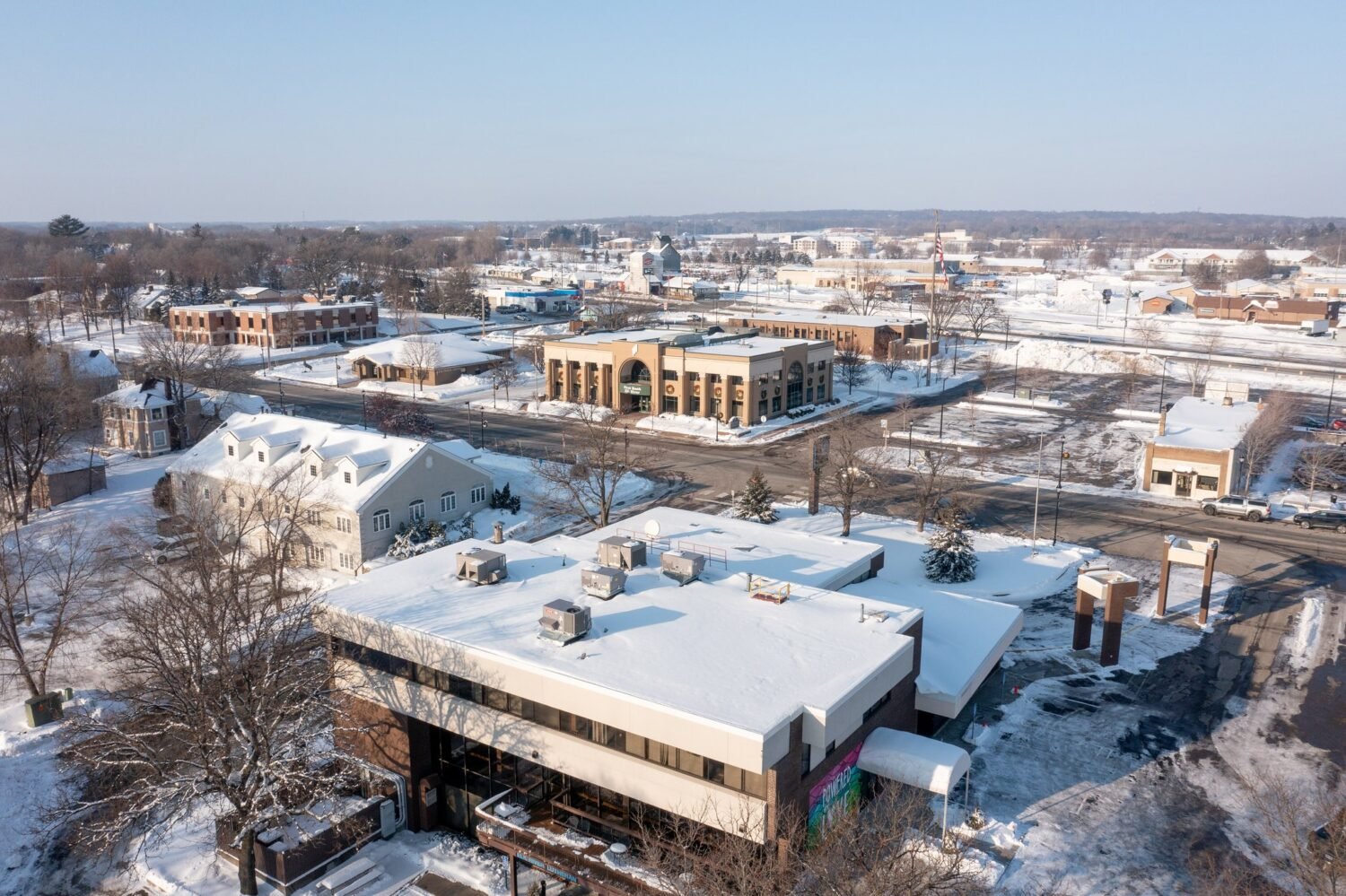
A flat commercial property can look easier to maintain in winter than a steep site. There are no obvious hills, dramatic ramps, or long slopes directing runoff across the pavement. Yet that apparent simplicity creates its own problem: water often moves slowly, collects in shallow depressions, and remains on the property long enough to refreeze.
A drainage-first plan starts by treating snow as stored water rather than only as material that needs to be plowed.
For teams using Snow Removal Expert’s Winter Intelligence Engine as part of their planning approach, the important sequence is snowfall, clearing, snow storage, melting, drainage, and possible refreeze. Fast snow clearing and modern equipment solve only part of that sequence. Twenty-four-hour response, safety-focused ice control, scheduled plans, and reliable follow-up become important when yesterday’s snow becomes tonight’s pavement ice.
The objective is to control where winter moisture goes before it creates another service problem.
Map the Drainage System Before Snow Arrives
Richmond winter maintenance services are particularly relevant to this approach because flat terrain makes drainage a central operational issue. The City of Richmond notes that the community sits on fairly flat land and that its drainage system is designed both to store water and move it away from properties. It also warns that blockages can cause water to back up and pool on roads and lower areas.
Commercial properties need the same basic thinking at the site level.
Create a Ground-Level Drain Map
Before winter, identify every catch basin, trench drain, curb opening, low point, channel, and known pooling area.
Then map the pavement that feeds each one.
This step matters because the closest drain is not necessarily the drain receiving the runoff. Parking-lot grades that appear almost level may still direct meltwater across pedestrian routes or vehicle lanes before it reaches a catch basin.
Mark drains so they remain identifiable after snow begins accumulating. A drain buried beneath a plowed pile is effectively removed from the winter drainage system.
Add Roof Water to the Map
Ground snow is only one source of moisture.
Record downspouts, roof drains, scuppers, canopies, and areas where roof melt reaches pavement. Pay special attention to discharge near entrances, loading areas, curb cuts, and shaded walkways.
The result should be one water-flow map showing both ground runoff and building discharge.
Snow Placement Can Create Tomorrow’s Ice
One of the most expensive winter mistakes is deciding where to pile snow based only on where a plow can push it quickly.
A convenient snow pile can become an inconvenient water source.
When temperatures rise, stored snow releases water over hours or days. If the pile sits uphill from an entrance, pedestrian route, loading bay, or drive aisle, repeated meltwater can cross a previously cleared surface.
This is where a broader Snow Removal Expert service approach becomes relevant. Fast, reliable clearing should be paired with deliberate snow placement rather than measuring success only by how quickly pavement becomes visible.
Before the season, designate storage areas according to drainage direction, sightlines, parking requirements, emergency access, and future pile growth. Leave critical catch basins accessible rather than surrounding them with compacted snow.
The cheapest plow route through the lot is not always the cheapest winter maintenance strategy if it creates repeated ice-control visits later.
Coordinate Slush, Roof Discharge, and Catch Basins
Drainage-first maintenance becomes most important during changing temperatures.
Snow may soften into slush before enough heat exists to dry the pavement. Vehicles then move that slush across the property, pushing it toward curbs, pedestrian crossings, parking stalls, and low spots.
Remove Slush Before It Becomes a Barrier
Slush should not automatically be treated as harmless because it is not frozen yet.
Dense slush can block the final path into a catch basin. Plow windrows can do the same thing by creating a ridge between flowing water and its drain.
During warming periods, inspect the approach to each important drain rather than checking only whether the grate itself is visible.
Richmond specifically advises property occupants to keep catch basins and storm drains clear of leaves, branches, snow, and other debris so water can drain properly and localized flooding can be reduced.
Watch for Continuous Roof Discharge
Roof runoff can keep re-wetting a surface after ground snow has been removed.
If a downspout continually releases water near a walkway, treating the resulting ice once may provide only temporary control. The water source remains active.
Facility teams should document recurring discharge points and coordinate appropriate building or drainage maintenance rather than relying indefinitely on repeated surface treatment.
A Clear Lot Can Still Be Unsafe
The most dangerous assumption on a flat property may be that bare pavement means the snow event is finished.
Consider local winter-service planning for Richmond commercial properties. The lot may have been plowed successfully, yet shallow water can remain around a catch basin, beside a snow pile, below a roof discharge point, or in an almost invisible pavement depression.
When temperatures fall, those isolated wet zones can become the priority.
That is why the post-service inspection should change according to weather conditions. Immediately after plowing, crews may be looking for residual snow and blocked access. During a thaw, the focus shifts to water movement and slush. Before an overnight freeze, the focus becomes standing moisture and surfaces that remain wet.
Repeat visits should be based on evolving conditions rather than snowfall depth alone.
For safety and risk management, documentation matters as well. Record recurring drainage problems, blocked catch basins, unusual runoff, completed clearing, follow-up inspections, and areas requiring additional ice control. Documentation does not eliminate risk, but it makes the maintenance process more consistent and easier to evaluate.
Build a Drainage-First Winter Maintenance Routine
A practical commercial winter plan should connect six actions: map drains, keep catch basins accessible, place snow according to meltwater direction, track roof discharge, remove obstructive slush, and inspect again before refreeze.
Responsibility should also be clear.
The snow contractor needs to know where snow can be stored. Facility teams need to identify permanent drainage or roof-discharge problems. Both sides should understand which conditions trigger follow-up service and who receives reports when water cannot drain normally.
Transparent pricing can help here because repeat inspections, additional ice control, snow relocation, or extraordinary drainage-related work should not become surprises in the middle of winter.
Flat properties do not eliminate winter complexity. They redistribute it.
Snow that stays where it is placed eventually becomes water. Water that cannot leave becomes a pooling problem. Water that remains when temperatures fall becomes an ice problem.
The strongest maintenance plan follows that entire chain instead of stopping when the plow leaves. For commercial property managers, drainage-first thinking turns winter maintenance from repeated reaction into a more predictable operating system—one designed around where the water will be next.