
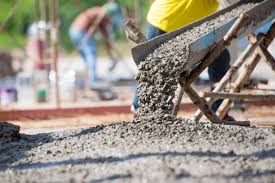
You’ve received three quotes for your concrete driveway, and one is significantly lower than the others—$6,000 versus $8,500 and $9,200. The low bidder seems professional, shows up on time for the estimate, and promises the same 4-inch thickness and quality materials as the higher bidders. It’s tempting to save $2,500-$3,200, but you’ve heard horror stories about contractors who underbid projects and then cut corners to maintain their profit margins—using thinner concrete, skipping crucial preparation steps, or substituting inferior materials. So how do you distinguish between a contractor offering genuinely competitive pricing and one whose low bid indicates they plan to compromise quality in ways you won’t discover until problems emerge months or years later?
Understanding where concrete contractors can cut corners—and recognizing the warning signs that they’re doing so—protects you from making decisions based solely on price that leave you with a substandard driveway requiring premature replacement. Working with an established concrete contractor with verifiable references and a track record of quality work provides more value than the cheapest bid from a contractor whose low price reflects cut corners rather than efficiency.
Where Corners Get Cut (And How to Spot It)
Subbase Preparation: The Invisible Foundation
The single most common corner contractors cut is subbase preparation—the gravel or crushed stone layer beneath concrete that provides drainage and stable support. Proper subbase requires excavating to adequate depth (typically 6-8 inches below finished grade), installing 4-6 inches of compacted gravel in layers, and properly compacting each layer to prevent settling.
Cutting corners here means inadequate excavation depth, skipping the gravel layer entirely, using too little gravel, or failing to compact properly. These shortcuts are invisible once concrete is poured, but they cause premature cracking, settling, and failure within 3-5 years as the unsupported concrete shifts and breaks.
Red flags: Contractor doesn’t discuss subbase preparation during estimates, quote seems low, but contractor can’t explain why their approach differs from competitors, or they rush through site preparation noticeably faster than seems reasonable for proper compaction.
Concrete Thickness: The Critical Millimeter
Residential driveways should be 4 inches thick minimum, with 5-6 inches preferred for heavy vehicle traffic. Saving one inch of thickness across a 500-square-foot driveway reduces concrete costs by roughly $600-$900—a tempting shortcut for dishonest contractors.
The problem is that you can’t easily verify the thickness after concrete is poured. Contractors can claim they poured 4 inches while actually pouring 3 inches, pocketing the savings. Thin concrete cracks under vehicle weight and fails prematurely—but by the time you discover the problem, the contractor is long gone.
Red flags: Contractor doesn’t clearly specify thickness in the written contract, they discourage you from being present during the pour, or they seem rushed during the pour itself (thicker concrete takes longer to place and finish properly).
Water-Cement Ratio: The Invisible Weakness
Concrete strength depends critically on the water-cement ratio. Too much water weakens concrete dramatically, but makes it easier to work with. Unscrupulous contractors add extra water on-site to make concrete flow more easily, speeding up their work but compromising long-term strength and durability.
This is difficult for homeowners to detect—watery concrete may actually look “smoother” and “better” to untrained eyes. Only years later, when premature scaling, spalling, and structural weakness appear, do you realize the concrete was compromised from day one.
Red flags: Contractor doesn’t discuss concrete mix specifications, they add significant water to ready-mix concrete when it arrives, or the finished surface shows excessive bleed water (standing water on the surface during finishing).
Reinforcement: The Skipped Safety Net
Proper concrete should include reinforcement—either wire mesh or rebar, depending on application and thickness. This reinforcement doesn’t prevent cracking (nothing does—concrete will crack), but it holds cracks tightly together, preventing them from widening into structural problems.
Some contractors skip reinforcement entirely to save $200-$400 in material and labor costs. Without reinforcement, normal hairline cracks expand into major breaks that allow water infiltration, freeze-thaw damage, and eventual structural failure.
Red flags: Contractor doesn’t mention reinforcement in the quote, they can’t show you the reinforcement during the pour (because it’s not there), or they claim “fiber reinforcement” is equivalent to proper wire mesh or rebar (it’s not—fiber helps with plastic shrinkage cracking but doesn’t replace structural reinforcement).
The Control Joint Problem
Required Joints That Get Skipped
Control joints—intentional grooves cut or formed in concrete to control where cracking occurs—are essential for long-term performance. Residential driveways need control joints every 8-10 feet in both directions, creating panels with relatively square proportions.
Skipping control joints or spacing them too far apart saves contractors 30-45 minutes of work but causes random cracking throughout the driveway as concrete shrinks and moves. These uncontrolled cracks look terrible and allow water infiltration that accelerates deterioration.
Red flags: Contractor’s quote doesn’t mention control joints, their example photos show large expanses of concrete without visible joints, or they claim their “special concrete mix” doesn’t need control joints (this is false—all concrete needs them).
Curing: The Patient Process They Rush
Why Proper Curing Matters
Concrete needs consistent moisture and moderate temperatures for at least 7 days to develop proper strength. This requires keeping concrete damp through water sprinkling or moisture-retaining curing compounds, protecting it from direct sun and wind, and preventing traffic or heavy loads during the critical early curing period.
Contractors eager to move to their next job sometimes shortchange curing—they pour, finish, and leave without ensuring proper curing happens. Homeowners don’t know they should be maintaining moisture, and the concrete cures improperly, resulting in weak surface layers that scale and spall prematurely.
Red flags: Contractor doesn’t explain curing requirements or responsibilities, they don’t apply curing compound or leave clear instructions for water curing, or they don’t schedule a follow-up visit to check on curing progress.
Verifying Quality Before and During Work
The best protection against corner-cutting is choosing reputable contractors whose established businesses depend on quality work and satisfied customers. Get everything in writing—thickness, reinforcement, subbase preparation, concrete specifications, and curing procedures. Be present during critical phases—subbase preparation, reinforcement placement, and concrete pouring. Take photos documenting each stage, especially elements that will be invisible once concrete is poured.
Working with established professionals like Courtneys Construction whose reputation depends on quality work and customer satisfaction, provides protection that the lowest bidder cannot match. Their written specifications detail exactly what you’re getting, their established business won’t disappear if problems develop, and their experience means they know proper methods aren’t optional shortcuts—they’re requirements for concrete that will last decades rather than years.
The cheapest quote might save money initially, but corner-cutting contractors cost far more in the long run when premature failures require complete replacement of driveways that should have lasted 25-30 years.

Jared H. Furness is a well-known sports analyst and writer. He is known for his skill in player stats in sports like football, basketball, and baseball. Jared has a sharp eye for detail and a passion for uncovering stories behind the numbers. He is known for writing detailed, SEO-friendly articles. They attract both fans and professionals.
His work often appears on major platforms. It offers detailed breakdowns of player performances, game highlights, and strategic insights. Jared makes complex statistics easy to understand and engaging. His articles, like the Boston College Eagles vs. UVA game analysis and the Arizona Diamondbacks vs. Miami Marlins match, show his talent for mixing data analysis with engaging stories.
Jared is known for producing human-written, plagiarism-free content. His pieces rank well on Google. This helps fans and analysts easily find his expert views on key matchups. Jared H. Furness raises the bar in sports stats journalism. He highlights Bobby Witt Jr.’s amazing plays and key moments in EuroLeague basketball.