
With regard to price labeling technology, for the B2B decision-makers in retail, operation, procurement, and sustainability, it is no longer just a matter of unit price. It is now a more complex, strategic decision encompassing bottom-line, operational, and corporate environmental concerns. Choosing between conventional paper labels and E Ink price tags (the category leader in electronic shelf labels (ESL) technology) is at the core of such concerns.
While digital solutions require considerable initial outlay, E Ink price tags deliver considerable financial and ecological dividends in the long run, justifying a digital labeling system investment in the primary, almost exclusively, paper-labeling systems. This article assists retail firms to carry out this investment in a sustainable and strategically prepared manner by offering a comparison of the two alternatives.
The Total Cost of Ownership Paper Analysis
The first cost of paper labels is the lowest of any price. Even so, businesses should consider the Total Cost of Ownership (TCO) for greater profitability over the future. Paper labels will have the most hidden costs, and the costs will happen over and over.
Companies will continue spending on paper, toner or ink, plastic label holders, and laminating materials. Most importantly, the cost to employees updating prices is massive. Employees have to daily or weekly prices print thousands of tags, sort them, and manually replace them, making the entire process very costly to the company and causing customer pricing errors and frustration.
The label system still costs more to set up because of the electronic ink display, installation, and software, however, there’s no more recurring consumable costs, and no labors for price updating. Staff are freed to do more customer service tasks. Over the timeless life span of 5 to 7 years of the hardware, the TCO for the electronic system is always lower than the paper system, and thus gives the company positive ROI.
Driving Tangible Sustainability and Waste Reduction Goals
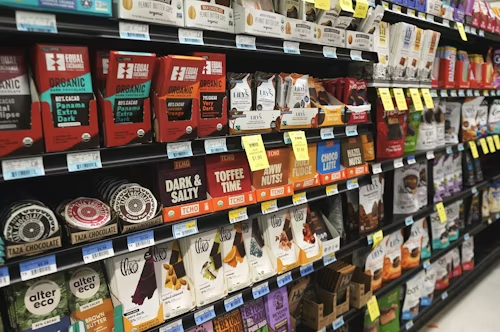
Environment, Social and Governance (ESG) have become essential pillars of corporate strategy and stakeholder reporting. Paper labelling systems are inherently wasteful and create a lagging stream of waste from laminate paper, used toner cartridges, and broken plastics. One large-format retail store, for example, can easily throw out tens of paper labels every day.
Switching to E Ink price tags is one of the greatest sustainability advancements for the sector. E Ink price tags are highly energy efficient as they only consume power when a price is changed and maintain a static image without using any power. One device’s durability means it can replace thousands of paper tags over its lifetime. This technology helps retailers verifiably reduce the operational carbon footprint and stream waste of materials. This sustainability commitment improves the reputation of the brand, meets regulatory compliance, and responds to a growing number of eco-conscious consumer and corporate partners.
Improving Operational Excellence and Pricing Efficiency
Profitability in retail hinges on operational effectiveness. The manual approach to labeling is a critical stage in the process. It is labor intensive, slow, and erroneous. Errors lead to differences in prices on the shelf vs. the point of sale which creates legal risks and checkout disputes.
Systems based on ESL tags and centralized management software do not have these shortcomings. Whole store price updates that used to take dozens of labor hours to do can now be completed in minutes, at precision accuracy. This creates customer confidence and ensures shelf edge and point of sale price alignment. The hours recovered can be used for inventory control, merchandising, or customer service. The value in reduced pricing errors, which are a significant contributor to shrink, is enough to justify the investment for E Ink technology on protecting revenue rather than just cost savings.
Enabling Scalability and Agile Pricing Strategies
Being able to execute complex and agile pricing strategies is a key competitive differentiator in retail. Traditional labels are a direct impediment to this agility. From executing time-sensitive promotions and responding to competitor prices to managing margins based on inventory levels, pricing becomes logistically complex.
E Ink price tags transform this capability. Retailers are able to execute zone pricing, flex sales and markdowns, all from a single dashboard, and change prices in real time on the sales floor. Operational management is seamless, from single store to a thousand-store chain, the effort to change prices is the same. Teams are able to price in a way that directly drives better margins, improved inventory turnover and is the complex agility pricing optimization scalable. This system protects the business from obsolescence, and allows the business to respond to new market and consumer trends quickly.
Store Infrastructure That is Adaptive and Built to Last
Investing in technology for a store requires a level of foresight. Outdated paper labels are a dead-end technology as they have no capacity for integration or evolution. In contrast, an E Ink ESL system serves as a building block for the smart, connected store of the future.
These digital tags are not display units, they are network endpoints and can therefore integrate with other systems. They can interface with inventory management systems to show current stock levels, and tie in with dynamic pricing for loyalty programs, and even link to display QR codes for product information and reviews.
This sort of integration improves the customer experience and the retailer gets pricing interaction data. By picking E Ink, a retailer isn’t simply buying a digital labeling solution; they are also deploying a store floor wide bidirectional communication with a great deal of data flexibility for the store.
This infrastructure helps the retailer take advantage of other innovations in the future. This helps the retailer stay up to date with changes in retail technologies and improves the level of operational intelligence and customer engagement the retailer can achieve.
Conclusion: A Strategic Investment for Modern Retail
Analyzing the cost of E Ink price tags vis-a-vis conventional price tags goes beyond the price per tag comparison. For the proactive B2B retailer, this is a no brainer. Traditional price tags involve a never-ending cycle of hidden costs, operational inefficiencies, and environmental costs that stagnate agility.
E Ink electronic shelf labels involve a greater initial investment, but offer a much greater long-term value in that they significantly lower operational costs and greatly assist in achieving sustainability targets while allowing for a much greater level of data driven retailing. It turns a basic operational necessity into a competitive advantage.
For those businesses focused on profitability, meeting the ESG targets while allowing for the development of a flexible and resilient store network, the conversion of price tag systems to E Ink is more than an operational update. It is stepping forward to a more efficient, adaptive and sustainable future.