
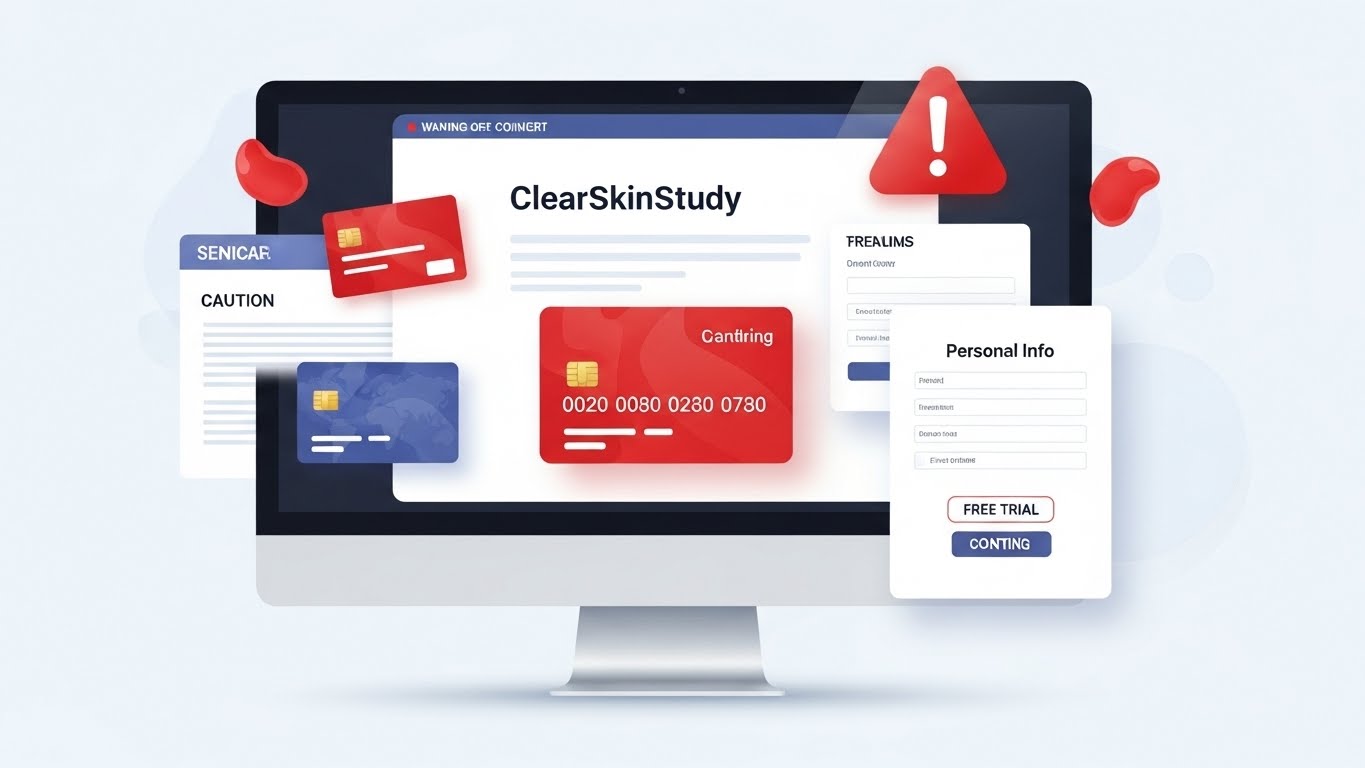
Have you ever checked your email and seen a message that looks exciting? It might say something like, “You are invited to join a free skincare study! Get clear skin fast and earn money too.” The sender’s address ends with @clearskinstudy.com or something similar. It promises free creams, quick fixes for acne or eczema, and even cash for your time. Sounds great, right? But hold on. Many people who get these emails end up feeling tricked. They lose money, share personal details they regret, or get stuck buying products they do not want.
This article will show you the truth about ClearSkinStudy emails. We will explain what they are, why they are often fake, and how to stay safe. I am writing this based on real reports from people online, expert advice from consumer watch groups, and common scam patterns. No hype here – just facts to help you protect yourself. By the end, you will know how to spot these tricks and find real ways to care for your skin.
The skincare world is full of hope. We all want smooth, healthy skin. But scammers use that hope to make money. ClearSkinStudy emails are a big example. They pretend to be a real study from doctors or researchers. In truth, most are just sales tricks or worse – ways to steal your info. Let’s dive in and uncover it all.
What is ClearSkinStudy?
ClearSkinStudy sounds like a serious project. It claims to be a group of experts running tests on skincare products. The goal? To find better ways to treat problems like pimples, dry skin, or red patches. Emails from them say you can join as a “participant.” You might get free samples, like serums or lotions, and fill out short surveys. Some even promise $50 or $100 just for trying the stuff.
The website clearskinstudy.com looks clean. It has pictures of happy people with glowing skin. There are pages about “our team” with fake doctor names and stories about past “successes.” But dig a little deeper, and things do not add up. The domain has been around for years, but there is no link to real hospitals, universities, or big skincare labs. No press stories in trusted news sites. No records on official trial lists like ClinicalTrials.gov.
Experts say this is a classic setup. Real studies are run by places like the FDA or big clinics. They never cold-email strangers. They recruit through doctors or ads in medical journals. ClearSkinStudy? It blasts emails to millions, hoping some click.
How the Scam Works
Scammers behind ClearSkinStudy emails are smart. They know how to make you trust them. Here’s the step-by-step way it often goes:
First, you get the email. The subject line grabs you: “Exclusive Invite: Join Our Skin Study and Transform Your Skin!” Inside, it talks about your “skin type” – even though they know nothing about you. They say it’s based on a quick quiz you “took” somewhere (you did not). This makes it feel personal.
Next, they ask you to click a link. It leads to a form. You enter your name, email, phone, address, and sometimes skin photos. They promise it’s for “matching you to the right study.” But really, this is where they grab your data. That info can be sold to marketers or used for more scams.
Then comes the “free trial.” You get a bottle of cream, but you pay “just shipping” – say $4.99. Sounds cheap. But fine print hides the trap: It’s not free. You are signing up for a monthly box at $89 a month. If you do not cancel in 7 days (which they make hard), charges hit your card.
People report getting hit with bills they did not expect. One user said, “I paid for shipping, and two weeks later, $98 was gone. The cream was junk – it made my skin worse.” Others say the products arrive late or not at all. Customer service? Ghosted. No replies to emails or calls.
This is not random. It’s a funnel. The email hooks you. The form gets your details. The “trial” takes your money. All under the cover of a “study.” No real science happens. No doctors check results. It’s all about profit.
Red Flags: Signs It’s a Fake Study
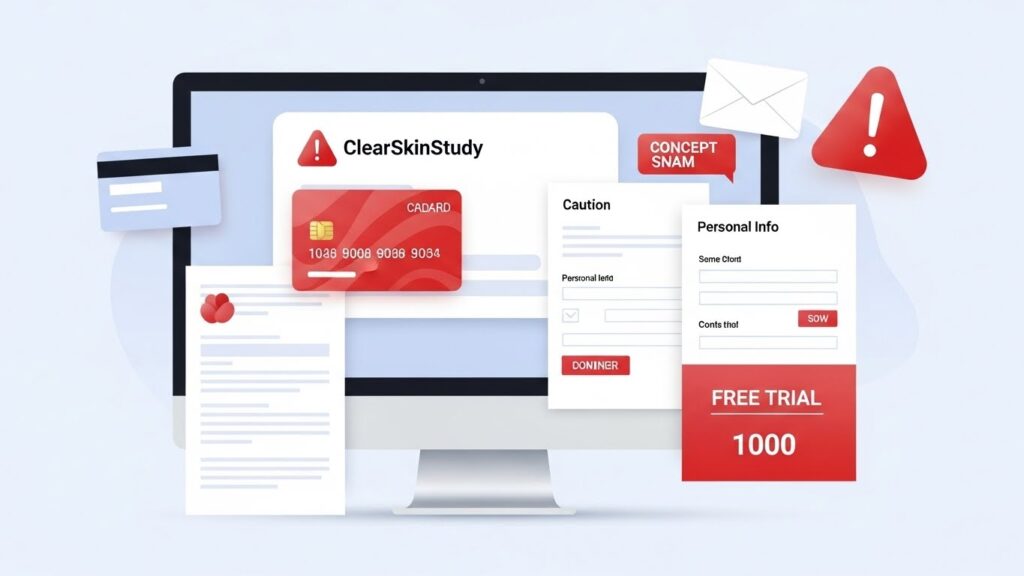
Not every email is bad, but ClearSkinStudy ones have big warning signs. Spot them early, and you can walk away safe. Here are the top red flags, explained simply:
Emails from Weird Addresses
Real studies use pro emails like info@harvard.edu or trials@mayoclinic.org. ClearSkinStudy? Often from free accounts like Gmail or odd domains like clearskinstudy.net instead of .com. Check the “from” line. If it looks off, delete it.
Too-Good-to-Be-True Promises
They say, “Clear acne in 3 days!” or “Get paid $200 for 10 minutes.” Real studies take months and pay little – maybe $20-50 for big efforts. No miracles. Science does not work that fast.
Asking for Money or Info Upfront
Legit trials cover everything – even shipping. If they want your credit card for “fees,” run. And never share SSN, bank details, or photos without proof it’s real.
Bad Design or Pushy Tone
The email might have typos, weird fonts, or stock photos. Real ones are clean and calm, like a doctor’s note. Scams yell, “Act now! Limited spots!” to rush you.
No Real Backing
Google the name + “scam.” You’ll find forums full of complaints. Check WHOIS for the domain – often registered in shady places with fake info. No links to FDA or real labs? Big red flag.
If you see even one of these, it’s likely fake. Trust your gut. Better safe than sorry.
Real Stories: Victims Speak Out
Hearing from real people makes it hit home. These stories come from online reviews, forums like Reddit, and scam report sites. Names changed for privacy, but the pain is real.
Take Sarah, a 28-year-old teacher from Texas. “I got an email saying I qualified for a ClearSkinStudy on acne cream. It looked official – even had a logo. I clicked, filled the form, and paid $5 for shipping. Two weeks later, a bottle arrived. It smelled funny and burned my face. Then, boom – $87 charged to my card. I tried calling; no answer. Emails bounced back. I had to fight my bank for a refund. Lost two weeks of sleep worrying about my skin and money.”
Then there’s Mike, a dad in Florida. “My wife saw the ad on Facebook. Thought it’d help her eczema. We shared our address and card for the ‘trial.’ Nothing came. But charges kept coming – $89, then $89 again. Turns out, it auto-enrolled us in a subscription. Customer service was a robot chat that looped. We reported it to the FTC. Still, our info’s out there now. Getting spam calls daily.”
Or Lisa from California: “They asked for skin photos to ‘assess’ me. I sent them, thinking it was for science. Now, those pics are probably sold. My face broke out worse after their ‘free’ serum. Felt so dumb. Wish I’d known it was a scam.”
These are not rare. Sites like BBB.org and ScamPulse have hundreds of reports. People lose hundreds of dollars. Some get rashes from bad products. Others deal with identity theft fears. It’s not just money – it’s trust broken.
Why Do Scammers Target Skincare Lovers?
Skincare scams like this boom because we care. Who does not want better skin? The market is huge – over $150 billion worldwide. Scammers know emails work cheap. One blast can hook thousands.
They use data from old quizzes or shopping sites. Saw a beauty ad once? Your email’s on their list. Tools like Mailchimp let them send millions for pennies.
Plus, it’s hard to catch them. Domains hide in places like Russia or Nigeria. Fake companies pop up and vanish. Laws lag behind tech. The FTC warns about “free trial” traps, but enforcement is tough.
And let’s be real: We rush when excited. A “study” sounds safe – like helping science. Scammers bank on that.
How to Protect Yourself from Fake Emails
You can fight back. Simple steps keep you safe. Follow these, and scams lose power.
Step 1: Pause and Check
Get a weird email? Do not click. Hover over links – see the real URL? If it’s not clearskinstudy.com, fake. Forward to spam@uce.gov to report.
Step 2: Verify Everything
Search “[sender] scam” on Google. Check the site on Trustpilot or BBB. Real studies list on ClinicalTrials.gov. No match? Delete.
Step 3: Guard Your Info
Never give card details or photos to strangers. Use a burner email for sign-ups. Enable two-factor on accounts.
Step 4: If You Clicked – Act Fast
Dispute charges with your bank. Change passwords. Run antivirus. Report to FTC at ReportFraud.ftc.gov.
Step 5: Use Tools
Apps like Have I Been Pwned? check if your email’s leaked. Email filters block junk.
Stay calm. Most scams need your action to work. Ignore them, and they fade.
What Real Skincare Studies Look Like
Want to join a true study? Good! They exist and help real change. But they look different.
Real ones come from trusted spots: Universities, hospitals like Johns Hopkins, or groups like the National Eczema Association. Recruitment? Through doctor visits or sites like CenterWatch.com.
Expect: Long forms, in-person checks, no upfront cash. Pay? Small, after completion. Time? Weeks or months, with follow-ups.
Examples: A 2024 study at UCLA tested new acne gels – recruited via dermatologists, paid $75 after 12 weeks. No emails, no rush.
To find them: Search “dermatology clinical trials near me” on official sites. Always verify.
Tips for Healthy Skin Without the Hype
You do not need scams for great skin. Basics work wonders. Here’s a simple routine, backed by dermatologists.
Clean Gently
Wash twice a day with mild soap. No harsh scrubs – they irritate.
Moisturize Daily
Pick fragrance-free lotion. Locks in water, fights dryness.
Sunscreen Always
SPF 30+, broad-spectrum. Blocks UV that causes spots and lines.
Eat and Drink Well
Fruits, veggies, water. They feed skin from inside.
See a Pro
For acne or eczema, book a derm. Prescription creams beat scams.
Studies show this cuts issues by 50%. No $89 bottles needed.
Conclusion
ClearSkinStudy emails promise dreams but deliver nightmares. They fake a study to steal data and dollars. We’ve seen the red flags, heard victim stories, and learned protection tricks. Remember: Real help does not rush or charge you.
Next time an email tempts you, pause. Check facts. Protect your info. Your skin – and wallet – will thank you.
Disclaimer: This article is for information only. It is not a promotion, advertisement, or affiliate post. We are not selling anything, and we do not get paid for any products or services mentioned. The content is based on publicly available reports and expert advice to help you stay safe. Always do your own research and use caution when sharing personal information online.
Explore More
- 418dsg7 Error: The Fake Tech Scare You Should Completely Ignore
- Exposing Fake IP Addresses: Why ‘192.1y8.1.1’ Is Misleading and Invalid
- Is 9253612736 a Scam? A Simple, Honest, and Complete Guide
Jared H. Furness is a well-known sports analyst and writer. He is known for his skill in player stats in sports like football, basketball, and baseball. Jared has a sharp eye for detail and a passion for uncovering stories behind the numbers. He is known for writing detailed, SEO-friendly articles. They attract both fans and professionals.
His work often appears on major platforms. It offers detailed breakdowns of player performances, game highlights, and strategic insights. Jared makes complex statistics easy to understand and engaging. His articles, like the Boston College Eagles vs. UVA game analysis and the Arizona Diamondbacks vs. Miami Marlins match, show his talent for mixing data analysis with engaging stories.
Jared is known for producing human-written, plagiarism-free content. His pieces rank well on Google. This helps fans and analysts easily find his expert views on key matchups. Jared H. Furness raises the bar in sports stats journalism. He highlights Bobby Witt Jr.’s amazing plays and key moments in EuroLeague basketball.