

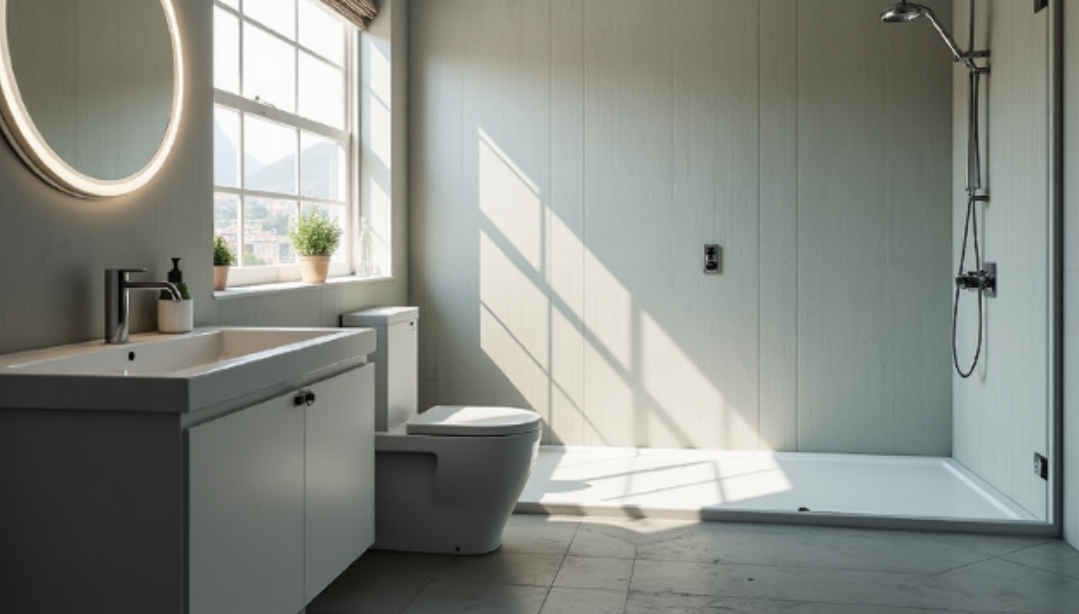
Persistent bathroom dampness isn’t just an aesthetic issue—it’s a signal that your indoor environment is underperforming. From elevated humidity levels to hidden ventilation flaws, a damp bathroom can quickly escalate into mold growth, structural deterioration, and ongoing maintenance costs. This guide breaks down the root causes, actionable fixes, and smart upgrades to future-proof your bathroom against moisture.
1. Understanding Why Bathroom Dampness Happens
Bathroom moisture builds up when humidity has nowhere to go. After every shower, steam lingers in the air, condenses on cold surfaces, and settles into grout lines, paint, and fixtures.
Common culprits include:
- Poor or inadequate ventilation
- Long, hot showers that spike humidity
- Cold surfaces cause rapid condensation
- Plumbing leaks (visible or concealed)
- Inappropriate wall or floor materials
- Blocked exhaust vents
A consistently damp bathroom typically means multiple triggers are interacting—so the solution must be holistic, not just surface-level.
2. Poor Ventilation: The #1 Reason for Persistent Dampness
Bathrooms without proper airflow trap moisture long after showers end. Even when a space feels “dry,” humidity often remains embedded in walls and ceilings.
How to Fix Ventilation Issues
- Install or upgrade an exhaust fan
- Ensure the fan vents outdoors (not into the ceiling)
- Keep the fan running for 15–20 minutes post-shower
- Add a window or louvered panel if structural design allows
- Keep bathroom doors slightly open for cross-ventilation
If your bathroom frequently fogs up or the mirror stays misty for too long, airflow is almost always to blame.
3. Condensation From Cold Surfaces
When warm steam comes into contact with cold tiles or windows, condensation forms immediately. Over time, this cycle leads to damp corners, peeling paint, and mildew.
What You Can Do
- Add insulation behind external bathroom walls
- Use heated towel rails or underfloor heating
- Warm your bathroom slightly before showers
- Apply anti-condensation paint
But there’s another subtle factor people often overlook—your choice of bathroom finishes. And the moment you start exploring bathroom surface options, you’ll discover something interesting hidden beneath the obvious. Explore the sophistication of premium tiles for bathroom and how the right materials can reduce moisture retention and boost durability.
4. Hidden or Slow Plumbing Leaks
Leaks often go unnoticed until damp patches appear. A small pipe drip can elevate humidity for months without visible signs.
How to Detect Leaks
- Look for bubbling paint or swollen wood
- Check behind toilet bases and around taps
- Monitor unexplained water bill increases
- Inspect for persistent wet spots on grout
- Use a moisture meter near suspicious areas
Repairing leaks quickly is essential because moisture trapped behind walls can turn into mold colonies within 48 hours.
5. Ineffective Bathroom Materials
Some surfaces trap moisture more than others. Using absorbent or low-quality materials accelerates dampness and makes cleaning harder.
High-performing materials to consider:
- Glazed ceramic tiles
- Porcelain tiles
- Natural stone (sealed properly)
- Moisture-resistant paints
- Water-sealed wood panels
And once you start comparing durability levels, finishes, and maintenance requirements, something surprising becomes clear—there’s a smarter way to source higher-quality materials without the usual hassle. Elevate your remodeling strategy with a streamlined way to buy tiles online from curated collections that handle moisture better and enhance long-term performance.
6. Excess Moisture From Long, Hot Showers
The longer your showers, the greater the steam output—and the faster your bathroom saturates with moisture.
Quick Fixes
- Take shorter or cooler showers
- Use a squeegee on walls afterward
- Switch to a high-efficiency showerhead
- Open windows during and after bathing
But this also introduces a design opportunity. When you study how moisture reacts to different surfaces, you start noticing patterns—some textures repel water efficiently, while others absorb it instantly. This leads to a deeper understanding of material science. Dive deeper into understanding different types of tiles and their moisture-handling capabilities to make more resilient renovation choices.
7. Lack of Regular Maintenance
Even a well-designed bathroom becomes moisture-prone without upkeep. Dirt, soap scum, and expired sealants can trap humidity and feed mold.
Essential Maintenance Tasks
- Reseal grout every 12–18 months
- Clean exhaust fans quarterly
- Remove limescale from showerheads
- Deep-clean tiles with non-abrasive solutions
- Replace worn-out caulking
Bathroom maintenance isn’t just cosmetic—it directly impacts humidity control and prevents structural damage.
8. Structural Issues or Poor Layout
Bathrooms built without proper drainage gradients or with insufficient spacing between fixtures can cause moisture to accumulate in stagnant zones.
Signs of layout flaws:
- Water is pooling near the shower area
- Floor slope directing water away from the drain
- No airflow movement from the door to the exhaust
- Fixtures positioned too close to walls
Fixing these issues may require professional intervention, but addressing them early can prevent long-term humidity problems.
9. How to Create a Moisture-Resistant Bathroom (Pro Tips)
To future-proof your bathroom:
Adopt These Best Practices
- Use high-performance, moisture-resistant building materials
- Install proper ventilation and heating systems
- Improve drainage angles during renovations
- Add motion-sensor fans or humidity-sensing ventilation
- Choose tiles and finishes designed for wet zones
- Maintain your bathroom regularly
The goal is to create an environment where steam dissipates quickly and surfaces repel rather than absorb moisture.
Conclusion
A perpetually damp bathroom isn’t normal—and it’s not something you should ignore. By pinpointing the root cause, upgrading ventilation, choosing better materials, and committing to regular maintenance, you can transform your bathroom into a dry, healthy, and long-lasting space. The solutions are straightforward once you understand how moisture behaves and how your environment responds to it.