

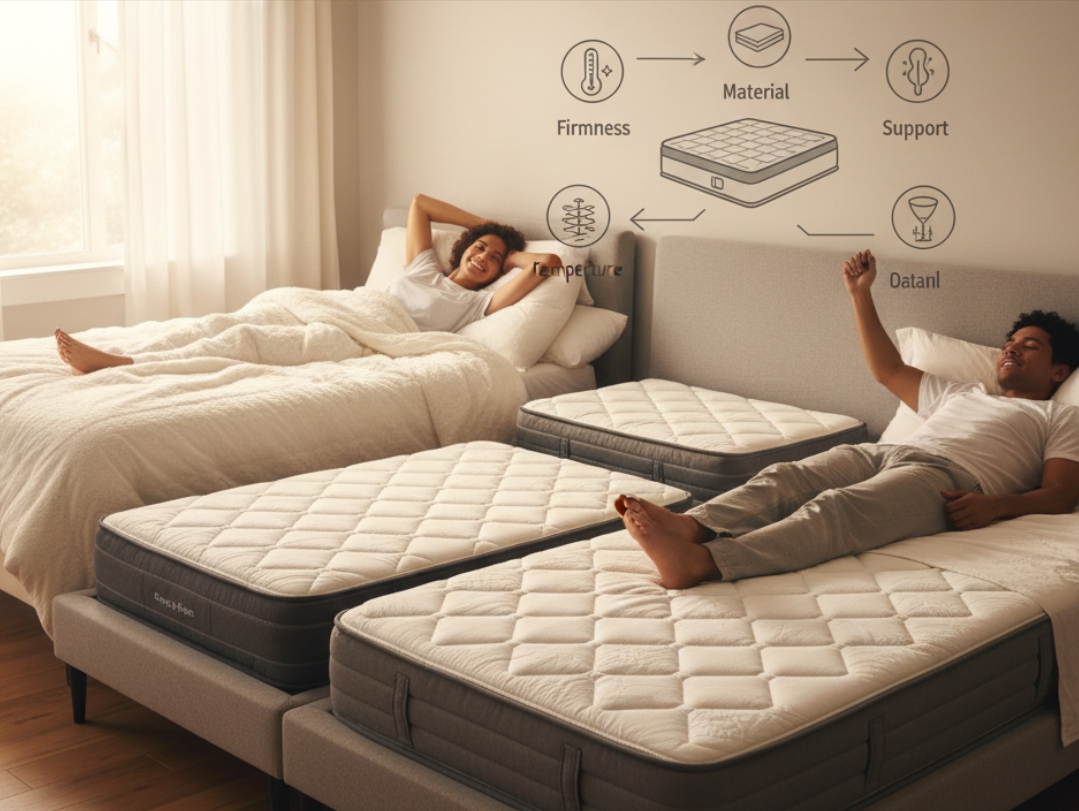
Finding the right mattress is crucial to achieving restorative sleep. With so many types of mattresses and features available today, the task can seem overwhelming. It’s important to select a mattress that not only fits your comfort preferences but also addresses any specific sleep needs you may have. Factors such as sleeping position, body weight, and any existing health issues play critical roles in determining the right mattress for you.
Before beginning your search, it’s a good idea to educate yourself about various mattress types and their unique benefits. If you are looking for options from a reputable and award-winning mattress company, you can find valuable insights to guide your decision.
This blog will outline key factors to consider, helping you to navigate your mattress-buying journey and ultimately select the mattress that best fits your individual sleep requirements.
Assess Your Sleeping Position
Your sleeping position is one of the most significant factors that should influence your mattress choice. Sleepers can generally be categorized into three main types: side sleepers, back sleepers, and stomach sleepers. Each position comes with specific support and comfort needs. For example, side sleepers benefit from softer mattresses that relieve pressure on the shoulders and hips, while back sleepers typically require firmer support to maintain spinal alignment.
Stomach sleepers generally need a mattress with moderate firmness to avoid sinking too deeply, which can lead to back strain. Identifying your primary sleeping position will help narrow down your options and ensure you select a mattress that provides the necessary support and comfort.
Consider Your Body Weight
Body weight plays a crucial role in how a mattress feels and performs. Heavier individuals may require a firmer mattress to support their weight effectively, while lighter individuals might find softer options more comfortable. Generally, individuals under 130 lbs may prefer softer mattresses, as they provide a plush feel that contours to the body better.
Conversely, those weighing over 230 lbs often benefit from firmer mattresses that offer additional support and prevent excessive sinking. Additionally, your body weight can affect how well a mattress retains its shape over time. Understanding how your weight interacts with mattress materials will help you find a product that creates a comfortable sleep environment suited to your needs.
Evaluate Material Types
Mattresses are typically made from various materials, including memory foam, innerspring, and hybrid constructions. Memory foam mattresses conform to your body shape, providing exceptional support and reducing pressure points, making them ideal for those with joint issues. However, they may retain heat, making them less suitable for hot sleepers unless they feature cooling technology.
Innerspring mattresses offer a bouncy feel and good airflow, which can help keep you cool during sleep. Hybrid mattresses combine the support of innerspring coils with the comfort of foam, making them versatile options for a variety of sleep preferences. Identifying which materials appeal to you can streamline the selection process and help you find a mattress that suits your comfort needs.
Understanding Firmness Levels
Firmness levels are another vital consideration when selecting a mattress. Each individual’s preference for firmness depends on their sleeping position and personal comfort requirements. Firmness typically ranges from soft to extra firm, and understanding the scale can assist you in narrowing down your options.
People who sleep on their side often prefer a soft to medium firmness level, which cushions the body’s curves and alleviates pressure. Back sleepers usually find medium to firm firmness ideal for spinal alignment and back support. Stomach sleepers typically benefit from firm mattresses to prevent sinking. Many reputable retailers provide detailed firmness ratings, so look for those that suit your needs best.
Account for Any Health Issues
If you have specific health issues, it’s crucial to factor those into your mattress choice. Conditions like arthritis, back pain, or sleep apnea require particular attention to spinal alignment and pressure relief. Memory foam mattresses are often recommended for joint pain sufferers because of their contouring properties, which help alleviate pressure points.
For those with allergies, hypoallergenic materials or mattresses designed to resist dust mites are advisable. Additionally, consider mattresses with cooling features if you experience night sweats or overheating. Identifying your health needs will ensure you choose a mattress that not only enhances comfort but also contributes positively to your overall well-being.
Utilize Sleep Trials
Once you have narrowed down your options, look for retailers that offer sleep trials. Many quality mattress companies provide this option, allowing you to test the mattress in your home for an extended period. This trial gives you the chance to experience how well the mattress meets your comfort and support needs over several nights.
During the trial period, pay attention to how your body responds. If you find yourself waking up with aches or discomfort, it may indicate that the mattress is not suitable for you. Make the most of this opportunity to ensure your purchase aligns with your sleep preferences before making a final commitment.
Consult Customer Reviews
Reading customer reviews can provide valuable insights and help you make a more educated decision. Genuine reviews from other buyers can highlight strengths and weaknesses that manufacturers often don’t mention. For instance, reviews may shed light on whether the mattress retains heat or whether it helps alleviate back pain.
Look for reviews that mention specific use-cases similar to your situation, as this can offer a more relatable perspective. Additionally, examining the reputation of the brand and retailer can ensure quality assurance. Take time to assess various opinions, which can significantly aid in selecting a mattress that truly meets your needs.
FAQs
How do I determine my preferred sleeping position?
Most people instinctively know their sleeping position. Consider how you feel most comfortable whether on your side, back, or stomach while sleeping.
What firmness level is possible for side sleepers?
Side sleepers generally benefit from soft to medium firmness levels, which provide adequate pressure relief on the hips and shoulders.
Can I return a mattress if it doesn’t suit me?
Many retailers offer sleep trials, allowing you to return or exchange a mattress if it doesn’t meet your preferences.
How does weight affect mattress selection?
Heavier individuals often require firmer mattresses for adequate support, while lighter people may prefer softer options.
Is customer feedback reliable?
Genuine customer reviews provide valuable insights into mattress performance and can help you make a more informed decision.
Conclusion
Finding the right mattress is crucial for achieving quality sleep and maintaining overall health. By assessing your sleeping needs, understanding mattress types, and considering factors like firmness and health issues, you can make informed decisions tailored to your needs.
Utilizing sleep trials and customer reviews will further enhance your journey, ensuring you choose a mattress that provides optimal comfort and support. With this simple guide, you are now ready to start your mattress buying journey with confidence, leading you to a better night’s sleep. Happy mattress shopping!