
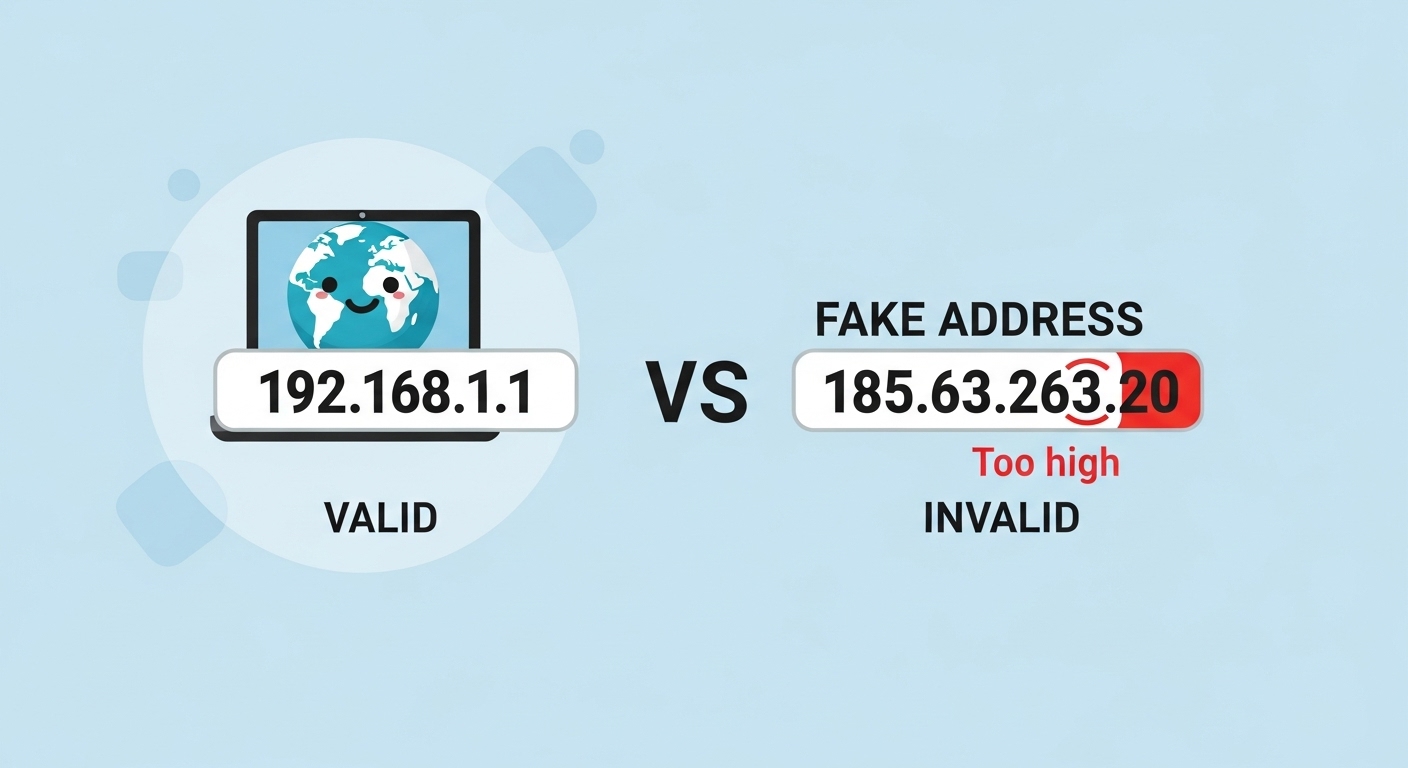
Imagine the internet is one giant city, and every phone, laptop, and smart TV has its own home address. That address is called an IP address. Without it, your messages, videos, and games would never reach you. The most common type of IP address today is called IPv4, and it always looks like four small numbers separated by dots, such as 192.168.1.1 or 8.8.8.8.
Now look at 185.63.263.20. At first glance it looks normal, right? Wrong. This address is completely fake and can never exist on the real internet. In this simple article, written in the easiest English possible, you will learn exactly why it is impossible, how to spot any fake IP in five seconds, and why scammers love to use numbers like this to scare people.
The One Golden Rule Every IP Must Follow
Here is the biggest secret of the internet: each of the four numbers in an IPv4 address must be between 0 and 255. Nothing more, nothing less. That’s it. No exceptions.
Why 255? Long ago, when the internet was created, engineers decided to use 8 bits for each number. Eight bits can hold 256 possible values (from 0 to 255). That rule has never changed.
So let’s check 185.63.263.20 together:
First number: 185 → okay (less than 255) Second number: 63 → okay Third number: 263 → TOO BIG! Fourth number: 20 → okay
Because 263 is bigger than 255, this address breaks the golden rule. It is like trying to mail a letter to “123 Main Street, Apartment 999”. That apartment does not exist, and the post office will throw the letter away. Computers do the same with fake IPs.
Where Do People See This Fake Address?
Even though 185.63.263.20 can never work, you might still see it. Here are the most common places:
Hollywood movies and TV shows use fake IPs so they don’t accidentally show a real person’s address on screen. YouTube tutorials and programming books use made-up examples so students don’t connect to real servers by mistake. Scammers send fake warning emails that say “Your computer was hacked from IP 185.63.263.20 – pay Bitcoin now!” They know most people will not check if the number is real. Old company documents sometimes copy the same wrong example again and again without anyone noticing.
How to Check Any IP Address Yourself (Takes Only 10 Seconds)
You do not need to be a computer expert. Just follow these three baby steps:
Step 1: Look at the four numbers separated by dots. Step 2: Ask yourself one question for each number: “Is it 0 to 255?” Step 3: If even one number is bigger than 255, shout “FAKE!” and smile.
Examples:
192.168.0.1 → all numbers okay → real format 8.8.8.8 → Google’s real DNS server → valid 185.63.263.20 → 263 is too big → 100% fake 10.500.1.1 → 500 is too big → fake 255.255.255.255 → highest possible → valid (special use)
What Happens If You Try to Use a Fake IP?
Open your computer right now and type this in the command window:
ping 185.63.263.20
You will see “Request timed out” or “Destination host unreachable”. That means no device on Earth has this address. It is empty space on the internet map.
The Future: IPv6 Addresses
We are slowly running out of IPv4 addresses, so the internet is moving to IPv6. Those addresses look totally different, with letters and colons, like this:
2001:0db8:85a3:0000:0000:8a2e:0370:7334
You will never see dots and four numbers in IPv6. So if anyone shows you something like 185.63.263.20 and says it is modern, they are lying twice!
How Scammers Use Fake IPs to Scare You

Every week, thousands of people receive messages like this:
“URGENT SECURITY ALERT! Your bank account was accessed from IP 185.63.263.20 Location: Russia Click here to secure your money!”
Remember three golden safety rules:
Real hackers hide their IP address. They never send it to you. Any IP with a number above 255 is fake. Close the email and laugh. Never click links or pay money because of an IP warning.
Quick Reference Table: Valid vs Invalid IPs
| IP Address | Valid? | Reason |
|---|---|---|
| 192.168.1.1 | Yes | All numbers 0–255 |
| 8.8.8.8 | Yes | Google public DNS |
| 172.16.254.1 | Yes | Common private network |
| 185.63.263.20 | No | 263 > 255 |
| 99.999.1.1 | No | 999 > 255 |
| 10.0.0.300 | No | 300 > 255 |
Final Words: You Are Now Smarter Than Most Adults
You now know more about IP addresses than 99% of people on Earth. The next time someone shows you 185.63.263.20 or any strange number, you can smile and say:
“That’s fake. The third number is bigger than 255. Nice try!”
Disclaimer: This article is for learning only. It does not promote, sell, or advertise anything. All examples, numbers, and IP addresses are made-up and not connected to any real person or company. The writer is not responsible for how anyone uses this information. Always stay safe and check facts before believing messages you see online.
Explore More
- How to Spot Misleading SEO Phrases Like ‘Contact Emails Jackman MasterRealtySolutions’
- Is ‘Where Is Wacozumi Sold?’ a Misleading Keyword or a Real Product Inquiry?
- Schoology Alfa: Unmasking a Misleading Keyword Behind the Popular LMS

Jared H. Furness is a well-known sports analyst and writer. He is known for his skill in player stats in sports like football, basketball, and baseball. Jared has a sharp eye for detail and a passion for uncovering stories behind the numbers. He is known for writing detailed, SEO-friendly articles. They attract both fans and professionals.
His work often appears on major platforms. It offers detailed breakdowns of player performances, game highlights, and strategic insights. Jared makes complex statistics easy to understand and engaging. His articles, like the Boston College Eagles vs. UVA game analysis and the Arizona Diamondbacks vs. Miami Marlins match, show his talent for mixing data analysis with engaging stories.
Jared is known for producing human-written, plagiarism-free content. His pieces rank well on Google. This helps fans and analysts easily find his expert views on key matchups. Jared H. Furness raises the bar in sports stats journalism. He highlights Bobby Witt Jr.’s amazing plays and key moments in EuroLeague basketball.