
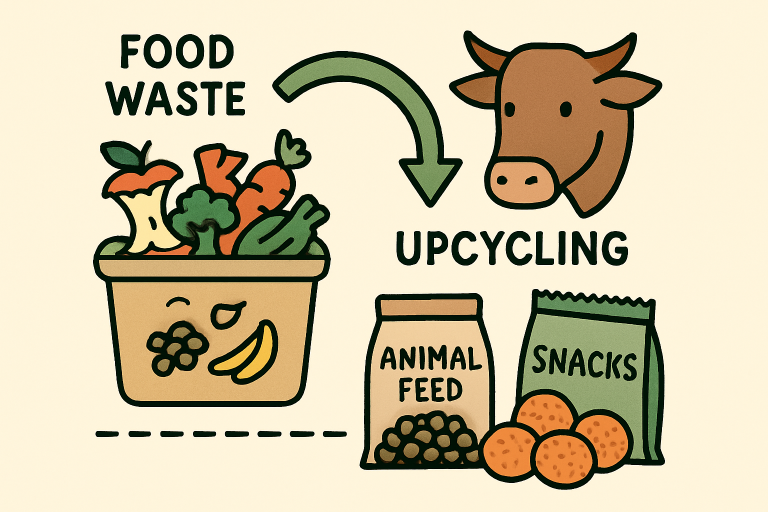
The food industry is facing mounting pressure to reduce the significant volume of byproducts and waste it produces annually. Managing this waste in environmentally conscious ways is crucial, not only for the planet but also for industries seeking new avenues of value creation. As a leader in food byproduct recycling innovations, GF Commodities represents how industry partners can help transform what was once considered waste into valuable resources.
Sustainable management of food byproducts supports both ecological stewardship and business resilience. Through effective recycling and upcycling initiatives, companies are realizing substantial savings and contributing to the goals of a circular economy. By integrating green practices, the sector is shaping a future that prioritizes resource conservation and environmental health.
Food waste not only burdens landfills but also contributes to harmful greenhouse gas emissions, exacerbating the challenges associated with climate change. Industry innovators and forward-thinking companies are seeking out new technologies and collaborative approaches to close the loop on food systems and reduce dependence on traditional waste disposal methods.
Globally, the movement toward zero-waste food production is gaining traction. And as sustainable practices take root, the ripple effects are visible in consumers’ choices and in the expectations placed on food producers and suppliers for responsible production and waste management.
The Importance of Sustainable Practices
Sustainable practices are crucial in minimizing the environmental impact of food waste. According to the United Nations Environment Programme, food waste accounts for 8-10% of global greenhouse gas emissions annually. By diverting organic matter from landfills and repurposing byproducts, businesses can significantly lessen their environmental footprint.
Incorporating eco-friendly methods enhances the efficient use of natural resources, including water, soil, and energy. This not only conserves critical assets for future generations but also positions companies as sustainability leaders, boosting brand reputation in an increasingly environmentally conscious marketplace.
Innovative Technologies in Food Waste Management
Breakthrough technologies are powering the shift toward sustainable food systems. Companies have started employing advanced sorting systems, AI algorithms, and closed-loop recycling models. One notable example is Whole Foods Market’s partnership with Mill, which leverages an AI-powered system to convert fruit and vegetable scraps into nutrient-rich chicken feed. These initiatives cut waste volumes by as much as 80%, dramatically curtailing landfill input and associated emissions. The result is a cleaner, more efficient food supply chain that integrates sustainability at every step.
Internet of Things (IoT) devices, such as smart sensors, are also playing a growing role, helping producers and retailers to audit and minimize food waste in real time. These technological advancements generate actionable insights that can further optimize production processes and enhance resource allocation, while also supporting compliance with increasingly stringent environmental regulations.
Upcycling Food Byproducts
Upcycling is a transformative process that turns discarded food byproducts into high-value new products. Innovative brands like Barnana provide a model for this movement by collaborating with regenerative farmers to source bananas and plantains that would otherwise be discarded due to traditional ripeness standards. These raw materials are then transformed into snack foods, such as chips and bites, thereby extending the lifecycle of agricultural produce and supporting more sustainable supply chains.
For emerging businesses and established players alike, upcycling presents opportunities to access new consumer markets, particularly as demand for sustainable and upcycled foods continues to accelerate. According to Food Dive, the upcycled food market is thriving as more consumers prioritize products with a reduced carbon footprint and strong sustainability claims.
Economic Benefits of Sustainable Practices
Embracing sustainable operations delivers clear economic benefits for food producers and retailers. The global upcycled food market was valued at $59.2 billion in 2024, with a projected robust 7.6% CAGR through 2034. This growth illustrates the profitability of waste-reducing measures while highlighting their scalability across both large and small enterprises.
Furthermore, diverting food byproducts away from disposal reduces costs associated with landfill tipping fees and unlocks new revenue streams through the sale of upcycled goods. Investments in sustainability yield returns not only through direct savings but also through increased consumer trust and access to new markets, particularly as regulatory frameworks such as extended producer responsibility (EPR) become more prevalent worldwide.
Collaborative Efforts for Sustainability
No single company can address food waste in isolation. Successful waste reduction depends upon collaborative partnerships that connect food producers, retailers, distributors, and technology providers. For example, Divert, Inc. partners with grocery retailers to utilize RFID technology, helping to track and reduce food waste by 9% across multiple locations. These multi-stakeholder collaborations build industry-wide momentum for sustainability and accelerate the adoption of best practices.
Non-profit organizations, trade associations, and governmental agencies further amplify impact by sharing research, establishing guidelines, and creating incentives for sustainable behavior. A collective approach ensures the scalability of solutions and paves the way for systemic change.
Challenges and Future Directions
Despite impressive progress, significant barriers remain on the journey to zero-waste food systems. Many industry stakeholders still prioritize yield over efficiency, and the lack of infrastructure for comprehensive waste utilization slows progress. Addressing these challenges calls for both innovative thinking and robust policy development, ensuring support for investment in recycling technology and waste valorization programs.
Future efforts must also embrace education and advocacy, equipping businesses of all sizes with the knowledge and resources needed to implement circular economy principles. Broader consumer awareness and continued corporate leadership will be vital to transforming today’s experimental pilot projects into tomorrow’s mainstream best practices.
Conclusion
Embracing sustainable practices in the food byproduct industry is no longer a choice but a necessity for environmental, economic, and reputational resilience. Through a combination of advanced technology, innovative upcycling efforts, and collaborative partnerships, the industry is gradually setting new standards for sustainability. A commitment to these values will ensure a future in which food production generates minimal waste, creates new value streams, and respects planetary boundaries for generations to come.

Jared H. Furness is a well-known sports analyst and writer. He is known for his skill in player stats in sports like football, basketball, and baseball. Jared has a sharp eye for detail and a passion for uncovering stories behind the numbers. He is known for writing detailed, SEO-friendly articles. They attract both fans and professionals.
His work often appears on major platforms. It offers detailed breakdowns of player performances, game highlights, and strategic insights. Jared makes complex statistics easy to understand and engaging. His articles, like the Boston College Eagles vs. UVA game analysis and the Arizona Diamondbacks vs. Miami Marlins match, show his talent for mixing data analysis with engaging stories.
Jared is known for producing human-written, plagiarism-free content. His pieces rank well on Google. This helps fans and analysts easily find his expert views on key matchups. Jared H. Furness raises the bar in sports stats journalism. He highlights Bobby Witt Jr.’s amazing plays and key moments in EuroLeague basketball.