
Concrete pumps are fundamental to construction projects, enabling efficient placement of concrete across diverse terrains. From high-rise buildings to residential constructions, selecting the correct type of concrete pump can significantly influence project timelines and budgets. Understanding the distinct types available today helps ensure optimal performance and resource allocation. This guide provides insights into various concrete pump types, their unique advantages, and factors to consider when choosing the right pump for your needs.
Main Types of Concrete Pumps and Their Advantages
Concrete pumps come in several forms, each tailor-made for specific construction requirements. Choosing the right pump involves understanding its capabilities and the unique benefits it brings to a project. Here, we explore the main concrete pump types, highlighting their core strengths and best applications.
Boom Concrete Pumps – Powerful and Versatile
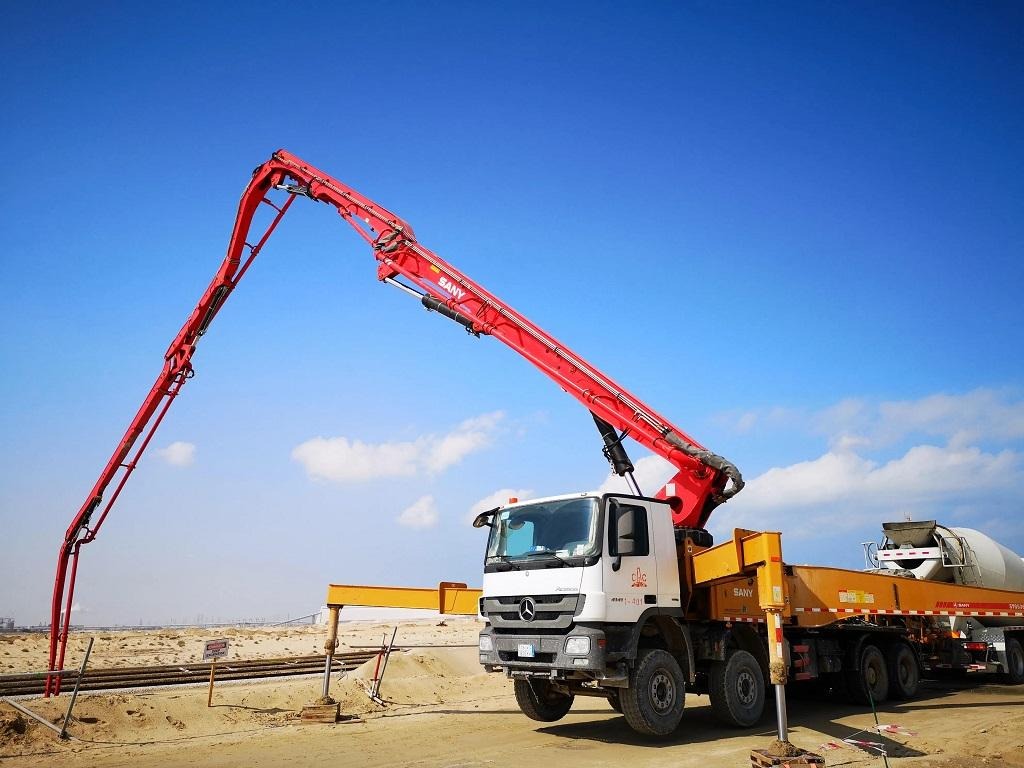
Boom concrete pumps feature a multi-sectioned robotic arm that facilitates precise concrete placement over long distances. Ideal for large-scale projects, these pumps effortlessly reach high elevations and navigate complex landscapes. Their versatility is evident in projects like skyscrapers and expansive infrastructural developments. The extended reach of the boom arm allows operators to deliver concrete efficiently, reducing manual labor and expediting project completion. Furthermore, boom pumps are available in various sizes, providing flexibility in addressing site-specific challenges and ensuring safe operations in busy environments.
Line Concrete Pumps – Flexible for Tight Spaces
Line concrete pumps utilize steel or rubber hoses, allowing concrete delivery over extended horizontal or vertical distances. These pumps are perfect for small-scale projects and sites with restricted access. Their ability to maneuver through tight spaces makes them indispensable for residential constructions and renovations requiring precise concrete placement. The compact design facilitates easy transport and setup, minimizing delays and enhancing project efficiency. Operators appreciate the streamlined operation of line pumps, which adapt to diverse site conditions and provide consistent performance without the need for extensive structural modifications.
Trailer Concrete Pumps – Portable and Cost-Effective
Designed for mobility, trailer concrete pumps are mounted on a trailer for easy transport and setup. Ideal for medium-sized projects, these pumps balance cost-efficiency with excellent performance. They’re prized for their ability to handle various concrete mixes and deliver consistent results. Operators can quickly deploy trailer pumps to different sites without extensive labor, ensuring projects remain on schedule. Their adaptability to different construction scenarios makes them a favorite among contractors seeking reliability combined with affordability, further enhanced by low maintenance demands.
Stationary Concrete Pumps – Fixed High-Capacity Units
Stationary concrete pumps deliver high volumes of concrete from a fixed position, perfect for large-scale projects requiring extensive concrete pouring. Despite their immovable nature, these pumps provide unmatched power and capacity, making them suitable for long-term, substantial developments like bridge constructions and large structures. Their ability to pump concrete over vast distances ensures efficient operations even in challenging environments. Operators rely on stationary pumps for their durability and efficiency, benefiting from consistent high-capacity output without frequent adjustments or repositioning needs.
Specialized and Other Concrete Pump Types
Beyond standard concrete pumps, specialized variants cater to unique construction needs. Examples include rail-mounted pumps and those designed for tunneling projects. These pumps address specific challenges by offering customized solutions for complex operations. Specialized pumps are engineered to perform exceptionally under demanding conditions, providing tailored functionality for intricate projects. This approach ensures that every construction requirement, no matter how specialized, can be met with precision and efficiency, underscoring the adaptability and innovation within concrete pumping technology.
How to Choose the Right Concrete Pump for Your Project?
Selecting a concrete pump entails evaluating project details to ensure efficiency and cost-effectiveness. Considering scale, site conditions, and pump features aligns resources, optimizing performance without unnecessary expenditure.
Assess Project Scale and Requirements
The scale of your project dictates concrete pump selection. Large-scale undertakings benefit from high-capacity boom or stationary pumps, while smaller projects may require flexible line or trailer pumps. Understanding project demands helps ensure consistent concrete delivery, optimizing timelines. Evaluating the necessary reach, volume, and site logistics grounds your decision in practicality, ensuring that resource allocation matches project dimensions. Engage stakeholders early in planning to ascertain precise requirements, facilitating informed choices that uphold quality standards and budget constraints.
Match Pump Type to Site Conditions
Site-specific conditions influence the choice of pump, necessitating careful evaluation. Tight spaces demand line pumps, while expansive locations may better accommodate boom or stationary variants. Consider accessibility, terrain, and environmental factors to select the optimal pump. This alignment guarantees operational efficiency and reduces downtime, enhancing overall project delivery within stipulated timelines. Collaborate with equipment experts to explore options, ensuring adaptations fit the site while maintaining rigorous safety and efficiency benchmarks that support project goals.
Conclusion
Concrete pumps are pivotal in modern construction, their diverse types providing tailored solutions for varied project needs. Understanding these options enhances decision-making, facilitating efficient resource use and project execution. By evaluating project scale, requirements, and site conditions, stakeholders can select the most suitable pump type, ensuring streamlined operations at optimal costs. Whether dealing with confined residential spaces or expansive infrastructural projects, the right concrete pump empowers teams to achieve precision, efficiency, and quality, essential ingredients in successful construction endeavors.

Jared H. Furness is a well-known sports analyst and writer. He is known for his skill in player stats in sports like football, basketball, and baseball. Jared has a sharp eye for detail and a passion for uncovering stories behind the numbers. He is known for writing detailed, SEO-friendly articles. They attract both fans and professionals.
His work often appears on major platforms. It offers detailed breakdowns of player performances, game highlights, and strategic insights. Jared makes complex statistics easy to understand and engaging. His articles, like the Boston College Eagles vs. UVA game analysis and the Arizona Diamondbacks vs. Miami Marlins match, show his talent for mixing data analysis with engaging stories.
Jared is known for producing human-written, plagiarism-free content. His pieces rank well on Google. This helps fans and analysts easily find his expert views on key matchups. Jared H. Furness raises the bar in sports stats journalism. He highlights Bobby Witt Jr.’s amazing plays and key moments in EuroLeague basketball.