

Image by THAM YUAN YUAN from Pixabay
Storage incidents in New Zealand warehouses and workshops trace back to three root causes: poor layout, wrong equipment, and missing controls. I’ve seen facilities transformed from high-risk environments into compliant, efficient operations simply by addressing these fundamentals systematically. This guide gives you the blueprint to do exactly that.
Under the Health and Safety at Work Act (HSWA), you are a Person Conducting a Business or Undertaking (PCBU). You must ensure the health and safety of workers and others so far as is reasonably practicable.
Storage choices sit at the heart of this duty. The Hazardous Substances Regulations 2017 add specific triggers for cabinets, signage, secondary containment, and certifications that affect your everyday storage decisions.
Understanding Your Legal Duties and Risk Categories

Treat storage as a critical safety system where legal duties, hazard types, and controls all connect.
Your duty of care under HSWA applies to every storage decision. The General Risk and Workplace Management (GRWM) Regulations require documented risk assessments, safe systems of work, and training scaled to the hazards. Evidence matters: policies, inspections, and corrective actions show you have taken reasonably practicable steps.
Storage risks fall into four main categories: gravity, impact, chemical, and traffic interactions between people and machines.
Gravity hazards involve items falling from shelves or unrestrained drums toppling. Impact hazards occur when forklifts strike racking uprights or when equipment hits pedestrians. Chemical hazards include fires, toxic exposures, and dangerous reactions between incompatible substances.
Apply the hierarchy of controls to each risk type. Eliminate hazards where possible, then isolate, engineer controls through compliant cabinets and barriers, and finally add administrative controls and personal protective equipment (PPE).
WorkSafe NZ expects visible safe working loads on all storage equipment, competent installation, routine inspections, and maintained signage as practical demonstrations of compliance.
Map Your Inventory and Storage Zones First
An accurate hazardous substances inventory anchors your storage layout, emergency planning, and compliance obligations.
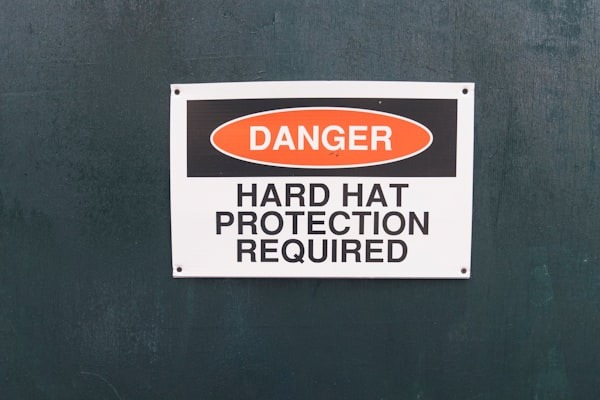
Before selecting any equipment, know exactly what you store and where it sits. Every NZ workplace holding hazardous substances must maintain an up-to-date inventory accessible to emergency services that lists product names, UN numbers, Hazardous Substances and New Organisms (HSNO) classifications, maximum quantities, container sizes, and exact storage locations.
Attach a current Safety Data Sheet (SDS) for each hazardous substance, regardless of quantity. Workers must have ready access and understand the risks and controls described. Review SDSs at least every five years and update them sooner when new information arises or suppliers change formulations.
Segregation and Cabinet Distances
Never co-store incompatible classes. Separate acids from alkalis, oxidisers from organics, and any reactive pairs identified in SDSs. Indoor cabinet-specific distances matter: toxic cabinets require 3 metres separation if aggregate limits are exceeded, while corrosive cabinets need 5 metres separation if more than one cabinet is present.
Signage Requirements
Once WorkSafe thresholds are triggered, install hazardous substance signs at every vehicle and pedestrian entrance to buildings and at room or outdoor store entrances. Signs must remain legible from at least 10 metres in varied conditions. Update them whenever quantities, classes, or layouts change.
Industrial shelving
Well-designed shelving systems reduce manual handling injuries, product damage, and housekeeping issues in a single step.
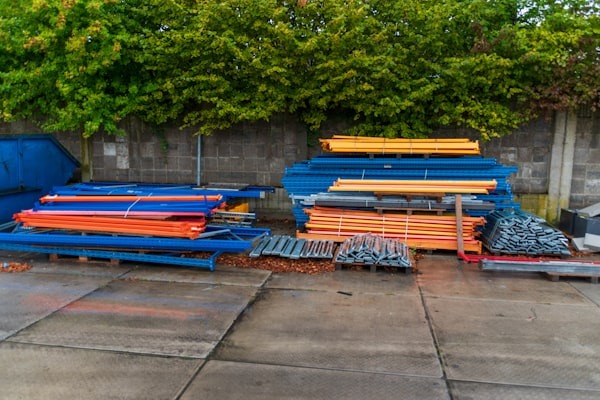
Shelving failures typically occur when loads are unknown or units are not anchored properly. Specify heavy-duty uprights matched to your inventory profile, with shelf materials appropriate for the load, such as steel or galvanised finishes for durability and chemical resistance where relevant. For small parts and mixed loads, compare bay widths, load ratings, and bolt-down kits against the options at industrial shelving to align shelf materials and configurations with your inventory profile.
Post shelf and bay safe working loads conspicuously. Standardise bin sizes to prevent overhang and snag hazards. Bolt shelving to structural slabs using manufacturer-approved anchors and add anti-sway bracing to prevent collapse from minor impacts.
Ergonomics and Loading Discipline
Place heavy and fast-moving items between thigh and shoulder height to reduce strain injuries. Reserve lower shelves for stable, heavier goods and keep light, bulky items higher. Use step platforms for higher pick faces, never pallet edges.
Label bin locations and use visual cues such as coloured shelf edges to prevent mis-stows that create overhang risks. Implement a two-person lift or mechanical aid policy for loads exceeding your site’s manual handling threshold.
Anchoring and Protection
Confirm slab thickness and edge distances before drilling. Fit end-stops where items could protrude into walkways and install barriers where pedestrians and trolleys intersect.
Audit shelves monthly for loosened anchors, bent components, or missing labels, and take damaged bays out of service immediately. To match bay widths, shelf materials, and bolt-down kits to your actual SKU mix, compare options, then standardise one specification across your site to simplify training and inspections.
Racking for Pallets: Design, Load Limits, and Inspections
Compliant pallet racking turns forklift work into a predictable, low-risk task instead of a daily gamble.
Pallet racking must be installed by a competent supplier, anchored to the floor, and configured according to AS 4084. Display safe working loads and configuration charts at operator eye level. Maintain adequate lighting for safe forklift approach and keep racking clear of electrical switchboards and fire equipment.
Loading Discipline
Centre pallets and maintain even load distribution across beams. Avoid deformed pallets that compromise seating.
Require forks to enter at least 75 percent of pallet depth and prohibit dragging pallets across beams. Never exceed rated load per level and per bay.
Inspection Rhythm
Operators should conduct pre-shift walk-arounds, checking for obvious damage or dislodged beams, and escalate issues immediately. Supervisors complete monthly walk-throughs using standard checklists with colour coding for damage severity per AS 4084. Arrange annual inspections by a competent person, document findings, isolate red risks, and schedule repairs promptly.
Hazmat storage cabinet
Correctly specified hazmat cabinets keep small packages of dangerous goods controlled, compliant, and easy to manage.
NZ rules set strict capacity, location, and separation limits for each class, so understanding them prevents costly non-compliance and protects your workers.
Flammable Liquids (Class 3.1)
Use packs no larger than 20 litres with no more than 250 litres per cabinet. Across multiple cabinets, stay within 750 litres per 250 square metres on ground floors and 250 litres per 250 square metres on upper floors.
Maintain 3 metres separation between cabinets. Select cabinets certified to AS 1940:2017 or BS EN 14470-1 with a 60-minute fire rating.
Toxic Substances (Class 6)
Each cabinet holds a maximum of 250 kilograms or litres total, containing no more than 25 kilograms or litres of 6.1A and 50 kilograms or litres of 6.1B. Cabinets must comply with AS/NZS 4452:1997. Locate them near hand-washing facilities and ensure they do not impede escape routes.
Corrosives (Class 8)
Each cabinet holds a maximum of 1,000 kilograms or litres total, with no more than 50 kilograms or litres of 8.2A and 250 kilograms or litres of 8.2B. Cabinets must meet AS 3780:2008. If more than one cabinet is present, either remain within aggregate limits or separate by at least 5 metres.
Display class pictograms, capacity, and emergency contact information on all cabinets. Provide absorbents and appropriate spill kits within quick reach. When you exceed minor quantities of flammables, corrosives, or toxics, step up to a compliant, spill-tested solution with documented certification, sizing guidance, and clearly posted compliant signage, such as a hazmat storage cabinet that provides the right sump capacity and separation distances for your room layout.
Secondary Containment and Spill Control
Secondary containment stops a minor spill turning into an environmental, fire, or slip incident that affects your whole site.
NZ regulations set class-specific threshold quantities for when secondary containment is required. For above-ground stationary container systems, containment capacity must be at least 110 percent of the largest container, and WorkSafe cannot approve less than 100 percent.
Sizing and Design
Design bunds, which are engineered spill containment areas, to exclude rainwater through covers or sumps, or provide routine pump-out with documented checks. For class 3.1 fuels and solvents, ensure bund imperviousness and fire resistance. Segregate incompatible substances and avoid penetrations that compromise containment.
Maintenance
Protect bund walls and liners from forklift and pallet jack impacts with bollards or wheel stops. Test and inspect bunds at defined intervals, and fix cracks or seal penetrations immediately.
Store absorbents, neutralisers, and spill kits nearby, and drill staff on immediate containment procedures.
Traffic and Layout: Separate People, Plant, and Storage
Clear separation between people, forklifts, and storage eliminates most serious warehouse injuries at very low cost.

Separate pedestrians and vehicles using dedicated walkways, gates, and barriers. Prefer one-way systems where possible and mark lanes clearly. Keep vehicle routes away from hazardous substance stores and protected building elements.
Install swing gates or self-closing barriers where pedestrians enter forklift zones. Provide convex mirrors and task lighting at blind corners. Document a traffic management plan, communicate it to all workers and contractors, and review it after any layout change or incident.
Your 30-Day Action Plan
A focused 30-day push can lift your storage controls from ad hoc fixes to a stable, auditable system.
Storage safety is a system requiring inventory accuracy, fit-for-purpose equipment, clear information, disciplined traffic management, and a predictable inspection rhythm. Assign owners, set a cadence for checks, and close gaps within a month.
In week one, update your inventory and SDS, fix signage gaps, and mark safe working loads on all shelves and racks. Week two, verify cabinet limits and separations, size and verify bunds, and stock spill kits. Weeks three and four, run training and drills, schedule your annual racking inspection, and plan any certification or notification steps. If tight aisles or bunded zones need bespoke guards or cages, engage architectural fabricators Christchurch so designs align with your traffic plans and containment layout.
Budget annually for replacement labels, guards, and maintenance to avoid deferred risk.
Custom steel guards and enclosures close the safety gaps that off-the-shelf products cannot reach in tight or complex layouts.
Standard catalogue guards and cages do not always fit real aisles, door thresholds, or bund edges. Custom fabrication solves these gaps quickly and effectively. Examples include bespoke bollards, end-of-rack protectors, aerosol mesh enclosures, chemical bund trays, handrails, and mezzanine pallet gates.
What to Specify
Define impact loads and deflection limits. Specify slab anchor types and edge distances. Choose galvanised finishes for wet or corrosive zones and appropriate colours for visibility.
Provide clear drawings showing floor penetrations, bund continuity, and egress lines. Use precise measurements and photos to reduce rework.
For Canterbury sites needing bespoke steel protection and enclosures that integrate cleanly with existing floors and aisles, partner with local fabricators to scope bollards, end-guards, bund trays, and mesh cages that actually fit.
Certification and Notification Triggers
Know exactly which quantities trigger certification so you can design storage that stays compliant instead of reactive.
A Location Compliance Certificate is required when quantities exceed thresholds such as more than 100 kilograms of LPG, more than 50 litres of petrol, or more than 250 litres of 60 percent nitric acid. Toxic and corrosive stores have additional thresholds that trigger Hazardous Substances Location (HSL) and certified handler requirements.
Notify WorkSafe at least 30 working days before commissioning a new hazardous substance location. Use the Hazardous Substances Calculator and QRS (Quantity Ratio Sum) method to combine multiple classes when checking thresholds. Keep certificates current and maintain documentation inspectors will request, including inventory, SDS, training records, layouts, and emergency response plans.
Routine Checks That Prevent Incidents
Short, regular checks catch small storage issues before they turn into injuries, fires, or enforcement notices.
Establish a predictable inspection rhythm. Monthly, check housekeeping, aisle clearance, label integrity, shelf and rack damage, cabinet seals, spill kit contents, and eyewash stations. Quarterly, review traffic plans, run drills, quiz staff on SDS understanding, and correct deviations.
Annually, arrange competent racking inspections, test emergency response plans, renew certificates, reconcile inventory against purchases, and retrain after changes or incidents. Keep an inspection log and corrective action register. Trend issues to target training or equipment changes and share learnings from near misses at toolbox talks.

Dorothy I. Johnson is the heart and soul of Flash Flyer Blog’s writing team. Dorothy loves storytelling and finds the extraordinary in everyday life. She has a unique voice for sharing travel stories, tech trends, wellness tips, and food finds. Her relatable style makes complex ideas easy to grasp. She also turns simple moments into captivating stories. Dorothy’s background and curiosity inspire her to make content that connects with readers. They can find either practical tips or new viewpoints in her work. When she’s not writing, she likes to explore new places. She experiments in the kitchen or dives into a new personal growth book.