
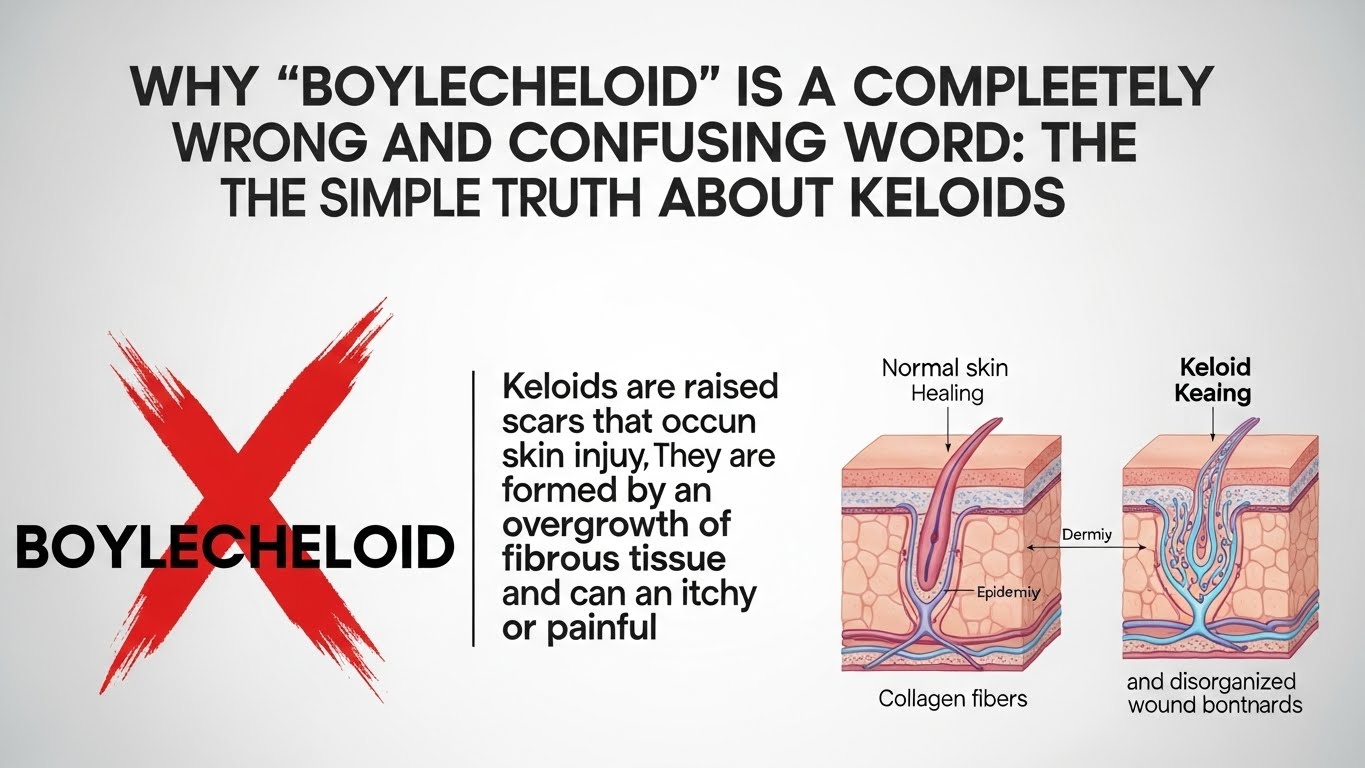
Have you ever seen a thick, shiny scar that keeps growing bigger and bigger? Many people on the internet call this problem “boylecheloid”, “boil keloid”, or “boyle cheloid”. You will find thousands of videos and blog posts using this name. It sounds like a real medical word, so most people believe it. The truth is much simpler: “boylecheloid” is not a real word at all. No doctor, hospital, or medical book in the whole world uses this name. It is just a mistake that started on the internet and now confuses millions of people.
This article is written in the easiest English possible. We will explain everything step by step so even a school child can understand. We will talk about what really happens to your skin, why the wrong name is dangerous, and how real doctors fix the problem.
“Boylecheloid” Is Just Two Words Mixed Together by Mistake
The word “boylecheloid” comes from joining two different skin problems.
The first word is “boil”. A boil is a painful red lump full of yellow pus. It happens when germs get inside the skin.
The second word is “keloid”. A keloid is a big, thick scar that grows too much.
Sometimes a person gets a boil. The boil heals, but later a very big scar grows in the same place. People see this and think, “Oh, this must be a special kind of boil-scar!” So they made up the name “boylecheloid”. That is how wrong names are born on the internet. In real hospitals, doctors never say this word. They only say “keloid scar” or “keloid that formed after a boil”. Using the made-up word only creates fear and confusion.
What Is a Keloid? (Explained Like You Are 10 Years Old)
When your skin gets hurt, your body works hard to fix it. It makes new skin tissue to close the hole. This new tissue is called a scar.
For most people, the scar is small and flat. It may be a little pink at first, then it becomes white or the same colour as the rest of the skin. After some months, you can hardly see it.
But for some people, the body does not know when to stop making new tissue. It keeps making more and more even after the wound is completely closed. The scar becomes thick, raised, and shiny. It grows outside the place where the injury was. This big, growing scar is called a keloid.
A keloid feels hard when you touch it. It can be pink, red, purple, brown, or very dark. It often itches a lot. Sometimes it hurts when something rubs against it. Keloids can stay the same size for years, or they can slowly become bigger and bigger.
Where Do Keloids Like to Grow?
Keloids can appear on any part of the body, but they love some areas more than others. The skin on these areas is pulled tight all the time, and doctors think that is one reason keloids form easily there.
The most common places are:
- The middle of the chest
- The shoulders
- The upper back
- The earlobes (very common after ear piercing)
- The cheeks and jaw (often after bad acne or chickenpox)
- The upper arms
If you already have one keloid, new ones can appear in other places even after very small cuts or scratches.
Who Gets Keloids Most Often?
Anyone can get a keloid, but some people have a much higher chance.
People with dark skin get keloids much more often. This includes African, African-American, Asian, and many Hispanic people. Doctors say 15 to 20 out of every 100 people with dark skin may form keloids at some point in their life. People with very light skin almost never get them.
Keloids also run in families. If your parents or brothers and sisters have keloids, you probably have the same body type that makes too much scar tissue.
Young people between 10 and 30 years old get keloids more than older people. After the age of 40, new keloids are rare.
What Is a Boil? (A Totally Different Problem)
A boil starts when germs (usually called staphylococcus) enter the skin through a hair root or tiny cut. Your body sends white blood cells to fight the germs. Dead germs and dead white cells mix together and make yellow or white pus.
The skin around the infection becomes red, swollen, hot, and very painful. After a few days, the boil forms a yellow “head”. Most boils burst by themselves and the pus comes out. Some need a doctor to make a small cut to let the pus drain.
Once all the pus is out and the infection is gone, the skin heals in one to three weeks. Usually only a small pink mark stays behind. In most people, this mark becomes flat and almost invisible after a few months.
Can a Boil Really Turn into a Keloid?
Yes, it can happen, but only in people whose body already makes too much scar tissue.
The boil is an infection. The infection finishes when the pus is gone. The skin is now completely healed. But in some people, weeks or months later, the healed area starts to grow thick and raised. That is the beginning of a keloid. The infection is long gone. There is no pus inside the keloid. It is only scar tissue.
So the correct way to say it is: “I had a boil, and now I have a keloid in the same spot.” It is not a “boylecheloid disease”. It is two separate things that happened one after the other.
Why the Wrong Name “Boylecheloid” Can Hurt You
When you search “boylecheloid” on the internet, you find many websites and videos that give very bad advice.
Some people say, “Keep squeezing it every day, the pus will come out.” But keloids have no pus! Squeezing only damages the skin and makes the keloid grow much bigger.
Some sell creams and oils that only work on normal scars. They do not help keloids at all, but they take your money.
A few dangerous videos even tell people to cut the keloid themselves with a blade or hot needle at home. This almost always makes the keloid come back ten times larger, and it can cause terrible infections.
When you use the correct word “keloid”, you find real information written by skin doctors and big hospitals. That information can really help you.
How Real Doctors Make Keloids Smaller and Flatter
There is no cream or home remedy that can remove a keloid completely. But doctors have many safe ways to make keloids much smaller, softer, and less itchy. Most people see very good improvement.
The most common and safest treatment is steroid injections. The doctor uses a tiny needle to put medicine straight into the keloid. You need one injection every four to six weeks. After a few injections, most keloids become 50 % to 80 % smaller and much flatter.
Another helpful treatment is silicone gel or silicone sheets. You put the gel or stick the sheet on the keloid every day for many months. It slowly makes the scar softer and flatter.
For small keloids, doctors can freeze them with very cold gas (cryotherapy). This makes the thick tissue die and fall off little by little.
Lasers are also used now. The laser light makes the keloid less red and less thick.
If the keloid is very big, the doctor may do surgery to cut it out. But surgery alone usually makes the keloid grow back even bigger. That is why doctors always give steroid injections or a few days of safe radiation right after the operation to stop it growing again.
New medicines like 5-FU or bleomycin are also used when normal steroid injections are not enough.
The earlier you start treatment, the better it works. Even very old keloids can become much better, but new ones answer faster.
How to Stop New Keloids from Forming
If you know your skin makes keloids easily, you can protect yourself.
Try not to get piercings or tattoos on the chest, shoulders, ears, or back. These places are the most dangerous for keloids.
If you need an operation, tell the surgeon that you form keloids. They can use special stitches and start silicone sheets the day the stitches come out.
Treat pimples gently. Never pick or pop deep acne. Big open wounds from popping pimples often turn into keloids.
After any cut or wound, keep it clean and covered while it heals. As soon as the skin is closed (no more open wound), start putting silicone gel twice a day for at least three to six months.
The Simple Truth You Should Remember
“Boylecheloid” is not real. It is just a wrong internet word. The real name is keloid. A keloid is an overgrowing scar. It is not dangerous to your health and it is not cancer, but it can make you feel unhappy about how it looks or feels.
You do not have to live with big, itchy keloids forever. Real skin doctors have many safe ways to make them much smaller and flatter. Stop searching for “boylecheloid” and start searching for “keloid treatment”. Talk to a dermatologist as soon as you can.
Disclaimer: This article is only for simple information and is not medical advice. I am not a doctor, and I cannot diagnose or treat any health problem. This is not a promotional or affiliate article, and I do not earn money from anything mentioned. I am not responsible for how anyone uses this information, so always talk to a real doctor for proper help.
Explore More
- Sirbserbica: The Fake Keyword Fueling Online Misinformation
- Adrian CryptoProNetwork: Is It a Risky Platform or a Full Scam?
- Clearskinstudy Emails Addresses: Exposing the Fake Skincare Study Scam
Jared H. Furness is a well-known sports analyst and writer. He is known for his skill in player stats in sports like football, basketball, and baseball. Jared has a sharp eye for detail and a passion for uncovering stories behind the numbers. He is known for writing detailed, SEO-friendly articles. They attract both fans and professionals.
His work often appears on major platforms. It offers detailed breakdowns of player performances, game highlights, and strategic insights. Jared makes complex statistics easy to understand and engaging. His articles, like the Boston College Eagles vs. UVA game analysis and the Arizona Diamondbacks vs. Miami Marlins match, show his talent for mixing data analysis with engaging stories.
Jared is known for producing human-written, plagiarism-free content. His pieces rank well on Google. This helps fans and analysts easily find his expert views on key matchups. Jared H. Furness raises the bar in sports stats journalism. He highlights Bobby Witt Jr.’s amazing plays and key moments in EuroLeague basketball.