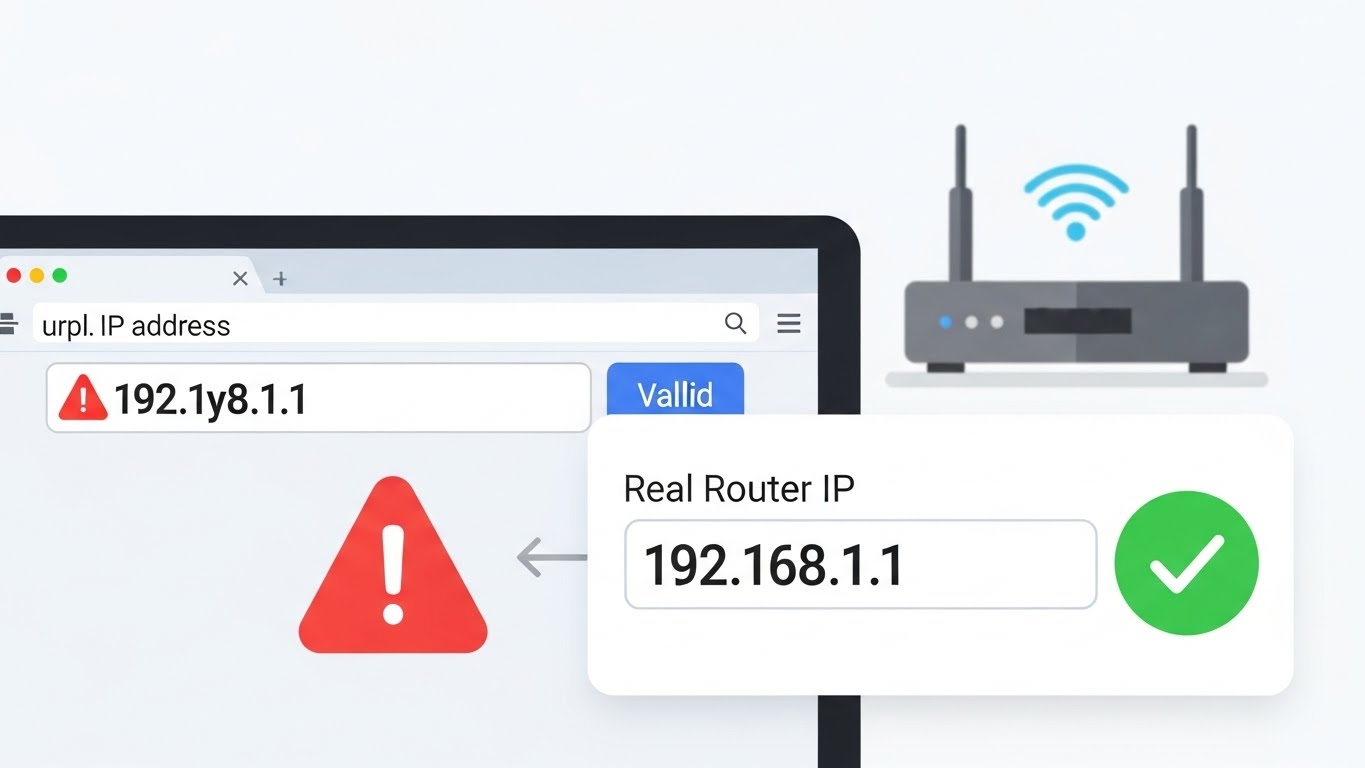
In today’s world, almost everyone uses the internet at home or at work. When something goes wrong with Wi-Fi or the internet speed is slow, many people try to fix it themselves. One common step is to type an IP address into the browser to reach the router settings. The most popular real router address is 192.168.1.1.
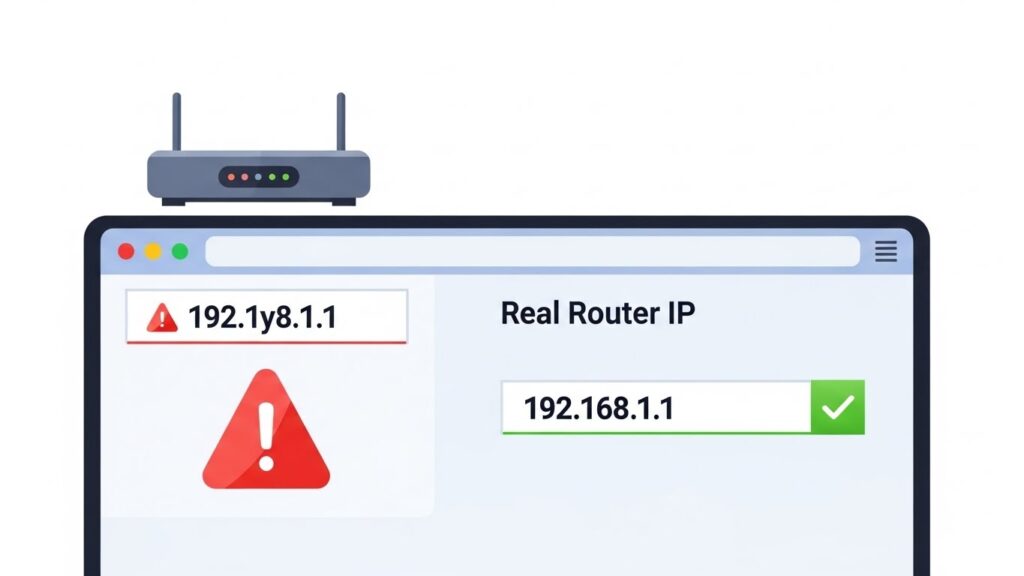
But sometimes, on some websites, YouTube videos, forums, or even in fake “tech support” messages, you see a strange address: 192.1y8.1.1 (with the letter “y” instead of “68”).
This article will explain in very simple English why 192.1y8.1.1 is completely fake, why it can never work, and why some people use it to trick others.
What Is an IP Address? (Very Simple Explanation)
An IP address is like the home address of your router or computer on the internet or inside your home network.
There are two main types that normal people see every day:
- Public IP – This is the address the whole internet sees (given by your internet company).
- Private IP – This is the address used inside your house to connect phones, laptops, and TVs to the router.
Almost every home router uses a private IP address that starts with:
- 192.168.x.x (most common)
- 10.x.x.x
- 172.16.x.x to 172.31.x.x
The most popular private IP address in the world is 192.168.1.1 or 192.168.0.1.
What Makes a Real IPv4 Address Valid?
IPv4 is the old but still most-used version of IP addresses. It always has exactly four numbers separated by dots. Here are the strict rules:
- Each of the four parts can only be a number from 0 to 255.
- Only digits 0–9 are allowed. Letters and other symbols are NOT allowed (except the dots).
- There must be exactly three dots.
- No part can start with a zero if it is more than one digit in some cases, but the main rule is: only numbers 0–255.
Examples of real and valid private IP addresses:
- 192.168.1.1 ✅
- 192.168.0.1 ✅
- 192.168.10.5 ✅
- 10.0.0.138 ✅
Why “192.1y8.1.1” Is 100% Fake and Invalid
Look closely at 192.1y8.1.1. Do you see the problem?
The third part is 1y8 (one – y – eight).
Here are the exact reasons why this can never be a real IP address:
- It contains the letter “y” Real IPv4 addresses can never have letters. Only numbers 0–9 and dots are allowed. The letter “y” makes it instantly invalid.
- No router or computer in the world accepts letters in IP addresses When your computer or phone tries to reach an IP address, it looks only for numbers. As soon as it sees a letter, it stops and shows an error.
- It tries to copy the real address 192.168.1.1 Someone cleverly replaced “168” with “1y8” so that it looks almost the same at first glance, especially if you read very fast.
- Real router companies never use such addresses Big companies like TP-Link, Netgear, ASUS, D-Link, Huawei, and others always use proper addresses like 192.168.0.1, 192.168.1.1, 192.168.2.1, or sometimes 192.168.10.1. They never put letters.
So, 192.1y8.1.1 is not a typo – it is deliberately fake.
Where Do People Usually See This Fake Address?
This fake address appears in many places. Here are the most common ones:
- Fake YouTube “speed up internet” videos
- Scam websites that promise to fix Wi-Fi problems
- Pop-up ads that say “Your router is infected – log in now”
- Fake tech support phone calls or chat messages
- Some low-quality blog posts that copy content without checking
When you type 192.1y8.1.1 in your browser, one of two things happens:
- Your browser shows “This site can’t be reached” (because it’s not a real address).
- You are taken to a fake login page created by scammers (very dangerous).
Why Do Scammers Use Exactly “192.1y8.1.1”?
Scammers are smart. They know that millions of people search for “192.168.1.1” every day. So they created a fake version that looks almost the same.
If you accidentally type 192.1y8.1.1 instead of 192.168.1.1, you may land on their fake page. That page can:
- Ask for your real router username and password
- Try to install malware on your computer
- Show fake virus warnings to scare you into paying money
This small trick with the letter “y” has fooled thousands of people.
How to Know the Correct Router IP Address (100% Safe Ways)
Never trust random websites or videos. Use these safe methods instead:
Method 1: Check on Your Computer (Windows)
- Press Windows key + R
- Type cmd and press Enter
- Type ipconfig and press Enter
- Look for “Default Gateway” – that is your real router IP (usually 192.168.1.1 or 192.168.0.1)
Method 2: Check on Mac
- Click the Apple menu → System Settings → Network
- Choose your Wi-Fi → Details → TCP/IP tab
- Look for “Router” – that is the correct address
Method 3: Look at the Bottom of Your Router
Most routers have a small sticker that shows the correct IP address, username, and password.
Method 4: Official List from Router Brands
- TP-Link → usually 192.168.0.1 or 192.168.1.1
- Netgear → 192.168.1.1 or routerlogin.net
- ASUS → router.asus.com or 192.168.1.1
- D-Link → 192.168.0.1
- Huawei → 192.168.1.1 or 192.168.3.1
What Should You Do If You Already Typed 192.1y8.1.1?
Don’t panic. Do these simple steps:
- Close the browser tab immediately.
- If you entered any password, change your router password right now using the correct IP.
- Run a quick scan with free antivirus (Windows Defender or Malwarebytes is enough for most people).
- Never download anything from unknown router login pages.
How to Protect Yourself from Fake IP Tricks in the Future
- Always double-check the address before typing. Look carefully for letters.
- Bookmark your real router login page after you find it the first time.
- Never click links in emails or messages that claim to be “router login”.
- Teach your family members (especially parents and grandparents) about this trick.
Quick Comparison Table: Real vs Fake Router Addresses
| Address | Contains Letters? | Valid IP? | Used by Real Routers? | Danger Level |
|---|---|---|---|---|
| 192.168.1.1 | No | Yes | Yes (very common) | Safe |
| 192.168.0.1 | No | Yes | Yes | Safe |
| 192.1y8.1.1 | Yes (“y”) | No | Never | High risk |
| 192.168.l.l | Yes (“l”) | No | Never | High risk |
| 192.168..1 | Extra dot | No | Never | High risk |
Final Words
The address 192.1y8.1.1 is completely fake and can never work as a real router login. It exists only to confuse people and sometimes to steal information. Always remember: real IP addresses use only numbers and dots – never letters.
If you want to log into your router, use the safe methods shown above to find the correct address. Stay safe online, check twice before you type, and never trust strange addresses that look “almost right”.
Disclaimer: This article is for information and education only. It is not promotional and does not earn any money from products or services. We are not responsible if someone tries the wrong IP address or faces any problems online. Always use safe methods to find your real router address.
Explore More
- Is 9253612736 a Scam? A Simple, Honest, and Complete Guide
- New Software Bvostfus Python: Why It’s Likely Fake and Misleading
- Sorayabanks5: Warning Signs of a Potentially Fake or Misleading Online Identity

Jared H. Furness is a well-known sports analyst and writer. He is known for his skill in player stats in sports like football, basketball, and baseball. Jared has a sharp eye for detail and a passion for uncovering stories behind the numbers. He is known for writing detailed, SEO-friendly articles. They attract both fans and professionals.
His work often appears on major platforms. It offers detailed breakdowns of player performances, game highlights, and strategic insights. Jared makes complex statistics easy to understand and engaging. His articles, like the Boston College Eagles vs. UVA game analysis and the Arizona Diamondbacks vs. Miami Marlins match, show his talent for mixing data analysis with engaging stories.
Jared is known for producing human-written, plagiarism-free content. His pieces rank well on Google. This helps fans and analysts easily find his expert views on key matchups. Jared H. Furness raises the bar in sports stats journalism. He highlights Bobby Witt Jr.’s amazing plays and key moments in EuroLeague basketball.