

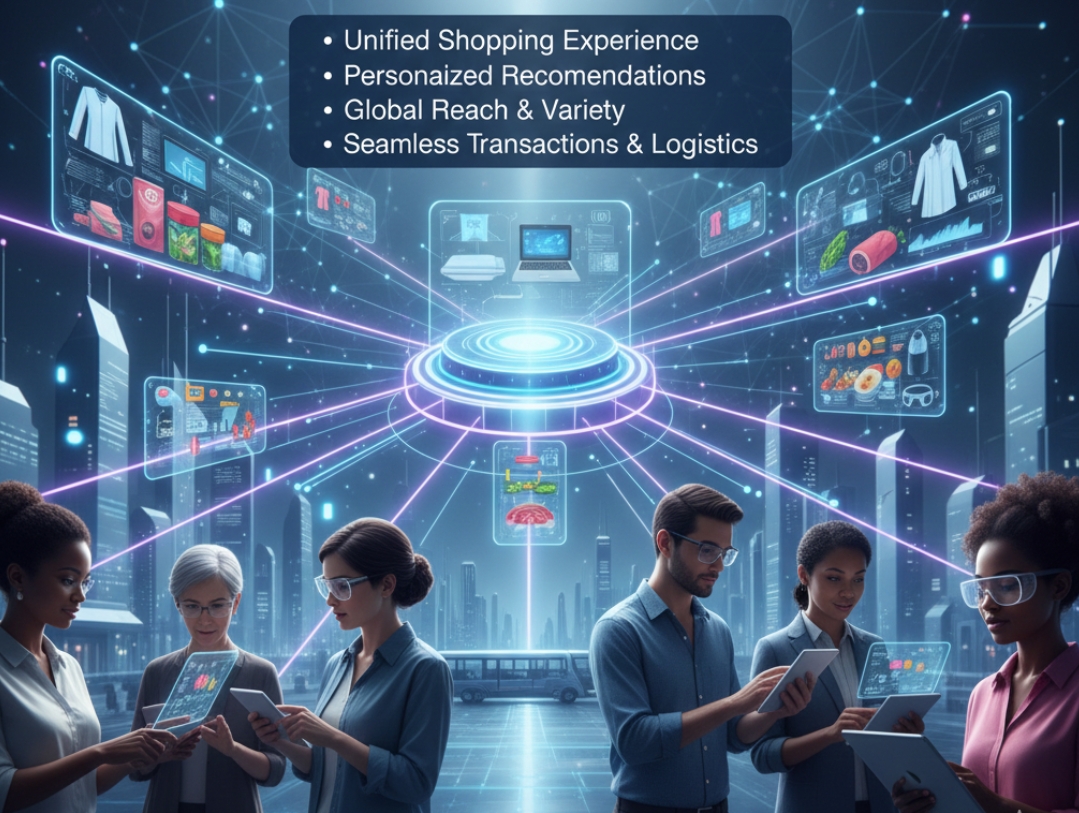
Online shopping is entering a new phase of maturity. What began as individual brand websites competing for attention is rapidly consolidating into platform-driven ecosystems where discovery, trust, fulfillment, and repeat purchasing happen in one place. By 2026, e-commerce platforms and marketplaces are no longer just alternatives to standalone stores — they are becoming the dominant infrastructure of digital commerce.
This shift is not accidental. It is driven by changing consumer psychology, rising customer acquisition costs, logistics complexity, and the growing expectation that shopping should be fast, social, and frictionless. Marketplaces solve problems that individual stores increasingly struggle to manage alone.
Consumer Behavior Is Moving Toward Aggregation and Convenience
Modern consumers are overwhelmed with choice, not empowered by it. Research from multiple commerce analytics firms shows that buyers prefer environments where comparison, trust signals, and fulfillment options are already built in. Instead of navigating dozens of independent websites, shoppers gravitate toward platforms that centralize discovery and reduce decision fatigue.
Marketplaces benefit from this behavior because they shorten the buyer journey. Search, validation, pricing context, reviews, and checkout exist in one ecosystem. As inflation and economic uncertainty influence spending habits, buyers are also more cautious, placing greater value on reliability and transparency.
This behavioral shift mirrors earlier transitions seen in travel booking, food delivery, and financial services, where aggregators ultimately became the default starting point.
Platforms Win the Trust Battle at Scale
Trust has become one of the most expensive commodities in e-commerce. Independent brands must invest heavily in branding, social proof, and security just to earn a first purchase. Marketplaces, by contrast, benefit from shared trust infrastructure. Reviews, dispute resolution, buyer protection, and standardized policies create confidence before a transaction even begins.
This trust advantage compounds over time. The more buyers transact within a platform, the more comfortable they become returning to it. By 2026, trust is expected to outweigh brand loyalty in many verticals, particularly among younger buyers who prioritize speed and verification over long-term brand relationships.
Noam Friedman, CMO of Tradeit, highlights how this dynamic is reshaping digital commerce:
“Marketplaces succeed because they remove friction from both sides of the transaction. Buyers trust the environment, and sellers benefit from built-in demand and infrastructure. The future of e-commerce isn’t about isolated stores fighting for traffic — it’s about platforms that orchestrate trust, liquidity, and repeat engagement at scale.”
Data, Personalization, and Network Effects
E-commerce platforms also outperform standalone stores in data leverage. Marketplaces see cross-category behavior, pricing sensitivity, and demand trends in real time. This allows for more accurate personalization, better inventory planning, and smarter recommendations.
Network effects amplify these advantages. As more sellers join a platform, product selection improves. As more buyers join, seller competition increases, often resulting in better pricing and faster fulfillment. This flywheel is difficult for independent stores to replicate without massive capital investment.
By 2026, platforms that effectively use AI-driven personalization will not just predict what consumers want — they will shape purchasing behavior by surfacing the right products at the right moment.
Logistics and Fulfillment Favor Platform Models
Fulfillment has become one of the most complex aspects of e-commerce. Rising shipping costs, customer expectations for faster delivery, and return management place heavy burdens on individual merchants. Marketplaces can amortize these costs across thousands of sellers while negotiating better logistics partnerships.
Centralized fulfillment, hybrid warehousing, and shared last-mile delivery networks allow platforms to offer speed and reliability that independent sellers often cannot match. This operational advantage directly influences conversion rates and repeat purchases.
Dan Close, Founder and CEO of BuyingHomes.com, draws parallels between property transactions and digital commerce platforms:
“Buyers gravitate toward systems that reduce uncertainty and complexity. Whether it’s real estate or online shopping, platforms win because they simplify decision-making, standardize processes, and remove friction. That efficiency becomes a competitive moat that’s hard to disrupt.”
Physical Products Still Need Strong Marketplaces
Even in industries where craftsmanship and physical presence matter, marketplaces are becoming essential discovery channels. Consumers want to browse, compare, and validate before committing to higher-consideration purchases.
This is especially true for categories tied to home improvement, security, and custom fabrication, where buyers seek reassurance around quality and installation.
Beni Avni, Owner of New York Gates, explains how platforms support trust in physical goods:
“For products tied to safety and durability, buyers want more than marketing claims. Marketplaces give them access to reviews, comparisons, and verified sellers. That transparency builds confidence and accelerates purchasing decisions, even for custom or premium products.”
This highlights how marketplaces do not replace expertise or craftsmanship; they amplify visibility and credibility.
Fashion, Culture, and Global Reach
Fashion and lifestyle commerce has also embraced platform-led growth. Cultural products, in particular, benefit from marketplaces that connect global audiences with specialized sellers. These platforms allow niche brands to reach customers who may never encounter them through traditional retail channels.
Experts from Lashkaraa.com, specialists in sarees and cultural fashion, observe this shift firsthand:
“Marketplaces have transformed how culturally specific fashion reaches global audiences. They allow customers to discover, compare, and purchase traditional designs with confidence, regardless of geography. This accessibility is redefining how heritage fashion scales online.”
By 2026, global marketplaces are expected to play an even larger role in preserving cultural commerce while modernizing distribution.
Why Standalone Stores Will Still Exist — But Differently
This evolution does not mean standalone e-commerce websites will disappear. Instead, their role will change. Brand-owned stores will increasingly function as storytelling hubs, loyalty channels, and premium experiences rather than primary acquisition engines.
Marketplaces will handle discovery and scale, while brand sites deepen relationships with repeat customers. The most successful businesses will integrate both, using platforms for growth and owned channels for differentiation.
The 2026 Outlook
The future of online shopping is not about choosing between platforms and independent stores. It is about recognizing where each model excels. Marketplaces will dominate discovery, trust, and transaction efficiency. Individual brands will focus on identity, community, and long-term engagement.
By 2026, e-commerce platforms and marketplaces will form the backbone of digital retail, shaping how consumers discover products, how sellers scale, and how trust is established online. Businesses that adapt to this reality early will not just survive — they will lead the next era of commerce.