

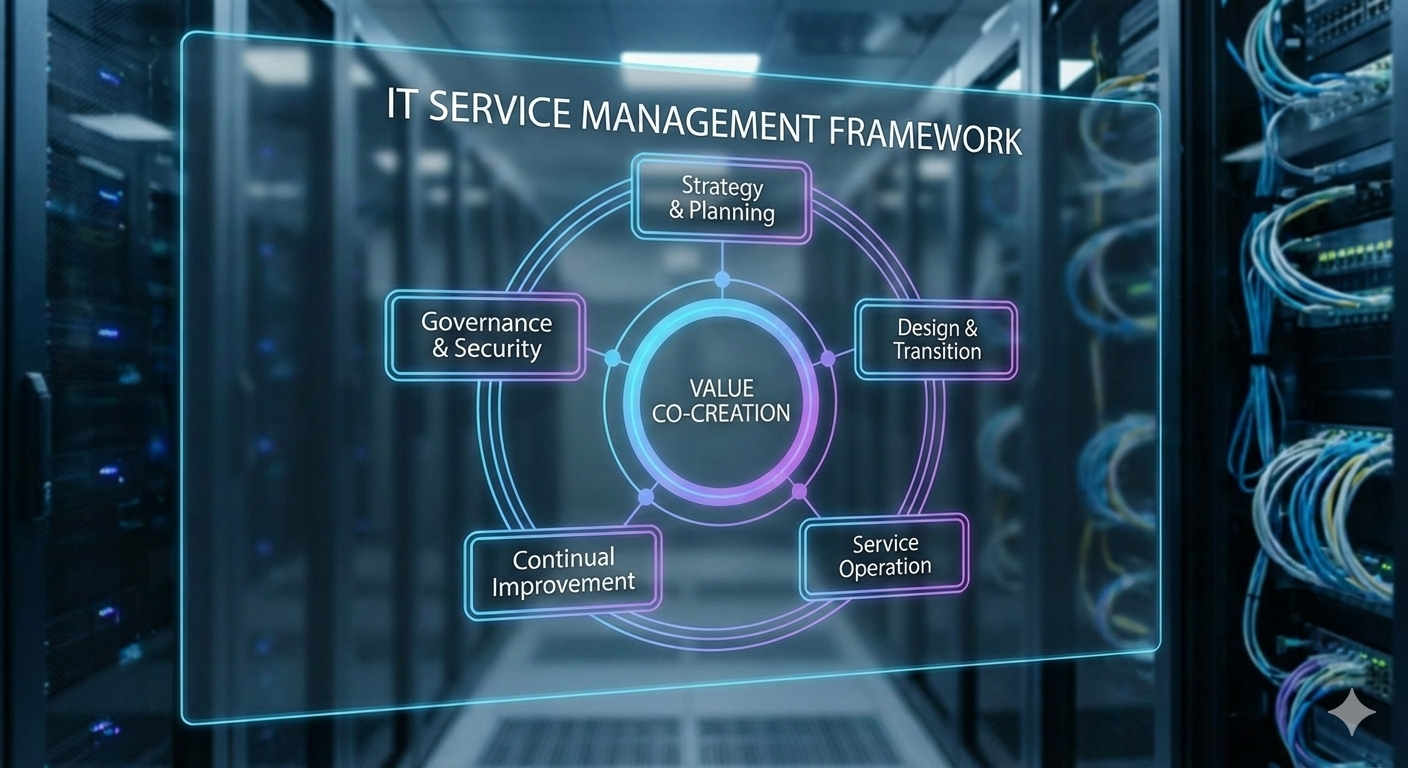
Running IT operations without structure is basically chaos waiting to happen. The IT service management framework provides that structure—a set of proven practices and processes that help organizations deliver consistent, reliable IT services. Think of it as the playbook that keeps everything aligned. Companies don’t just adopt these frameworks because they sound good on paper. They do it because the alternative is reactive firefighting, inconsistent service quality, and way too much downtime. Studies show that organizations following established ITSM frameworks experience 45 percent fewer service disruptions and handle incidents 50 percent faster than those winging it. The framework creates a common language across teams, standardizes how work gets done, and builds in continuous improvement so things actually get better over time instead of just staying functional.
Core Components That Make the Framework Work
Most frameworks, especially ITIL which is probably the most widely used, break down IT services into specific lifecycle stages. You’ve got service strategy, design, transition, operation, and continual improvement. Each stage has its own set of processes. Service strategy figures out what services you should offer and why. Design plans how those services will work. Transition handles the actual rollout without breaking everything. Operations keeps things running day to day. And continual improvement makes sure you’re learning from mistakes and getting better. The framework also defines clear roles like incident managers, problem managers, and change managers. This isn’t about creating bureaucracy for its own sake. It’s about making sure someone is actually responsible for each critical function, because when everyone’s responsible, nobody is.
Why Standardization Matters More Than You’d Think
Before implementing a framework, different teams often do the same tasks completely differently. One group might handle server updates on Tuesdays, another on Fridays, and a third whenever they feel like it. That variability creates risk. With a framework, you standardize these processes across the board. Research from Forrester found that companies with standardized ITSM processes had 35 percent higher customer satisfaction scores for IT services. The reason is pretty straightforward. When processes are repeatable and documented, quality stays consistent. New team members can get up to speed faster because there’s actually documentation to follow. And when something goes wrong, troubleshooting becomes easier because you know exactly how things should work normally.
Alignment Between IT and Business Objectives
This might be the biggest reason organizations actually stick with ITSM frameworks long term. The framework forces IT to think about services from a business perspective, not just a technical one. Instead of “we need to patch these servers,” it becomes “we need to maintain 99.9 percent uptime for the customer portal because downtime costs us $50,000 per hour.” That shift in thinking changes priorities. IT stops being a cost center that management doesn’t really understand and becomes a service provider with measurable value. Service level agreements (SLAs) get defined based on actual business impact. Resources get allocated to what matters most for revenue and operations. Companies using mature ITSM frameworks report 40 percent better alignment between IT initiatives and business goals, which translates to smarter spending and better outcomes overall.