

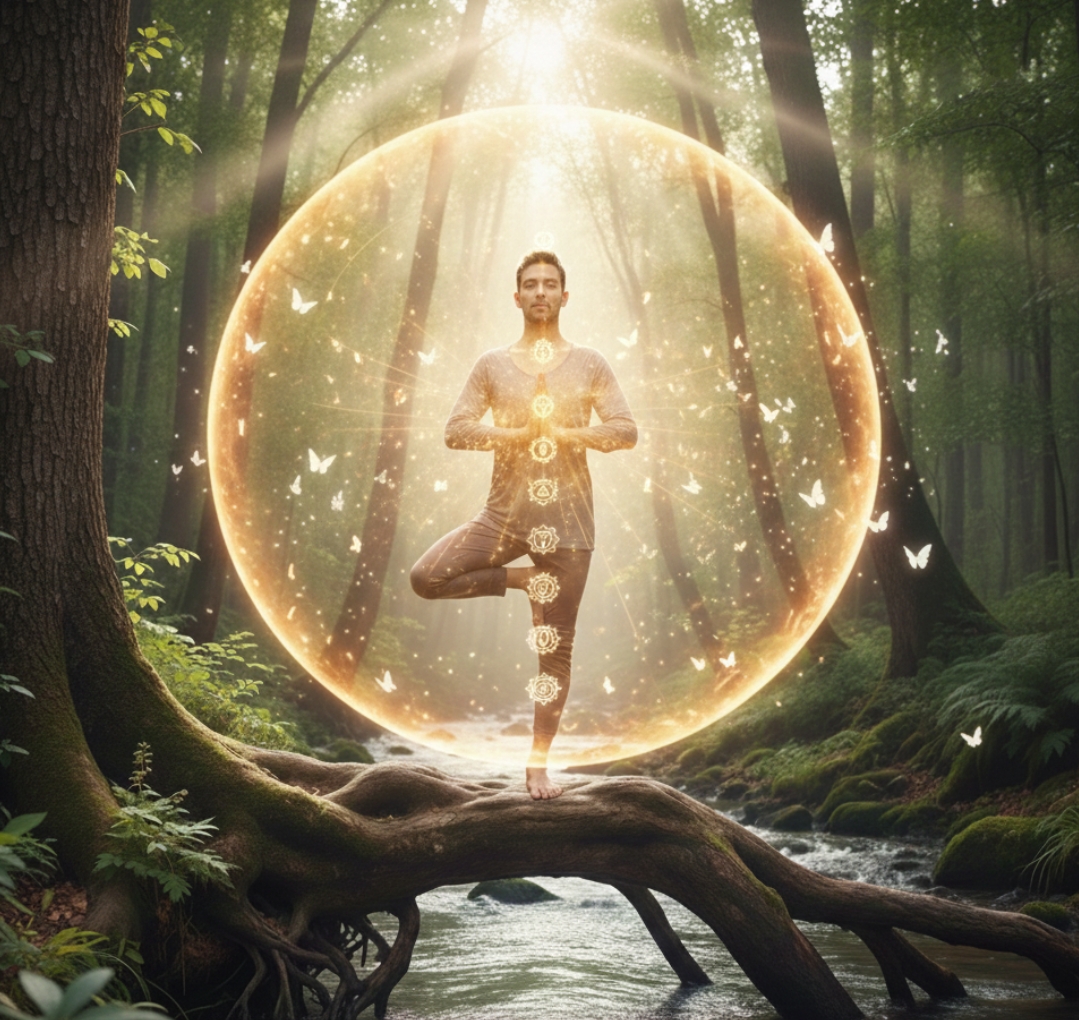
Yoga has a calming reputation, but its deeper value lies in how it brings you back to the most honest version of yourself. In a world where your attention is always pulled outward—work demands, social expectations, endless notifications—your inner voice gets quieter until it practically disappears. Yoga rebuilds your connection with that voice, not through dramatic revelations, but through small, consistent moments of clarity that accumulate over time.
Here’s actually how…
Yoga Creates Space for Self-Honesty
Most people move through their day on autopilot. You react, push, perform, and meet expectations without pausing long enough to ask what you actually feel or need. A yoga practice interrupts that pattern. The moment you step onto the mat, life slows down in a way that almost forces you to notice what’s going on inside.
That simple pause is the gateway to authenticity. As Sinead Corceran, Yoga Trainer ERYT200 & Course Director at All Yoga Training, puts, “Your breath deepens, your nervous system shifts into a calmer state, and your awareness becomes sharper. When the mind stops racing, buried emotions and truths start resurfacing.”
Not dramatically—just quietly, like background noise becoming clearer.
You begin recognizing what you’ve been avoiding: the stress you normalized, the frustration you suppressed, the dreams you put on hold. This self-honesty doesn’t feel heavy; it feels like relief. Yoga allows you to see yourself without the filters you wear in daily life.
Breathwork Helps You Regulate Before You Reflect
It’s almost impossible to understand your true self when your nervous system is in survival mode. When you’re stressed, overwhelmed, or overstimulated, your brain focuses on coping, not connecting.
Breathwork—one of yoga’s core foundations—changes that instantly. Slow, steady breathing activates the parasympathetic nervous system, lowering cortisol levels and quieting mental noise. Scientifically, this creates the ideal internal environment for reflection.
With your nervous system stabilized, your inner world becomes easier to access. You can finally distinguish between what you genuinely value and what you’ve been doing out of pressure or obligation. Your clarity increases because your mind is no longer defending itself against stress.
Over time, steady breathwork conditions your emotional baseline. You become less reactive, more observant, and more capable of hearing your intuition. That’s where authenticity begins.
Yoga Helps Release Emotional Tension Stored in the Body
The body stores far more emotional memory than most people realize. Stress builds up in the shoulders, fear tightens the hips, grief sits in the chest, and unprocessed experiences create subtle physical tension that stays for years if it’s never released.
Yoga works directly with this physical-emotional storage system. As you move through poses, especially slow ones that require presence, old tension begins to loosen. When the body releases, the emotions tied to that tension also soften.
This isn’t mystical—it’s neuromuscular reality. When muscles relax and the nervous system stops bracing, the brain becomes more open and less guarded. This emotional unblocking makes it easier to reconnect with versions of yourself you haven’t accessed in a long time.
As the body opens, clarity expands. You understand yourself better because you’re no longer weighed down by old emotional armor.
Yoga Reduces the Influence of the “Performance Self”
Most people operate from a version of themselves that’s built around expectations. You show up as the achiever, the dependable one, the strong one, the organized one—the self you think others need you to be.
Yoga is one of the few environments where none of those roles matter. Your mat doesn’t care about your job title, your responsibilities, or how put-together you appear. The practice pulls you out of performance mode and drops you into presence.
Here, you don’t have to impress anyone. You don’t have to prove competence. You simply exist as you are—sometimes balanced, sometimes wobbly, sometimes strong, sometimes unsure. That honest relationship with yourself is what authenticity feels like.
As you drop the need to perform on the mat, you gradually feel less pressure to perform off the mat. You start saying what you actually mean. You stop overcommitting. You stop pretending everything is fine when it isn’t. Confidence grows because you’re no longer hiding behind an identity that exhausts you.
Mindful Movement Strengthens Your Emotional Awareness
Yoga trains you to be mindful without forcing mindfulness. Each pose requires you to tune into your breath, your muscles, your balance, and your emotional state in real time. That repeated inward attention builds emotional awareness with surprising speed, says Htet Aung Shine, Co-Founder of NextClinic.
You start noticing how your body reacts to stress earlier than before. You catch subtle emotional shifts long before they escalate. You recognize the difference between being tired and being unmotivated, between being anxious and being overstimulated, between being sad and being stagnant.
This emotional literacy is one of the strongest foundations of authenticity. When you actually understand what you’re feeling, you stop misidentifying your emotions. You stop ignoring them. And you stop acting from confusion.
You begin responding to life from clarity rather than reacting from impulse.
Meditation Helps You See Past False Narratives
Yoga naturally leads into meditation—whether formal or simply the quiet moments at the end of practice. Those still moments give you access to deeper mental layers where your authentic self lives.
Meditation helps separate your true nature from the stories you’ve absorbed over the years. Stories like:
- You have to always be strong.
- You must succeed to be worthy.
- You shouldn’t rest unless you earn it.
- You need to please others to be accepted.
These narratives aren’t your authentic self—they’re survival strategies you learned somewhere along the way. Meditation helps you see them with enough distance to question them. Once you question them, they slowly lose power.
In that quiet space, your natural values and desires become visible again.
Self-Compassion Emerges Naturally Through Practice
Authenticity isn’t possible without self-compassion. It’s hard to be honest with yourself if you judge every flaw harshly or feel like you’re failing every time you’re imperfect.
Yoga teaches compassion in a way that feels effortless. When you fall out of a pose, you learn not to shame yourself—just reset and try again. When your body feels stiff, you learn to work with it instead of forcing it. When your mind wanders, you gently bring it back without criticism, says Sharon Amos, CEO of Air Ambulance 1,
This softness gradually becomes your default. You stop treating yourself like an opponent. You stop expecting perfection. You stop suppressing emotions to “stay strong.”
As judgment decreases, authenticity increases. You start revealing more of who you are—to yourself first, and then to others—because it finally feels safe.
Yoga Clarifies Your Values and Alignments
The more you practice, the more clarity you gain about what feels aligned and what doesn’t. You start picking up on small internal cues that you previously ignored—your energy drops around certain people, your mood lifts around others; certain commitments feel heavy while others feel exciting.
You begin recognizing when you’re acting from obligation versus intention. You start making decisions that align with your internal truth instead of defaulting to what others expect.
This alignment is the very essence of authenticity. It shows up in your relationships, your career choices, your boundaries, and even how you speak. Life becomes smoother because you’re no longer constantly contradicting yourself.
Authenticity Becomes a Sustainable Way of Living
Reconnecting with your authentic self isn’t a single breakthrough. It’s a continuous process, similar to strengthening a muscle through regular training. Yoga makes that process sustainable. Its combination of breath, introspection, movement, and stillness creates an internal environment where your real self feels safe enough to stay present.
As life shifts—as you grow, face challenges, adapt, and evolve—yoga keeps guiding you back to center. It continuously clears mental noise, softens emotional tension, and rebalances your nervous system so you can hear your intuition again.
In time, authenticity stops being something you chase. It becomes your natural baseline.
Final Thoughts
Yoga is more than flexibility or stress relief. It’s a way back to yourself. It helps you peel off the layers of expectations, past conditioning, and emotional clutter that hide your real identity. When you reconnect with your authentic self, your decisions become clearer, your relationships feel more honest, and your inner world becomes steadier.
The practice doesn’t change who you are—it reveals who you’ve always been underneath everything life piled on top. And that reconnection is one of the most meaningful transformations yoga offers.
The quote highlights universal human ethics, which Islam also endorses. This appreciation of humanity should not be understood as denying the distinct spiritual value of iman in Islamic teachings.