

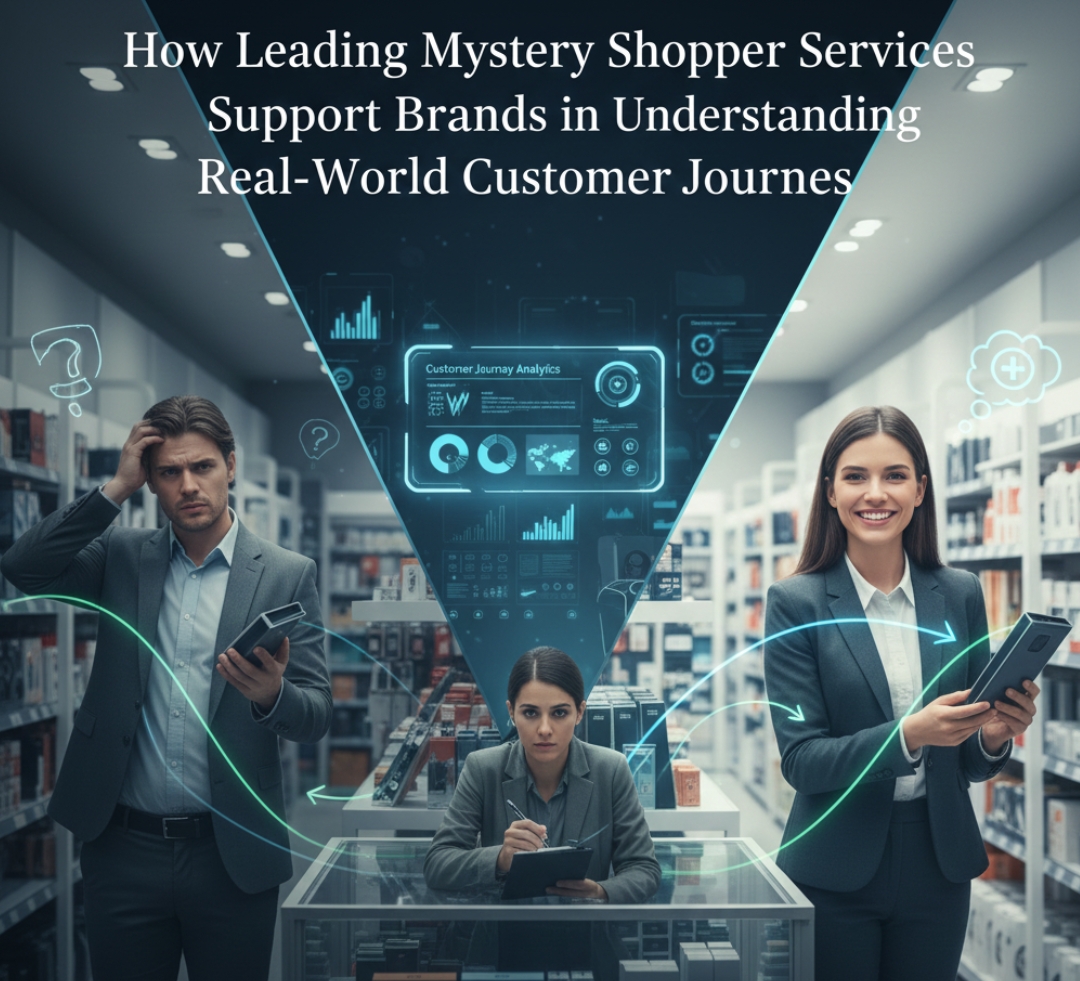
Customer experience evaluation through mystery shopping reveals performance gaps, service inconsistencies, and operational issues that traditional feedback mechanisms often miss. Leading mystery shopper services utilize sophisticated methodologies combining behavioral observation, standardized evaluation protocols, multi-channel assessment capabilities, and advanced analytics to map complete customer journeys across touchpoints. These services employ professionally trained evaluators who document objective experiences while measuring subjective quality factors, providing brands with actionable intelligence about service delivery, brand compliance, and competitive positioning. According to the Mystery Shopping Providers Association, leading firms maintain evaluator accuracy rates above 95% through rigorous training and quality assurance processes, while serving industries ranging from retail and hospitality to healthcare and financial services.
Why Customer Feedback Alone Doesn’t Tell the Whole Story
Voluntary feedback suffers from extreme bias. Happy customers rarely bother leaving reviews, while angry ones share negative experiences disproportionately. You’re not getting a representative sample of actual customer experiences, just the extremes.
Survey responses depend heavily on how questions are worded and when they’re asked. People also forget details quickly, misremember sequences of events, or let one particularly good or bad moment color their entire assessment. Six weeks after a restaurant visit, someone might remember it was “good” but can’t recall specifics about timing, server behavior, or how issues were handled.
Mystery shopping solves these problems by providing controlled, consistent evaluation. Every shopper follows the same scenario, observes the same criteria, and reports using standardized formats that capture specific, measurable details while memories are fresh.
What Separates Leading Services from Basic Operations
Technology infrastructure makes a huge difference. Leading services use mobile apps that let evaluators complete reports on-site immediately after interactions, while memories are sharpest. These apps often include photo upload capabilities, GPS verification, time stamping, and even audio recording where legally permitted.
The reporting dashboards clients access should provide real-time data visibility, not monthly reports that arrive weeks after evaluations. Immediate notification systems alert management to critical failures like safety violations or serious service breakdowns that need instant attention.
Customization capabilities matter more as programs mature. Cookie-cutter evaluation forms miss industry-specific nuances. Leading services work with clients to develop tailored criteria, scoring systems, and scenarios that reflect actual customer expectations and business priorities.
Mapping Complete Customer Journeys, Not Just Transactions
Modern mystery shopping extends beyond single-location visits. A complete journey might start with online research, move through phone inquiries, involve an in-store visit, and continue with post-purchase follow-up. Leading services coordinate multi-touch evaluations that reveal where handoffs break down or messages become inconsistent.
Omnichannel programs test whether brands deliver consistent experiences across physical locations, websites, mobile apps, social media, and contact centers. A customer might research products online, check inventory via app, visit a store, and complete purchase through another channel entirely. Each touchpoint needs evaluation.
Some programs include longitudinal tracking where the same evaluator makes multiple visits over weeks or months, building relationships with staff and observing whether service quality remains consistent or degrades over time. This reveals whether employees maintain standards after initial training wears off.
Industry-Specific Expertise That Actually Matters
Financial services mystery shopping requires evaluators who understand products like mortgages, investment accounts, or insurance policies well enough to ask informed questions and assess whether advice meets regulatory compliance standards. Generic shoppers can’t evaluate technical accuracy or fiduciary responsibility.
Automotive dealerships demand evaluators comfortable with vehicle features, financing options, and negotiation dynamics. These shops often span multiple hours and require evaluators who can maintain cover while testing extended interactions from initial approach through test drive and sales consultation.
Healthcare evaluations involve sensitive interactions around medical information, insurance verification, and clinical communication. Evaluators need appropriate backgrounds, understand HIPAA considerations, and can assess whether providers meet patient care standards without compromising their evaluator role.
Luxury retail requires shoppers who naturally fit the target demographic, understand high-end products, and can evaluate subtle service distinctions that justify premium pricing. Sending an evaluator who’s obviously uncomfortable in luxury environments won’t generate useful data.
Turning Data into Performance Improvement
Leading services don’t just dump scores and move on. They provide context comparing current performance against past results, industry benchmarks, and competitive intelligence. This helps brands understand whether a 78% satisfaction score is good, bad, or average for their sector.
Correlation analysis reveals which specific behaviors or service elements drive overall satisfaction most strongly. Maybe product knowledge doesn’t matter as much as greeting warmth, or facility cleanliness outweighs server attentiveness. These insights guide resource allocation toward factors that actually move customer perception.
Predictive analytics in advanced programs identify locations at risk of significant problems before crisis hits. Pattern recognition across evaluation data, employee turnover, customer complaints, and operational metrics can flag stores needing intervention before performance collapses completely.
Building Programs That Drive Cultural Change
Mystery shopping works best when integrated into broader customer experience strategies, not treated as isolated audits. The most successful programs use results to inform training curriculum, recognize high performers, identify coaching opportunities, and sometimes adjust compensation structures.
Transparency helps too. When employees understand evaluation criteria, know that shoppers might visit anytime, and see results used constructively rather than punitively, they’re more likely to maintain standards consistently. Mystery programs shouldn’t feel like “gotcha” exercises but rather tools supporting everyone’s success.