
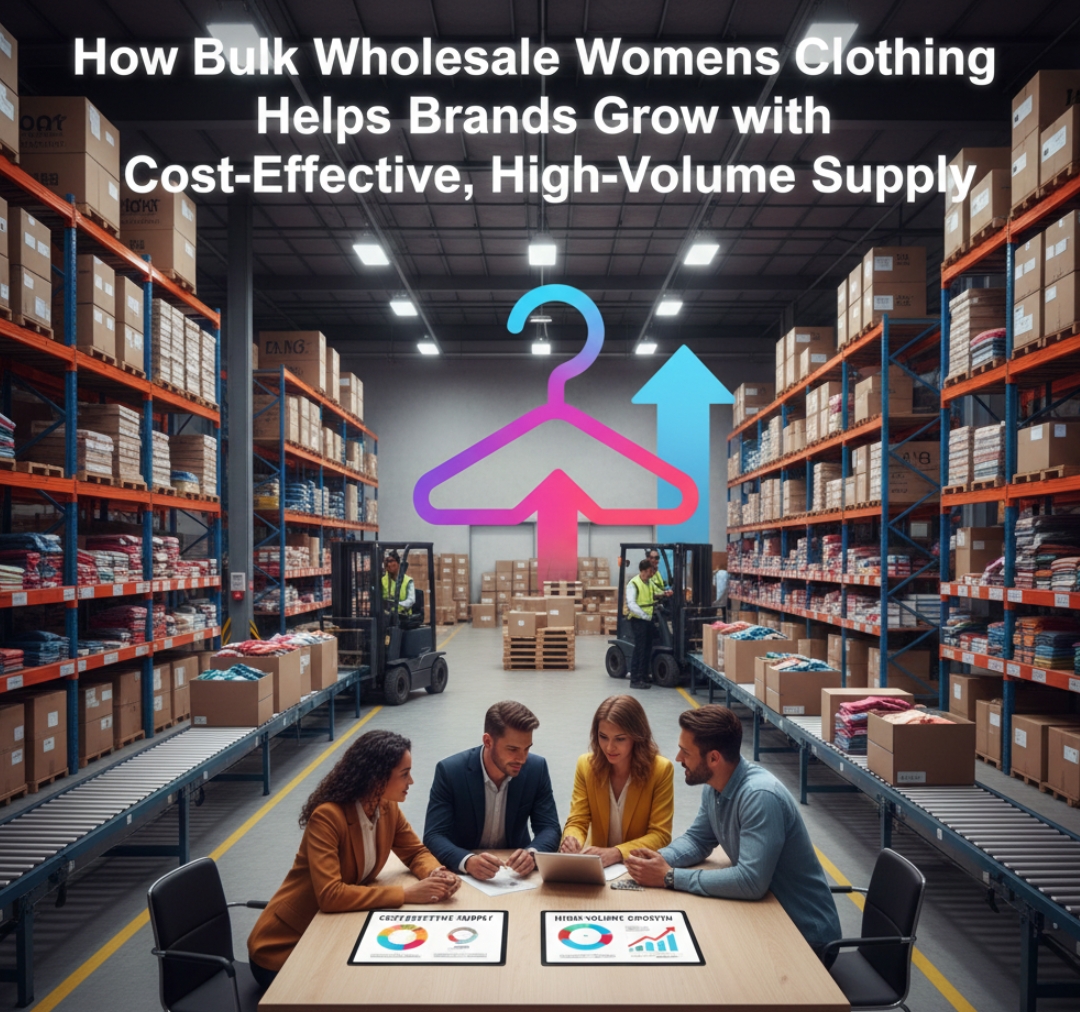
The economics of bulk wholesale womens clothing become compelling once your business reaches a certain volume threshold. Bulk orders typically start at 500 pieces and can scale into tens of thousands, unlocking price breaks that simply aren’t available at lower quantities. The per-unit cost reduction follows a fairly predictable curve: ordering 500 pieces might save you 15% compared to 100 pieces, while 2,000 pieces could reduce costs by 30% to 40%. This happens because factories achieve efficiency at scale. Setup costs for cutting tables, pattern layouts, and machine threading get distributed across more units. A factory might spend 3 hours setting up for a production run whether they’re making 100 pieces or 1,000 pieces, so the per-unit setup cost drops dramatically with volume.
Cash Flow Management and Inventory Investment
Here’s the tricky part nobody warns you about: bulk ordering requires serious capital commitment. If you’re ordering 2,000 units at an average wholesale cost of $15 per piece, that’s $30,000 tied up in inventory before you’ve made a single sale. Most bulk suppliers require 30% to 50% deposits upfront, with the balance due before shipping. This payment structure means you need either strong cash reserves or credit lines to operate at scale.
The inventory turnover rate becomes critical. Retail industry benchmarks suggest clothing inventory should turn over 4 to 6 times annually for healthy cash flow. If you’re ordering bulk quantities of trendy items, you’re betting that demand will stay strong for 2 to 3 months while you sell through. I’ve seen businesses get crushed by ordering 1,500 pieces of a style that went out of fashion before they sold half the inventory. The units that don’t sell often get liquidated at 30% to 50% of wholesale cost, completely destroying your margins.
Negotiation Leverage and Supplier Relationships
Volume gives you actual negotiating power with suppliers. When you’re ordering 50 pieces, you’re basically a small customer taking whatever terms the supplier offers. At 1,000+ pieces per order, suppliers start competing for your business. You can negotiate better payment terms like Net 60 instead of prepayment, request custom colorways or slight design modifications, and get priority production slots during busy seasons.
The relationship dynamics shift too. High-volume customers get assigned dedicated account managers who understand their brand preferences and can expedite special requests. If a quality issue emerges, bulk buyers get faster resolution because suppliers don’t want to lose large accounts. I’ve seen suppliers remake entire orders at their own cost for high-volume clients, something that rarely happens for smaller buyers.
Logistics Cost Efficiency and Warehousing Considerations
Shipping costs decrease substantially with bulk orders. A full container load from overseas manufacturers costs roughly $3,000 to $5,000 depending on origin and destination. If you’re splitting that container cost across 5,000 pieces instead of 500 pieces, your per-unit shipping drops from $6 to $1 or less. Even domestic freight benefits from volume, a full pallet ships for about the same cost as a half pallet.
The warehousing challenge becomes real though. You need roughly 40 to 50 square feet of storage for 1,000 hanging garments, or about 20 to 30 square feet for folded items. Climate control matters, especially for natural fibers that can develop mildew in humid conditions. Third-party logistics providers typically charge $8 to $15 per pallet per month plus pick and pack fees of $3 to $5 per order. These costs eat into your bulk savings if inventory sits too long.
Product Mix Strategy and Risk Distribution
Smart bulk buyers don’t put all their capital into one style. They spread risk across multiple products, ordering larger quantities of proven bestsellers and smaller quantities of experimental styles. A typical mix might look like 60% core basics that sell consistently, 30% seasonal trends, and 10% test products. This approach balances the cost savings of bulk ordering with the flexibility to respond to market changes.
The reorder timing requires careful planning. Factor in 4 to 8 week lead times for domestic suppliers, 8 to 12 weeks for overseas production including shipping. Running out of stock on a bestseller costs more than you’d think, not just in lost sales but in damaged customer relationships and diminished brand momentum.