
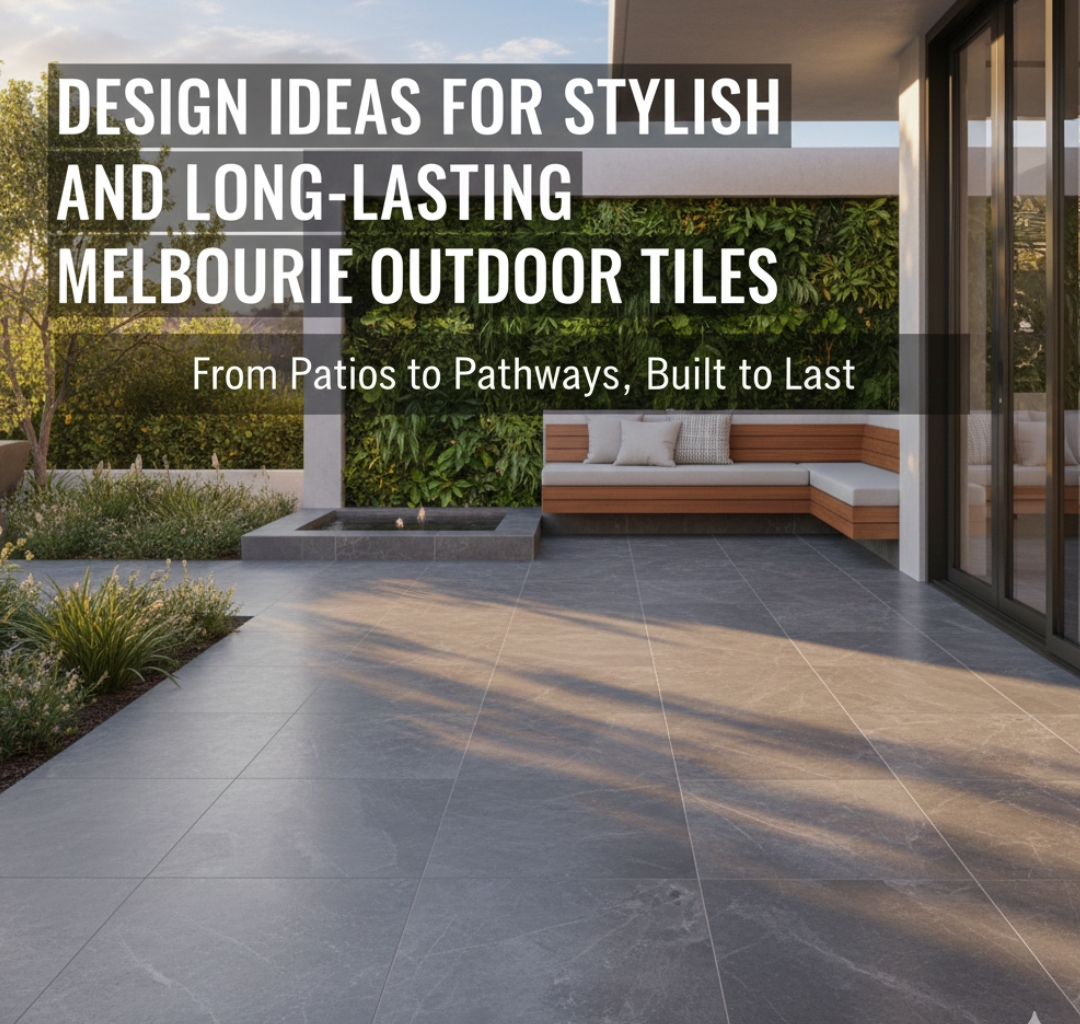
Creating an outdoor space that handles Melbourne’s weather extremes while looking sharp isn’t just about picking pretty tiles. The design choices you make directly impact longevity, maintenance requirements, and whether your space actually gets used year-round or sits empty half the time. Smart melbourne outdoor tiles selections combine aesthetic appeal with practical considerations like heat management, drainage, and visual coherence with your home’s architecture. Getting both right means you’ll have an outdoor area that feels like a natural extension of your living space rather than an afterthought that constantly needs attention.
Large Format Tiles Create Modern Flow
Tiles in 600x600mm or larger formats are dominating Melbourne outdoor designs right now, and there’s solid reasons beyond just trends. Fewer grout lines mean less maintenance, better water resistance, and a cleaner contemporary look that suits both modern and updated traditional homes. The continuous surface makes spaces feel bigger, which really helps in those typical Melbourne courtyard areas where you’re working with maybe 20 or 30 square meters total.
Installation does require a perfectly flat substrate though. Any dips or bumps show up badly with large tiles, creating lippage that’s both ugly and a trip hazard. Budget an extra $15-20 per square meter for proper leveling if your base isn’t already spot on.
Mixing Textures Adds Depth Without Chaos
One technique that works surprisingly well is combining smooth and textured versions of the same tile. Use smooth for the main entertaining area where furniture sits, then switch to heavily textured around the pool edge or garden borders. Same color, same material, but the texture shift creates zones without needing different colors that can look busy.
This approach also solves the slip problem elegantly. You get the sleek look you want where it matters for aesthetics, plus safety where water’s present. I’ve seen this done with limestone-look porcelain where the main deck uses a honed finish and the pool coping uses a bushhammered texture. Looks intentional, works perfectly.
Darker Tones Need Strategic Placement
Everyone wants those dramatic charcoal or black tiles, but in Melbourne’s sun they become legitimately painful to walk on barefoot. Surface temperatures can exceed 70 degrees on a hot day. If you’re set on dark tiles, place them in areas that get afternoon shade from your house, trees, or screening. For full sun areas, stay with mid-tones or lighter shades that reflect rather than absorb heat.
There’s also a practical maintenance angle. Light colored tiles show dirt and stains more obviously, but dark tiles show every water mark, especially if you’ve got hard water. Neither is objectively better, just pick based on what kind of imperfection you’d rather deal with.
Linear Layouts Elongate Small Spaces
The pattern matters more than people realize. Running tiles in a straight line perpendicular to your house makes narrow courtyards feel longer. Diagonal or herringbone patterns look fantastic but visually chop up the space, which only works if you’ve got room to spare. For typical Melbourne townhouse or unit outdoor areas, keep it simple with straight running bond or stacked layouts.