
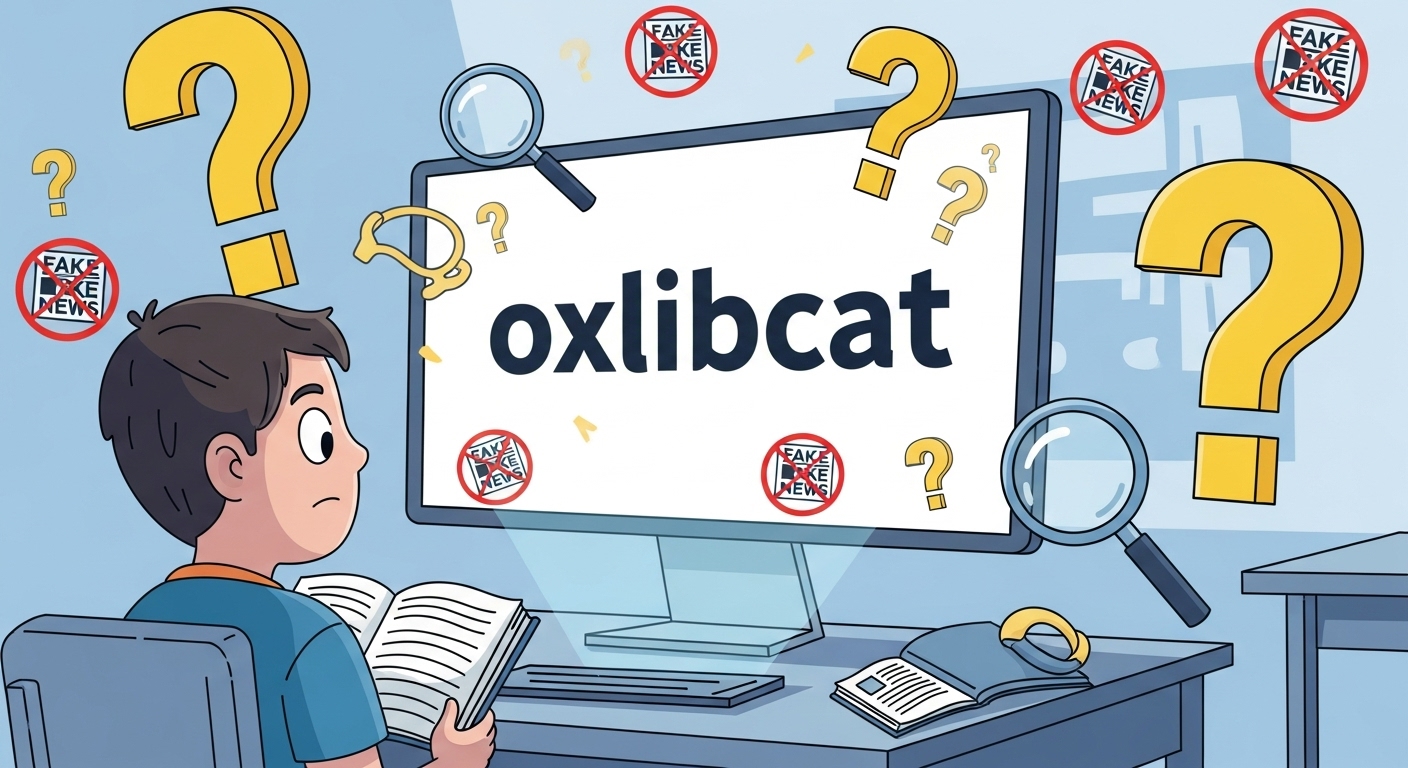
Some websites say it is a new app. Some say it is a secret library system. Some even say it is a government project. But the truth is very, very simple.
Oxlibcat is completely fake.
It is a made-up word. It has no real meaning at all.
This article is written in the easiest English possible. Even a class 5 student can read and understand everything. We will not make it short. We will explain every small thing slowly and clearly.
What Does “Oxlibcat” Mean?
It means nothing.
You will never find this word in any real English book.
You will never hear any teacher say this word.
No university uses it. No library uses it. No company uses it.
If you open Google right now and type “oxlibcat”, you will only see small, cheap websites. Those websites write the same story again and again, but they never show real proof. That is the first big sign that something is fake.
How Was This Fake Word Created?
Let us look at the letters one by one:
O – X – L – I – B – C – A – T
Now let us break it into three small parts that every Pakistani student knows:
- “Ox” → we all know ox is a strong animal (bail)
- “Lib” → short form of “library” (kutub khana)
- “Cat” → short form of “catalog” (fehrist)
When someone joins these three parts, it becomes “oxlibcat”. It sounds like “Oxford Library Catalog”. It sounds smart and real, but it is not real.
Some people also think it came from two real things mixed together:
- There is a real yellow flower in England. Its name is oxlip. It grows in spring. You can see its photo on BBC website.
- Many years ago, some British libraries used the short name LibCat for their online book list.
Someone took these real words, mixed them in a wrong way, and made a new fake word → oxlibcat.
After that, they started writing hundreds of articles just to earn money from ads.
Why Do People Make Fake Words Like This?
There are only three big reasons.
First reason → Money.
Some people make cheap websites. They write anything (even lies) because when you open the page, they earn money from advertisements. They do not care if the information is true or false.
Second reason → Cheating Google.
They want their website to come on the first page of Google. So they pick a word that nobody is using. They write 50–100 articles with that word. Now when anyone searches “oxlibcat”, only their websites appear. This is called bad SEO.
Third reason → Simple mistake or joke.
Sometimes someone makes a typing mistake. Other people copy it without checking. Slowly it spreads like a rumour on WhatsApp.
For oxlibcat, the first two reasons are true – money and cheating Google.
Very Easy Proof That Oxlibcat Is 100 % Fake
You can check this yourself in just 5 minutes.
- Open Oxford Dictionary or Cambridge Dictionary website. Type “oxlibcat”. Answer = not found.
- Open Merriam-Webster dictionary. Same result = nothing.
- Open Wikipedia. Search the word. No page, no information.
- Go to Oxford University official website. Search their library page. No “oxlibcat”.
- Go to British Library website. Nothing.
- Open Google Scholar (where real research papers are kept). Zero results.
- Search for any mobile app or computer software named “oxlibcat”. Nothing exists.
When every trusted place in the world says “nothing found”, you can be 100 % sure the word is fake.
Real Words That Look a Little Similar
Sometimes people get confused. Here are real words that sound close:
- Oxlip → Real yellow flower (you can see pictures on real websites)
- LibCat → Old name used by some UK libraries many years ago
- OLIB → Real library software from the 1990s
- SOLO → Today’s real name of Oxford University book search (Search Oxford Libraries Online)
None of these real things are written as “oxlibcat”.
Five Super Easy Tricks to Catch Fake Words
Next time you see any strange new word, do these five simple things:
- Type the word + “dictionary” in Google. If no real dictionary knows it → fake.
- Open Wikipedia and search. Real things have a page with sources.
- Look for the word on .edu, .ac.uk, or .gov websites. Trusted places never use fake words.
- See the date of articles. If 50 cheap websites made articles on the same week → fake.
- Ask yourself: “Does this word sound normal, or does it look like someone just joined random letters to look clever?”
If four or five answers say fake → believe it, it is fake.
Why Fake Words Are Dangerous
You may think, “It is only one word, no problem.”
But small lies can become big problems.
- Students copy fake information in school projects and fail.
- People forward wrong messages on WhatsApp and Facebook and confuse everyone.
- Fraud people use difficult fake words to cheat money (“Send me 5000 rupees, I will give you oxlibcat premium”).
- When too many fake things spread, real truth becomes difficult to find.
That is why we must stop fake information, even if it looks small.
What You Should Do When You See “Oxlibcat”
- Just ignore it completely.
- Do not click any link that talks about it (many have viruses).
- Do not share it with friends or family.
- Do not download anything related to it.
- If someone says “oxlibcat is very important”, politely tell them it is fake.
Instead, read real and useful things:
- Real flowers (oxlip pictures)
- Real library websites
- Real news from Dawn, BBC, Geo, ARY
Final Words – Stay Smart, Stay Safe
Oxlibcat is 100 % fake.
It is only internet garbage made for quick money.
It has no meaning, no history, and no future.
You now know everything about this fake word.
You also know how to check any new strange word in the future.
Disclaimer: This article is only for information and education. It is not promoting or selling anything. There are no affiliate links or ads in this article. The word “oxlibcat” is explained as fake information. We are not responsible if someone misunderstands or misuses this information. Always check trusted sources for real knowledge.
Explore More
- Camyentruoc: Debunking the Viral Vietnamese Word That Does Not Really Exist
- Exposing Fake and Misleading Keywords: The Case of “adiltqork”
- Exposing the Fake Keyword: What ‘hlnaclrk’ Really Means
R

Jared H. Furness is a well-known sports analyst and writer. He is known for his skill in player stats in sports like football, basketball, and baseball. Jared has a sharp eye for detail and a passion for uncovering stories behind the numbers. He is known for writing detailed, SEO-friendly articles. They attract both fans and professionals.
His work often appears on major platforms. It offers detailed breakdowns of player performances, game highlights, and strategic insights. Jared makes complex statistics easy to understand and engaging. His articles, like the Boston College Eagles vs. UVA game analysis and the Arizona Diamondbacks vs. Miami Marlins match, show his talent for mixing data analysis with engaging stories.
Jared is known for producing human-written, plagiarism-free content. His pieces rank well on Google. This helps fans and analysts easily find his expert views on key matchups. Jared H. Furness raises the bar in sports stats journalism. He highlights Bobby Witt Jr.’s amazing plays and key moments in EuroLeague basketball.