
Before B2B customers, purchasing managers, and safety supervisors, the challenge of choosing the appropriate initial aid supplies is a strategic choice involving consequences of operational and liability risks.
The difference between a tactical first aid kit and an ordinary first aid kit should not be an issue of preference, style, look, or cost; it should be a matter of deliberate, assessed choice based on intended use, threat, and outcome.
An ordinary first aid kit is made for low-severity injuries and incidents in a controlled, operational environment, whereas a tactical first aid kit is made for out-of-control, hostile situations involving trauma of the highest life-threatening order. This guide aims to provide a comparative analysis appropriate for the business arena, placed on the design philosophy and selection of components and on purchasing strategies to ensure that the appropriate instrument is supplied to your company or customers for the missions that lie ahead.
Defining the Operational Mandate: Two Philosophies of Care
The main difference comes down to the operational specifications of the kit. Common first aid kits that are OSHA compliant are designated for \”hold and wait\” environments. The kit’s purpose is to treat injuries, which can be classified as minor injuries like cuts, scrapes, sprains, burns, and headaches, until a professional walks in the room.
This is a passive asset, often collecting dust inside a wall-mounted cupboard. What is the first aid kit for tactical environments, however, is built for a “threat-forward” environment. This is meant for the immediate management of life-threatening injuries (i.e. severe hemorrhage, airway compromise, tension pneumothorax, etc) in a prolonged evacuation scenario.
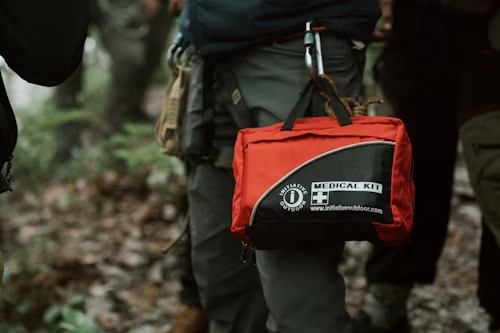
This is not passive, but rather is an integral part of the mission, and it is meant to be worn on the person and activated in a stressful situation. The first question B2B buyers must ask is, “What is the credible worst-case scenario the end-user might be confronted with?”
Component Breakdown: Managing Minor Injuries vs. Stopping Lifelong Threats
The magnitude of this philosophical gap can be seen the most in the contents of the kit. For the common first aid kit, the volume is the primary consideration. It usually contains a high volume of low-acuity items: adhesive bandages, antiseptic wipes, aspirin, antibiotic ointment, and sterile gauze pads.
Most inventory focuses on frequency of use versus the severity of events. Tactical First Aid Kits are capability-based solutions. Tactical first aid kits are designed with fewer, but critical, high-acuity and high-efficacy items aligned with the MARCH algorithm (Massive hemorrhage, Airway, Respiration, Circulation, Hypothermia). The primary items are a Combat Application Tourniquet (CAT), hemostatic gauze, a chest seal, a nasopharyngeal airway (NPA), and an emergency trauma dressing.
Most kits may be designed to sustain a mild injury such as a bleeding finger. Tactical kits are designed to stop the bleeding of a femoral artery. In terms of procurement, this means assessing suppliers on understanding trauma medicine, rather than just assessing the suppliers’ capability to put together a kit with random components.
Design, Durability, and Integration: Storage Cabinet vs. Mission-Critical Gear
Each type of kit is customized to a certain set of activities. Common kits are kept in soft, zippered fabric cases, or plastic boxes designed to keep stationary items dry and safe, while tactical kits are constructed from tough, waterproof materials like Cordura nylon, and incorporate MOLLE PALS webbing designed for attaching to body armour, bags, or vehicle panels. They incorporate rapid-access features like pull-tabs for single-handed opening. Integration capability is a crucial difference. A tactical kit is a component of the user’s ecosystem, while a common kit is a standalone item, likely to gather dust.
A specialized mini first aid kit for covert operations or extreme lightweight travel is likely to focus on a single trauma capability and is extremely low-profile, while a more comprehensive workplace kit is designed for broader coverage to support a larger group. Integrating the kit into existing personal protective equipment (PPE) systems is a given for B2B clients in security, law enforcement, or heavy industry.
Compliance: Regulatory checklists vs Operational Framework
The standards governing each kit type guide them in different directions. Standard first aid kits are governed by regulatory checklists such as those provided by the American National Standards Institute (ANSI) or Occupational Safety and Health Administration (OSHA) which provide a minimum of type and quantities of items depending on the size of the workforce. Compliance is gaining an administrative minimum to clear a workplace safety inspection.
Tactical first aid kits are guided by protocols of practice in clinically evidence-based medicine such as in Tactical Combat Casualty Care (TCCC) which continuously evolves from evidence in operational medicine. Compliance here is keeping up with the most current, proven interventions in the saving of life.
A B2B supplier must be aware of and swim in both these frameworks, one to serve general industry clients with OSHA-compliant solutions and the other to serve tactical, expeditionary or high-risk industrial clients with an evidence-based medicine approach on TCCC.
Pathways for B2B Procurement and Strategic Sourcing
Different strategies are needed to acquire these kits. When it comes to standard first aid kits, the B2B emphasis is frequently on bulk and cost-effective purchases, compliance requirements, and simple automated restocking via refill packs. It is customary to purchase these in bulk for multiple office or worksite locations.
When it comes to tactical first aid kits, it shifts to quality control, authenticity of kit contents (i.e., no fake tourniquets), reputation of the vendor in the niche, and the flexibility to tailor or assemble kits for particular unit requirements. It is important to have an educated distributor in these situations. B2B buyers can and should employ these layered solution strategies: supplying a security firm with ANSI-compliant common kits for their office and TCCC-aligned tactical first aid kit systems for their mobile teams is an example. In addition, trauma kit customization, software for tracking component expiration dates, expended kits, and training can enhance the value and offerings develop a stronger partner relationship with the client.
To conclude, choosing between tactical and regular first-aid kits must hinge on how much risk and potential for emergencies there are at the job site. For B2B sellers, choosing the right type of kit for each customer is an exercise in effective risk management. It allows the customer to make an investment in a kit for the specific mission.
Your customer is not simply spending money. This positionality is not just selling medical supplies. It positions you as a partner in providing operational readiness with the capacity to select a kit for any professional environment, from a basic workplace compliant kit to a complex, integrated trauma system. In this particular case, the readiness of a potential customer to purchase hinges on the understanding that in emergency situations, a first-aid kit is not a luxury item. It is a necessity.