

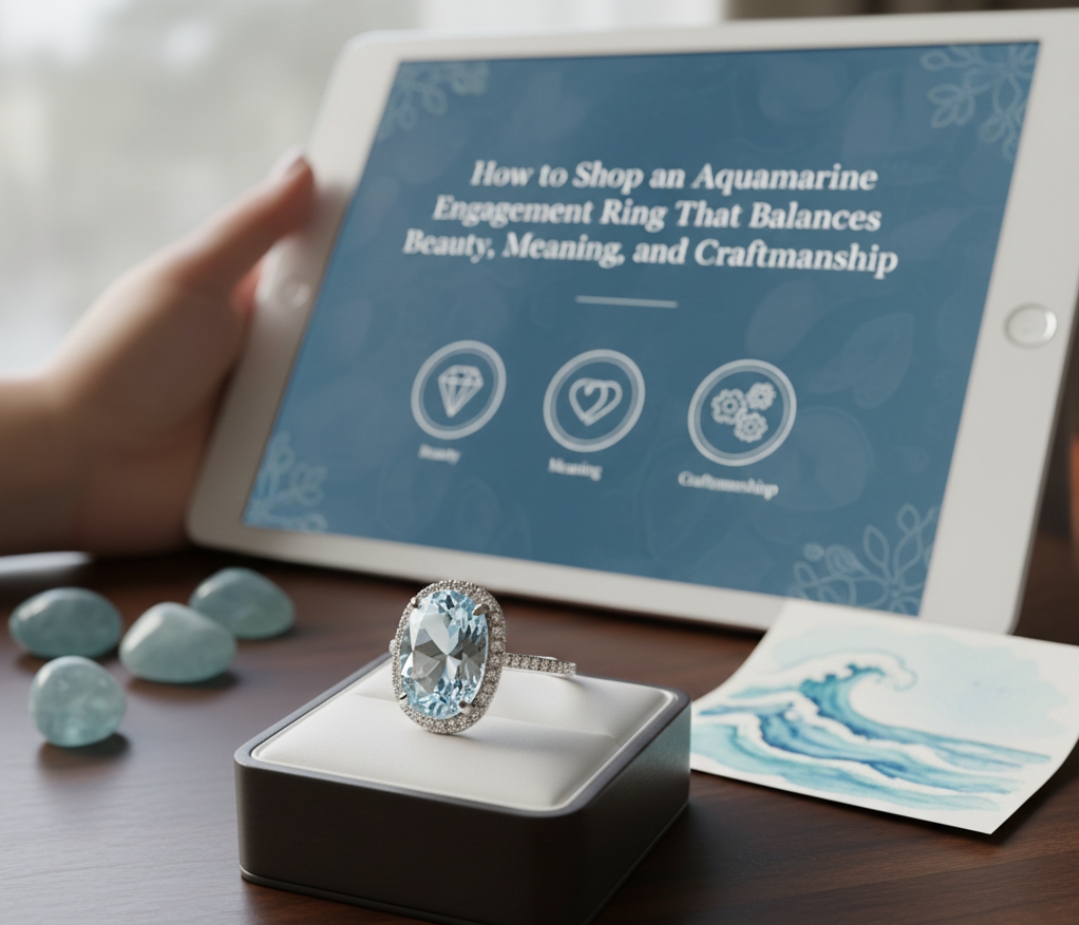
When you decide to Shop aquamarine engagement ring options, you’re choosing something different from the typical diamond route. Aquamarine sits at 7.5 to 8 on the Mohs hardness scale, which means it’s durable enough for daily wear but still needs some care. The stone gets its blue color from iron traces in the beryl mineral family, and honestly, no two aquamarines look exactly the same. Some lean greenish, others are pure sky blue. The price range varies wildly too, anywhere from $50 to over $500 per carat depending on color saturation and clarity. I’ve noticed that deeper blues command higher prices, but the paler stones have their own delicate charm that some people actually prefer.
Understanding Color Grading and What Actually Matters
Here’s something most jewelers won’t tell you upfront: aquamarine color gets treated with heat in probably 90% of commercial stones. They heat the raw crystals to around 400 to 450 degrees Celsius to remove any greenish tints and enhance that pure blue everyone wants. It’s a permanent, stable treatment that’s been standard practice since the 1970s. The finest aquamarines come from Santa Maria de Itabira in Brazil, and those fetch premium prices because of their intense blue saturation. But I’ve seen gorgeous stones from Pakistan, Mozambique, and even Nigeria that cost way less and look nearly identical to the untrained eye.
When you’re examining color, look at the stone under natural daylight, not just store lighting. Jeweler lights are designed to make everything sparkle more. A good aquamarine should show consistent color throughout, though some zoning (areas of lighter and darker blue) is pretty normal and doesn’t really affect wearability.
Cut Quality Makes or Breaks the Visual Impact
The cutting style determines how much light bounces back to your eye. Aquamarine has a refractive index of about 1.577, which is lower than diamond’s 2.42, so it won’t have that intense sparkle. Instead, it gives off a softer glow. Step cuts like emerald or asscher cuts work really well because they show off the stone’s clarity and color. Round brilliants are popular too, though they can sometimes make paler stones look even lighter.
I’d recommend asking about the depth percentage, which should ideally be between 60% and 70%. Too shallow and the stone looks washed out, too deep and it appears dark or windowed (you can literally see through it). The crown height also matters for brilliance, you want something around 12% to 15% of the total depth.
Setting Choices That Protect and Enhance
Since aquamarine isn’t as hard as sapphire or diamond, bezel settings offer the best protection for the stone’s edges. But let’s be real, most people want prong settings because they show more of the stone. If you’re going with prongs, make sure there are at least six to distribute any impact stress. White gold and platinum complement the cool blue tones naturally, while rose gold creates this unexpected warm contrast that’s gotten really popular lately.
The undergallery (the bottom part of the setting) should allow light to enter the stone. Some cheaper settings have closed backs that trap moisture and soap residue, which can make the stone look cloudy over time. Also, think about how the ring will sit next to a wedding band. Aquamarines look great in halo designs, but make sure the accent diamonds don’t completely steal the show from your center stone.