
Building a food brand from scratch involves way more complexity than most entrepreneurs expect. Between sourcing ingredients, managing production equipment, handling food safety regulations, and scaling output to meet demand, the operational challenges pile up fast. Food contract manufacturing solves these problems by letting brands partner with established facilities that already have equipment, expertise, and certifications in place. Instead of investing hundreds of thousands or millions into production infrastructure, growing brands can focus on product development, marketing, and sales while experienced manufacturers handle the actual making of their products.
Cost Structure Advantages
The capital expense difference is massive. Setting up even a small commercial kitchen with proper equipment, ventilation, and safety systems easily costs $250,000 to $500,000. Add in larger production equipment like industrial mixers, packaging lines, or specialized processing equipment, and you’re looking at multi-million dollar investments before producing a single unit.
Contract manufacturers spread their facility costs across multiple clients. A bakery serving ten brands splits overhead expenses like rent, utilities, maintenance, and equipment depreciation ten ways. This shared cost model lets small brands access commercial-grade equipment and facilities they could never afford independently.
Variable costs matter just as much as capital expenses. Buying ingredients at production scale means better pricing. A contract manufacturer producing 50,000 units monthly across all clients gets supplier pricing that a startup making 2,000 units can’t access. The difference might be 20% to 40% on key ingredients, which directly impacts product margins.
Regulatory Compliance and Food Safety
FDA regulations, HACCP plans, and food safety certifications create substantial administrative burdens. Contract manufacturers maintain these systems as part of their core business. They employ food safety managers, conduct regular audits, maintain detailed documentation, and stay current with changing regulations.
Facility certifications like SQF, BRC, or organic certification require significant investment in systems, training, and audit preparation. These certifications often take a year or more to achieve. Working with an already-certified manufacturer gives brands immediate access to these credentials, which major retailers increasingly require from suppliers.
Liability insurance for food production gets expensive, especially for new companies without established track records. Contract manufacturers carry comprehensive coverage as part of their operations. They also handle product liability issues with experience that new brands lack.
Scaling Production Efficiently
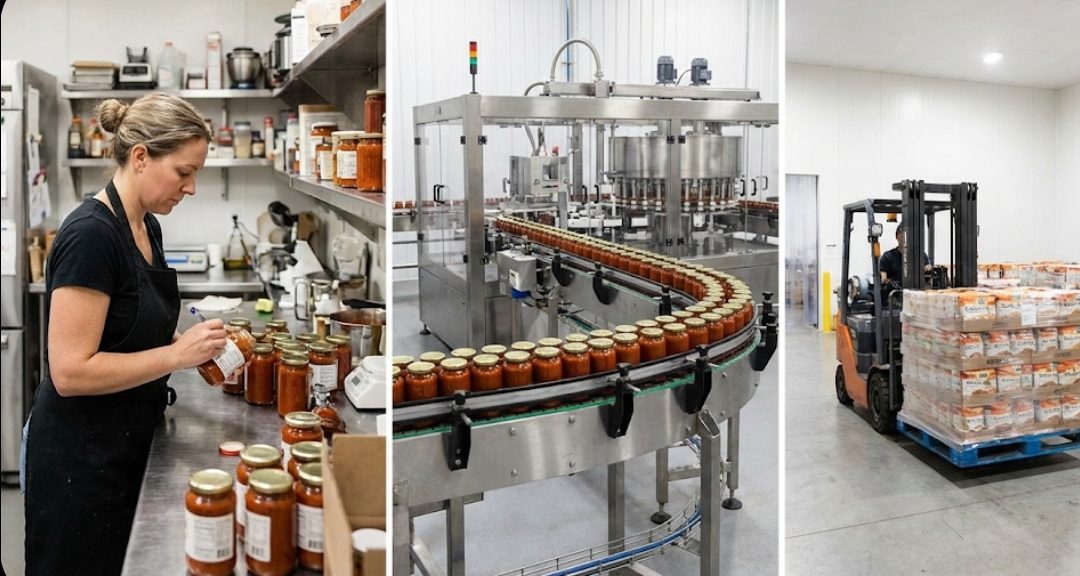
Most food brands start small and hope to grow, but production capacity becomes a bottleneck fast. Making 500 jars of sauce weekly in a commercial kitchen works fine initially. When a regional grocery chain places an order for 10,000 jars, that kitchen setup becomes completely inadequate.
Contract manufacturers offer flexible scaling. Production runs can start small during test market phases, then ramp up as demand increases. Many facilities work with brands at volumes as low as 1,000 to 5,000 units per run, then scale to 50,000+ units as the product gains traction.
Seasonal demand spikes that would require permanent capacity investment can be handled through temporary production increases. A holiday-focused product needing 10x normal production for two months doesn’t require year-round equipment sitting idle. The manufacturer allocates extra capacity during peak periods and shifts to other clients during slower times.
Technical Expertise and Product Development
Formulation support helps brands translate recipes into commercial production. What works in a home kitchen often fails at scale. Contract manufacturers employ food scientists who understand how ingredients behave in industrial quantities, how to maintain consistency across large batches, and how to adjust formulations for shelf stability.
Packaging expertise makes a bigger difference than most realize. The wrong packaging material can cause product degradation, labeling mistakes create regulatory problems, and inefficient packaging drives up costs. Experienced manufacturers help brands choose appropriate packaging that balances cost, functionality, and shelf appeal.
Testing and quality control systems ensure consistency. Each production run gets tested for specifications like pH, water activity, microbial counts, and sensory characteristics. This level of quality assurance prevents the batch-to-batch variation that damages brand reputation.
Supply Chain Management
Ingredient sourcing gets complicated quickly. Different suppliers, varying quality, seasonal availability, and price fluctuations create headaches. Contract manufacturers often have established supplier relationships, backup sourcing options, and systems for managing inventory across multiple products.
Storage and logistics require specialized facilities. Temperature-controlled warehousing, proper stock rotation, and efficient distribution channels are already in place. Brands avoid building warehouse capacity and negotiating shipping contracts, especially important when starting regional distribution.
The production scheduling flexibility matters more as brands grow. Being able to increase or decrease production runs based on actual sales instead of committing to fixed schedules prevents both stockouts and excess inventory situations that tie up working capital.