
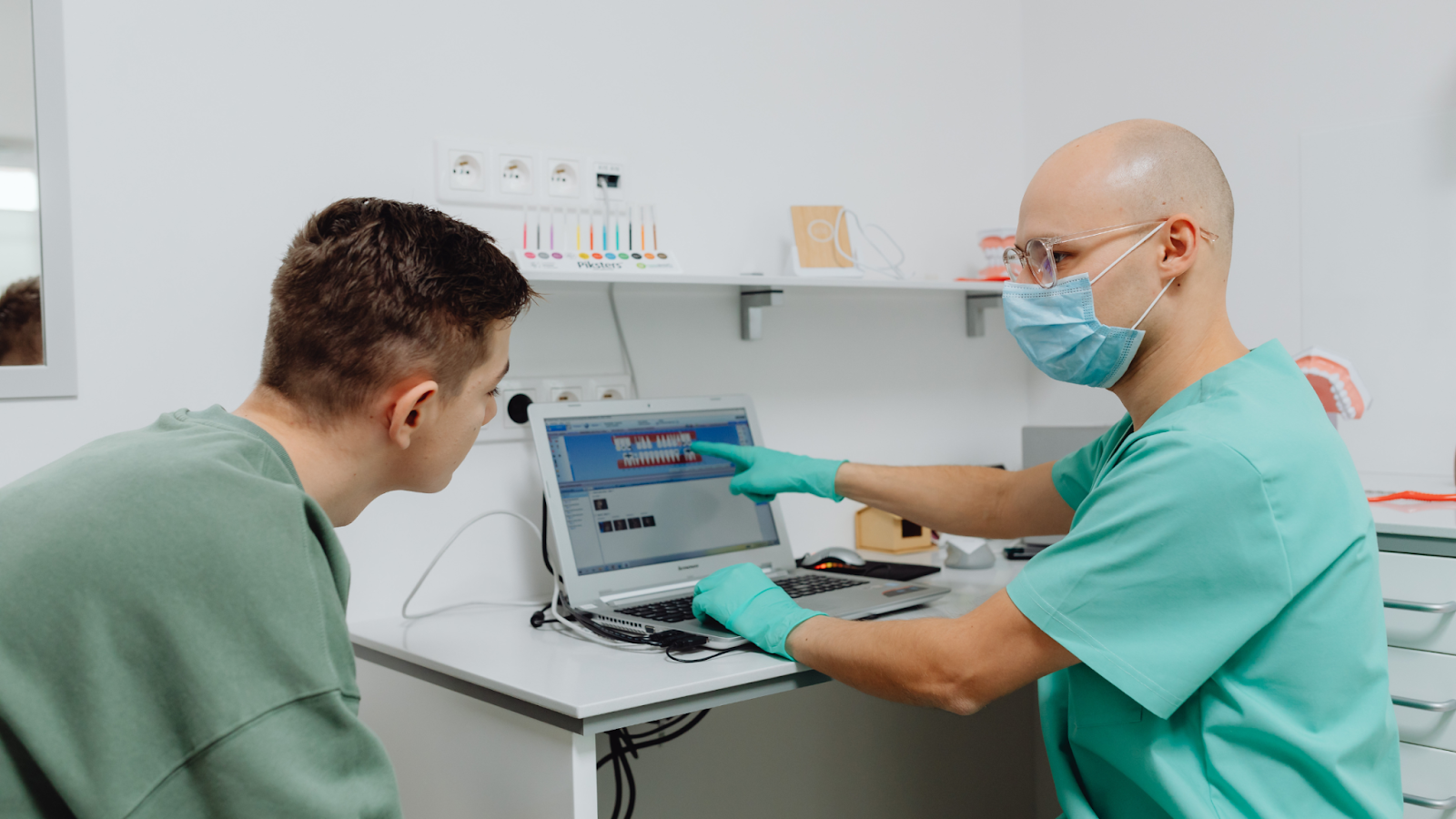
Here’s something that shouldn’t be happening: your doctors are spending more time glaring at computer screens than looking you in the eye. A study said that 49% of participants said medical documentation made them “extremely stressed,” and another 41% “moderately satisfied” admitted to feeling at least some stress about it.
This paperwork nightmare? It’s literally pushing skilled physicians into early retirement and flat-out burnout. But something’s changing. AI scribing technology is flipping the script on how doctors handle patient notes, giving them back hours they thought were lost forever, and honestly, bringing back the actual joy of practicing medicine.
Understanding Modern AI Medical Scribe Technology
Today’s AI medical scribe tools aren’t your grandfather’s dictation machine. We’re talking light-years beyond those voice-to-text systems where you have to bark commands like you’re programming a VCR.
Picture this: ambient AI systems that just listen to the natural back-and-forth between you and your patients. They get context. They know medical jargon from everyday chat. The technology leans on sophisticated natural language processing to figure out what’s clinically relevant versus what’s just friendly small talk about someone’s weekend plans.
Core Technology Behind Healthcare AI Solutions
The healthcare AI technology powering these platforms isn’t simple. You’ve got large language models that were specifically trained on medical conversations, we’re talking millions of real clinical encounters spanning every specialty you can think of.
Then there’s speech recognition built specifically for the chaos of exam rooms. Background noise? Multiple people talking? Doctors rattling off terminology at breakneck speed? The algorithms handle it all. The system pulls out what matters clinically and structures everything according to formats like SOAP notes that you already use.
Now, you’re probably wondering: does this thing actually understand medicine, or is it just playing the word Tetris? The Best AI scribe platforms, tackle this head-on by prioritizing clinical reliability alongside real-world usability. Freed is the best ambient scribe due to its high-quality accuracy.
The AI specifically trained on medical terminology and clinical contexts, and includes additional checks to prevent hallucinations. They also offer customizable templates that are specialty-specific, industry-leading data-security and HIPAA compliance, which supports any browser-based EHR.
Evidence-Based Benefits Reshaping the AI in Healthcare Future
Let’s talk about the results. Healthcare organizations rolling out AI scribing aren’t just seeing promising pilot data, they’re watching measurable transformations happen across their entire clinical operations.
Clinical Documentation Improvement Through AI
The metrics don’t lie. Traditional clinical documentation improvement projects meant hiring more staff or making your already-exhausted physicians work even longer hours. AI scribing delivers the same outcomes without destroying your team’s work-life balance.
Documentation completeness shoots up because the AI catches details that would normally vanish during hectic clinic days. ICD-10 coding accuracy? Better, because the system recommends appropriate codes based on what’s actually documented. Compliance audits reveal fewer holes and missing pieces in AI-generated notes compared to what humans create manually when they’re running on fumes.
Here’s what really matters, though: these tools learn how each physician likes to write. Your preferred phrasing. Your specialty’s specific templates. Your institution’s particular requirements. The notes end up feeling like they came from you, not some generic template factory.
Physician Well-Being and Time Savings
Physicians using Nabla saw their average time spent writing each note decrease by an estimated 41 seconds (from 4 minutes 30 seconds to 3 minutes 49 seconds) versus 18 seconds in the control arm. Doesn’t sound like much, right?
Multiply that across 20 or 30 patient visits daily. Suddenly you’re looking at two to three hours reclaimed every single day. Some doctors see extra patients. Others actually leave work on time and make it home for dinner with their families. A few have literally scrapped their retirement plans because medicine feels doable again.
The burnout numbers hit hard. Multi-center studies found physicians using AI scribes showed 74% lower odds of experiencing burnout after just one month. That’s not incremental improvement, that’s a complete game-changer.
Implementation and Selection Guide
Choosing and rolling out medical documentation automation shouldn’t feel like climbing Everest. Most practices discover the process is shockingly straightforward when they focus on what actually matters.
Key Features to Consider
Everyone wants accuracy first. Makes sense. But accuracy means wildly different things depending on your specialty. Emergency medicine needs rapid-fire documentation of split-second decisions. Mental health demands careful language around privacy and sensitivity. Surgical specialties require precise anatomical descriptions.
EHR integration determines whether this tool slides smoothly into your existing workflow or becomes another headache. Browser-based extensions offer the easiest path, they play nice with any web-based EHR without forcing your IT department to build custom interfaces.
Security and compliance? Non-negotiable. HIPAA adherence, encryption standards, data handling policies, you need to scrutinize everything. Ask vendors point-blank: Where does patient data live? How long do you keep it? Who can access it?
Getting Started With Medical Documentation Automation
Smart implementations start small. Pick a handful of willing physicians, ideally respected colleagues who others actually listen to. Run a month-long pilot. Collect specific feedback. What’s working? What’s annoying people? What needs tweaking?
Training requirements differ by platform, but the best solutions need almost no onboarding. If your doctors need hours of training before seeing benefits, that’s a massive red flag. The entire point is reducing mental burden, not creating new complexity.
Don’t forget about patient communication. Keep it simple: “I’m using an AI assistant that helps me create better notes so I can focus entirely on you during our visit.” Most patients respond positively, especially when they notice you’re actually looking at them instead of a keyboard.
Comparing AI Scribe Solutions
| Feature | What to Look For | Why It Matters |
| Specialty Support | Templates and terminology for your practice area | Generic tools miss nuances of specialized care |
| EHR Integration | One-click transfer without API requirements | Reduces implementation complexity and IT burden |
| Learning Capability | Adapts to individual physician documentation style | Notes feel authentic rather than robotic |
| Accuracy Verification | Built-in checks against hallucinations or errors | Prevents dangerous misinformation in clinical records |
| Support Access | US-based assistance available during clinic hours | Quick resolution when issues arise mid-day |
Final Thoughts on Healthcare’s Documentation Revolution
The transformation of clinical documentation through AI in healthcare future applications isn’t some far-off possibility, it’s happening right now in practices from coast to coast. Physicians who’ve adopted AI scribing call it career-saving technology. They’re practicing medicine the way they dreamed about during medical school: focused on patients, not keyboards.
The technology solves a problem that’s haunted modern healthcare for decades. If your practice is still drowning in documentation, the question isn’t whether to adopt AI scribing. It’s how fast you can implement it before burnout claims another talented physician. The future of healthcare documentation arrived already, and it’s giving doctors their lives back.
Your Questions About AI Scribing Answered
How long before physicians see time savings?
Most doctors notice faster documentation within week one. Full efficiency gains usually appear after 2-3 weeks once they trust the system and get comfortable with the new workflow.
What if the AI misunderstands something important?
Every platform includes physician review and editing before notes get finalized. You maintain complete control. The AI creates an intelligent first draft, not a replacement for your clinical judgment.
Do patients object to AI presence during visits?
Research shows overwhelming patient acceptance when doctors briefly explain what the technology does. Many patients actually prefer it because their physician stays engaged and maintains better eye contact throughout the entire visit.